The landscape of the United Kingdom is often defined by its iconic landmarks, some of which are built from stone and steel, while others are carved by nature itself over centuries. Few natural landmarks held as much emotional weight as the Sycamore Gap tree. Standing for hundreds of years in a dramatic dip along Hadrian’s Wall in Northumberland, it was more than just a tree; it was a symbol of resilience, a backdrop for countless proposals, and a silent witness to history. When the tree was unlawfully felled in late 2023, it left a void not just in the physical landscape, but in the hearts of people across the country. However, nature has a remarkable way of finding a path forward, and today, that path has led to the tranquil waters and rolling greens of the Norfolk Broads.
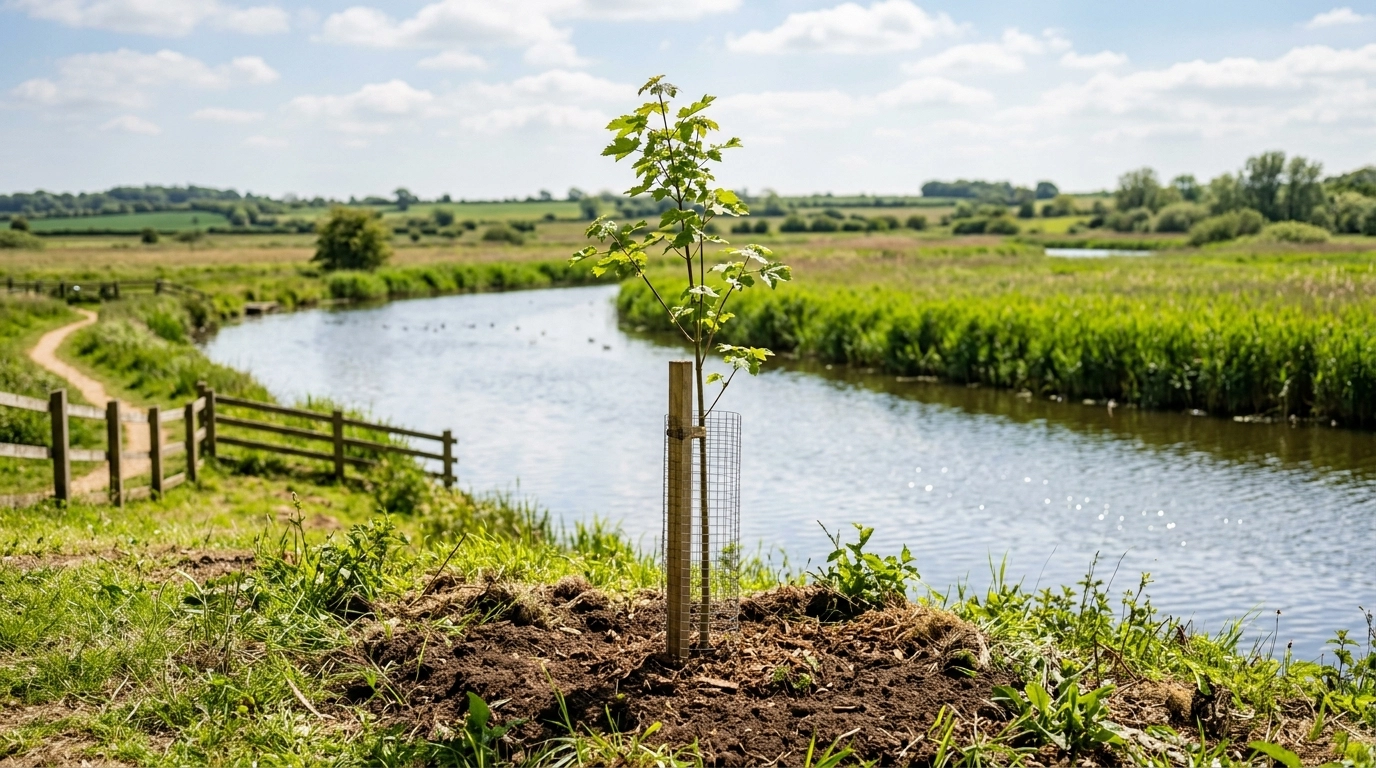
In a move that signifies hope and the continuity of life, a sapling grown from the seeds of the original Sycamore Gap tree has been officially planted at the How Hill Nature Reserve. This marks a significant chapter in what many are calling a “living legacy” project, ensuring that while the original giant may be gone, its DNA and its spirit will continue to grow in new corners of the British countryside. The arrival of the sapling in Norfolk represents a bridge between the rugged, northern heights of Northumberland and the soft, marshy beauty of the East Anglian fens.
A Symbol of Resilience Finds a Home in the Broads
The choice of How Hill Nature Reserve for this particular planting is deeply symbolic. How Hill is one of the most celebrated spots in the Norfolk Broads, known for its stunning views, its historic thatched house, and its commitment to environmental education. By placing the sapling here, those responsible for its care are ensuring that it will be looked after by experts who understand the delicate balance of the ecosystem. It also places the tree in a location where thousands of school children and visitors come every year to learn about the importance of nature and conservation.
The planting ceremony was a quiet, respectful affair, reflecting the somber yet optimistic mood that has surrounded the Sycamore Gap story since the original tree’s demise. Local conservationists and volunteers gathered to see the young tree settled into its new soil. It is a small, fragile thing at the moment: hardly a match for the towering presence of its parent: but it carries with it the hope of a nation. The soil at How Hill is rich and fertile, providing the perfect environment for the sapling to establish its roots and begin the long journey toward becoming a landmark in its own right.
For the people of Norfolk, having a direct descendant of the Sycamore Gap tree is a point of immense pride. It connects the local community to a national story of loss and recovery. The Broads have always been a place of healing and quiet reflection, making it a fitting sanctuary for a tree that represents the enduring power of the natural world. As the sapling grows, it will become a new point of interest for those walking the trails of How Hill, offering a place to stop and remember the tree that stood by the Wall, while celebrating the new life that has taken root in the East.
The Journey from Hadrian’s Wall to How Hill
The journey of this sapling is a testament to the dedication of horticulturalists and conservationists who jumped into action immediately after the original tree was felled. In the days following the event, teams worked tirelessly to salvage what they could. Seeds were gathered, and cuttings were taken in a high-stakes effort to preserve the genetic line of the sycamore. These materials were taken to secret, high-security greenhouses where they were nurtured under climate-controlled conditions. The success of this propagation project has been a ray of light in an otherwise dark chapter for British environmentalism.
This particular sapling is one of the “chosen few” to be sent out across the country to various National Parks and sites of scientific interest. The process of selecting these sites was rigorous, ensuring that each sapling would have the best possible chance of survival. The Norfolk Broads, with its unique peat-rich soil and specialized water management, offers a different set of challenges than the rocky terrain of Northumberland, but sycamores are famously hardy trees. They are known for their ability to thrive in various conditions, and experts are confident that this descendant will adapt well to its new coastal-adjacent home.
Moving a plant with such high emotional and historical value is no small feat. It required careful transportation to ensure the root ball remained intact and the delicate young branches were protected from the wind and vibration of the journey. Upon arrival at How Hill, the sapling was given time to acclimatize before being placed in the ground. The planting process involved enriching the local soil with organic matter to give the roots an initial boost, followed by the installation of a sturdy wooden stake and protective mesh to guard against local wildlife. This careful attention to detail highlights just how much this tree means to everyone involved.
Cultivating a Legacy for Future Generations
The significance of the Sycamore Gap sapling goes beyond just the physical act of planting a tree. It is a powerful lesson in stewardship and the responsibility we have to protect the natural world. For the youngsters who visit How Hill on school trips, the tree will serve as a living classroom. They will be able to watch it grow over the years, learning about the biology of sycamores, the history of the original tree, and the importance of conservation efforts. It turns a story of environmental vandalism into a narrative of restoration and community action.
As the years pass, this sapling will eventually cast its own shadow over the Broadland landscape. It will provide a habitat for birds, insects, and small mammals, contributing to the biodiversity of How Hill. While it may take decades for it to reach the majestic proportions of its ancestor, the process of watching it grow is a reward in itself. It encourages a long-term perspective on the environment, reminding us that the trees we plant today are gifts for the generations of the future. The project aims to create a network of these “sister trees” across the UK, creating a literal map of resilience that spans the length and breadth of the country.
For visitors to the Norfolk Broads, the new addition to How Hill offers a moment of connection. In a world that often feels fast-paced and fragmented, the story of the Sycamore Gap sapling is a reminder of the slow, steady rhythms of nature. It invites us to slow down, to appreciate the beauty of a single leaf, and to recognize the deep bonds we share with the landscapes around us. The planting at How Hill is not just the end of a journey for a small sapling; it is the beginning of a new legend that will be told by the water’s edge for centuries to come. The spirit of the gap has found a new home, and in the quiet rustle of its leaves, the story continues.