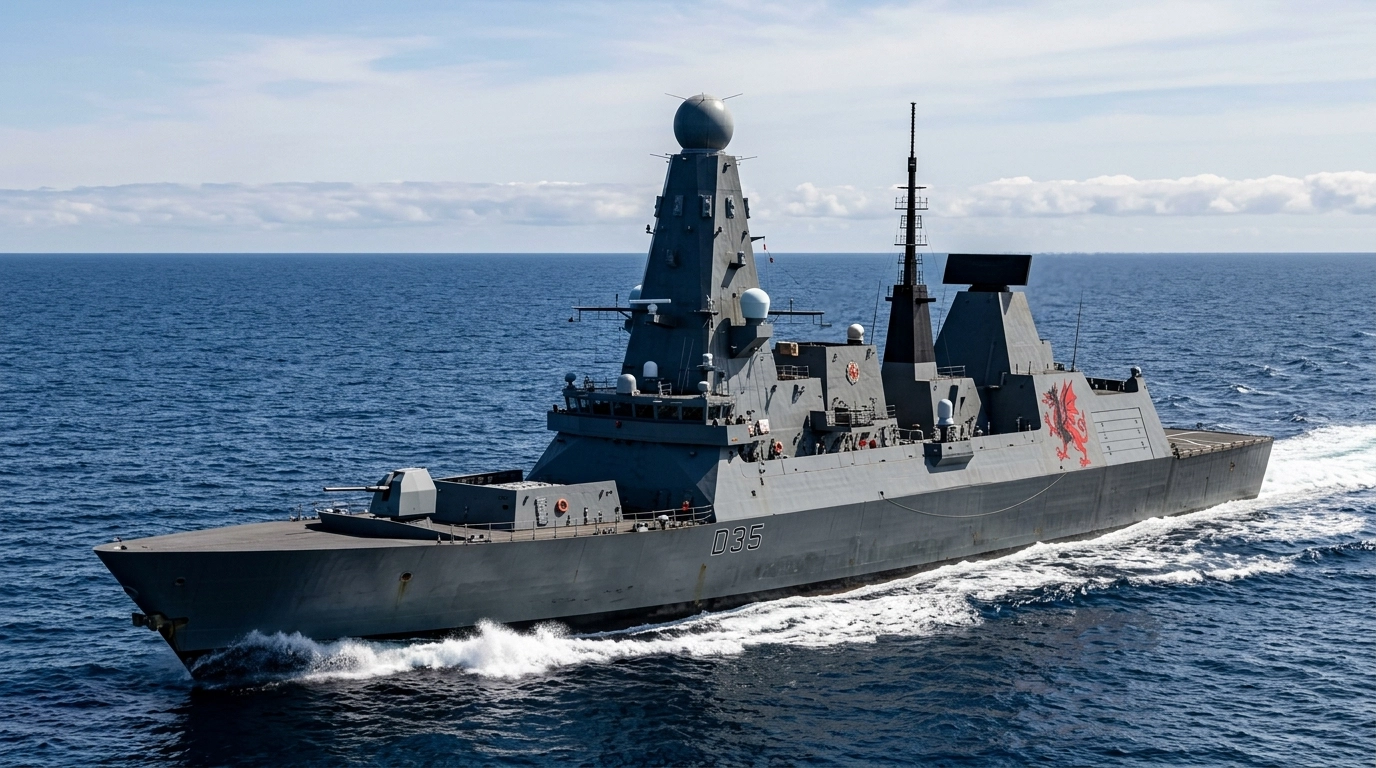
HMS Dragon, one of the Royal Navy’s most sophisticated Type 45 destroyers, has been forced to pause operations in the Mediterranean following the emergence of significant technical faults. The vessel, known for its advanced air-defence capabilities and distinctive dragon emblem, is currently undergoing essential maintenance to address issues with its internal water systems. This unexpected withdrawal from active duty comes at a critical juncture for British maritime operations in the region, particularly as regional tensions remain high.
The destroyer was operating at high readiness when the faults were identified, necessitating an immediate assessment and repair schedule. While the Ministry of Defence maintains that such technical hurdles are a routine part of managing complex naval platforms, the timing and nature of the failure have raised questions regarding the resilience of the UK’s surface fleet. The Type 45 class has historically faced scrutiny over its propulsion and cooling systems, though this specific incident appears focused on the ship’s freshwater and utility infrastructure.
Operational Impact in the Mediterranean
The sidelining of HMS Dragon leaves a notable gap in the Royal Navy’s presence in the Mediterranean Sea. As a premier air-defence platform, the ship’s primary role is to provide a protective shield for other vessels and to monitor regional airspace. With its high-tech SAMPSON radar and Sea Viper missile system, the destroyer is a cornerstone of the UK’s ability to project power and ensure the security of shipping lanes. Its absence requires a reconfiguration of available assets to maintain the same level of maritime situational awareness and deterrent capability.
The Mediterranean remains a focal point for international security, served by its proximity to North Africa and the Middle East. The Royal Navy’s commitment to the region often involves working alongside international partners to ensure stability. HMS Dragon’s transition from an active patrol to a maintenance status means that other vessels may need to extend their deployments or accelerate their training cycles to fill the void left by the elite destroyer.
Technical Challenges for the Type 45 Class
Technical issues have long been a talking point for the Type 45 fleet. Since their introduction, these destroyers have undergone various upgrades to improve their reliability in warmer climates, where their propulsion systems previously struggled. The current fault involving the water systems on HMS Dragon highlights the ongoing maintenance burden associated with these sophisticated warships. Maintaining the delicate balance between high-performance military hardware and the harsh realities of the maritime environment remains a constant challenge for naval engineers.
Specialist teams are now working to rectify the problems, which involve the ship’s ability to manage and distribute water for both operational and crew requirements. These systems are vital for the day-to-day running of the vessel and the safety of the personnel on board. The complexity of the Type 45 design means that even relatively minor technical faults can require specialised parts and expertise, often necessitating a stay in a port with the appropriate industrial support facilities.
Strategic Context and Rising Regional Tensions
The timing of this technical setback is particularly sensitive given the current geopolitical landscape. Tensions in the Middle East, specifically involving Iran and its proxies, have led to an increased focus on the security of maritime transit. The UK has been active in providing escorts and maintaining a visible presence to deter aggression against merchant shipping. Having a high-readiness destroyer like HMS Dragon unavailable for deployment reduces the flexibility of the UK’s response options should the situation escalate further.
Defence analysts have expressed concern that the frequency of technical issues within the surface fleet could impact the UK’s long-term defence posture. While HMS Dragon is expected to return to sea once repairs are completed, the incident serves as a reminder of the thin margins within which the Royal Navy operates. With a limited number of advanced destroyers available, ensuring maximum availability and reliability is essential for meeting the nation’s global security commitments and supporting its allies in volatile regions.