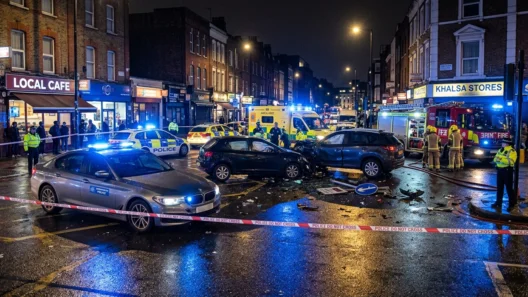
A nineteen-year-old e-bike rider has been sentenced to six years and nine months in prison following a catastrophic collision that claimed the life of an eighty-six-year-old great-grandmother. The incident, which occurred at a zebra crossing in Sunderland, has reignited a national debate regarding the regulation of high-powered electric bikes and the increasing frequency of modified vehicles on British roads. The victim, Gloria Stephenson, was described by her family as an exceptionally active and fit woman who was simply attempting to complete her daily walking goal when she was struck by the illegal vehicle.
The court proceedings revealed a harrowing series of failures by the rider, Billy Stokoe, who was operating a vehicle that was neither road-legal nor safe. The collision took place on the B1286 Burdon Road, a location where pedestrians should reasonably expect the highest level of safety. Instead, the court heard that the defendant showed a total disregard for the rules of the road and the safety of vulnerable pedestrians. The severity of the sentence reflects the gravity of the offence, which was categorised as causing death by dangerous driving due to the specific nature of the bike involved.
The Tragic Circumstances of the Collision
On the afternoon of the incident, Gloria Stephenson was walking her daughter’s dog, a routine she maintained to reach her target of 10,000 steps per day. She had approached the zebra crossing on Burdon Road and waited appropriately for traffic to stop. As she proceeded across the designated walkway, she was struck with immense force by a Sur-Ron electric bike. The impact was so significant that Mrs Stephenson was thrown a considerable distance from the crossing. Despite the efforts of emergency services and bystanders, her injuries were unsurvivable. Even the dog she was walking suffered injuries during the collision, highlighting the violence of the impact.
Investigation into the vehicle used by Billy Stokoe uncovered a catalogue of illegal modifications and maintenance failures. The bike was identified as a Sur-Ron, a high-performance electric vehicle that, in its modified state, exceeded the legal power limits for an electrically assisted pedal cycle. Under UK law, such vehicles are classified as motorbikes and require registration, insurance, a driving licence, and the use of a helmet. Stokoe possessed none of these. Furthermore, the bike was found to be in a dangerous condition; the right-hand brake lever was completely non-functional.
The court was presented with evidence that Stokoe was not only riding a defective and illegal machine but was also significantly distracted and impaired. Dashcam footage and witness testimonies indicated that he was holding a mobile phone in his left hand: the only hand capable of operating the functioning brake: at the moment of the crash. Forensic tests later confirmed that he was over the legal limit for cannabis. This combination of mechanical failure, drug impairment, and digital distraction meant that Stokoe made no attempt to slow down or avoid Mrs Stephenson as she crossed the road.
A Failure of Responsibility and Legal Consequence
The aftermath of the collision was marked by what the prosecution described as a cowardly attempt to evade responsibility. Immediately after the impact, Stokoe was thrown from the bike but managed to regain his footing. Rather than staying to provide assistance to the dying woman or calling for an ambulance, he chose to flee the scene. He rode the damaged bike to a friend’s house, where he attempted to hide the vehicle and changed his clothing in an effort to alter his appearance. It was only an hour later, after the gravity of the situation became clear, that he handed himself into a police station.
During the sentencing at Newcastle Crown Court, Judge Robert Adams addressed the defendant’s actions with stern criticism. The judge noted that the zebra crossing should have been a place of absolute safety for a pedestrian of Mrs Stephenson’s age. The fact that the rider was distracted by a phone and impaired by drugs while operating a defective vehicle made the event almost inevitable. The court also heard a victim impact statement from Lisa Tench, the victim’s daughter, who spoke of the profound hole left in their family. She addressed Stokoe directly, stating that her mother never stood a chance against his reckless behaviour and that he had left her to die in the road.
The legal classification of the e-bike played a crucial role in the sentencing. Because the Sur-Ron bike functioned more like a moped or motorcycle than a standard bicycle, Stokoe was charged with causing death by dangerous driving, a charge usually reserved for motorists in cars or on registered motorcycles. The sentence of six years and nine months in a young offender institution is accompanied by a driving disqualification of over eight years. This case serves as a landmark reminder that the operators of high-powered electric bikes are subject to the same stringent laws as any other road user when their vehicles fall outside the legal definition of an EAPC.
The Growing Crisis of Illegal e-Bikes on UK Roads
The death of Gloria Stephenson has brought the issue of unregulated and modified e-bikes into sharp focus for police forces across the country. Northumbria Police have used the conclusion of this trial to issue a direct appeal to the public to report dangerous riding and illegal vehicle modifications. Superintendent Billy Mulligan emphasised that the perception that police will not or cannot pursue e-bike riders is false. He noted that the police are increasingly using specialist units to track and seize vehicles like the one involved in this fatal crash, which are often marketed as bicycles but possess the power and speed of motor vehicles.
Current UK regulations state that an e-bike must have a motor with a maximum power output of 250 watts and must not provide assistance when the bike is travelling faster than 15.5 mph. Vehicles like the Sur-Ron often far exceed these limits, with some models capable of reaching speeds of 45 mph or more. When these bikes are used on pavements or at zebra crossings, they pose a lethal threat to pedestrians, especially the elderly and those with limited mobility. The lack of engine noise makes them particularly dangerous, as pedestrians often do not hear them approaching until it is too late to react.
Community leaders and safety campaigners are calling for tighter controls on the sale and modification of these high-powered motors. While many people use legal e-bikes as a sustainable and efficient mode of transport, the rise of "off-road" bikes being used on public highways is creating a public safety crisis. The case of Billy Stokoe highlights the need for better education and enforcement to prevent similar tragedies. The police have urged anyone with information about individuals riding dangerously or using illegal bikes to come forward, stressing that community intelligence is vital in removing these "death traps" from the streets.
The tragedy in Sunderland is a stark illustration of the consequences of ignoring road safety laws. A fit and healthy woman, who had contributed much to her community and was the heart of a large family, lost her life because of a series of reckless decisions made by a teenager. As the prison sentence begins, the focus remains on the family’s loss and the ongoing effort to ensure that zebra crossings remain the safe havens they are intended to be. The case stands as a permanent warning to those who choose to ride illegal, high-powered vehicles on public roads: the law will eventually catch up, and the cost of negligence is often measured in human lives.