In the corridors of Brussels, the atmosphere has shifted from a tense, heavy silence to one of cautious relief. After months of gruelling negotiations and a high-stakes standoff over energy infrastructure and regional interests, the European Union has finally authorised a staggering €90 billion financial package for Ukraine. This isn’t just another aid instalment; it is a definitive strategic pivot that signals a long-term commitment to a continent in flux. For those following independent news uk, this development marks one of the most significant geopolitical shifts since the start of the 2020s.
The breakthrough follows a period of intense diplomatic friction, often referred to as the “pipeline deadlock.” For weeks, several member states remained at odds over energy security and the technicalities of gas transit, stalling the financial support that Kyiv desperately required. However, as the conflict enters its fifth year, the necessity for a unified front outweighed the regional disputes. The €90 billion lifeline is designed to ensure that the Ukrainian state doesn’t just survive, but maintains the capacity to defend its borders and stabilise its economy during an incredibly volatile period.
The deal was reached using a mechanism known as “enhanced cooperation.” This allowed the majority of EU nations to move forward with the funding despite the lack of a unanimous consensus, as Czechia, Hungary, and Slovakia opted out of the specific backing for the loan. While this reveals some cracks in the internal unity of the bloc, the sheer scale of the package demonstrates that the core of Europe remains resolute.
Key Takeaways from the EU-Ukraine Agreement
- Total Funding: A €90 billion package comprising loans and financial assistance.
- Military Support: €60 billion specifically earmarked for defence and military capabilities.
- Economic Stability: €30 billion allocated for macro-financial assistance and budget support.
- Repayment Terms: Repayment of the principal is contingent on Ukraine receiving war reparations from Russia.
- Policy Conditions: The funds are tied to ongoing democratic reforms and anti-corruption measures within Ukraine.
- The Deadlock: The agreement follows the resolution of a major dispute regarding energy pipelines and transit routes.
The Logistics of the €90bn Lifeline
Understanding the sheer magnitude of €90 billion requires looking at how the European Union manages its books. This isn’t money sitting in a vault; it is a sophisticated financial instrument backed by the collective creditworthiness of the member states. The package is split into two primary pillars: €60 billion for defence and €30 billion for the “Ukraine Facility,” which focuses on the day-to-day running of the country.
The €60 billion defence component is particularly noteworthy. It allows Ukraine to procure advanced military equipment not just from EU industries, but also from the European Economic Area. In urgent cases, there are even provisions to source equipment from outside these regions if it is deemed essential for immediate security needs. This level of flexibility is rare in EU financial planning and highlights the urgency felt in Brussels. By securing this funding, Ukraine can move away from “emergency” asks and transition into a more structured, long-term defence procurement strategy.
On the other side of the ledger, the €30 billion in macro-financial assistance is the glue holding the Ukrainian state together. This money pays for civil servant salaries, keeps hospitals running, and ensures the energy grid remains functional under constant pressure. The financing for this is raised through common EU borrowing on the capital markets, guaranteed by the “headroom” of the EU’s long-term budget. It is estimated that debt-servicing costs will be managed by the EU budget itself, with the principal repayment only being required once Russia pays reparations. This ensures that the immediate burden on the Ukrainian taxpayer remains manageable while the country is still in a state of active defence.
Navigating the Political Deadlock
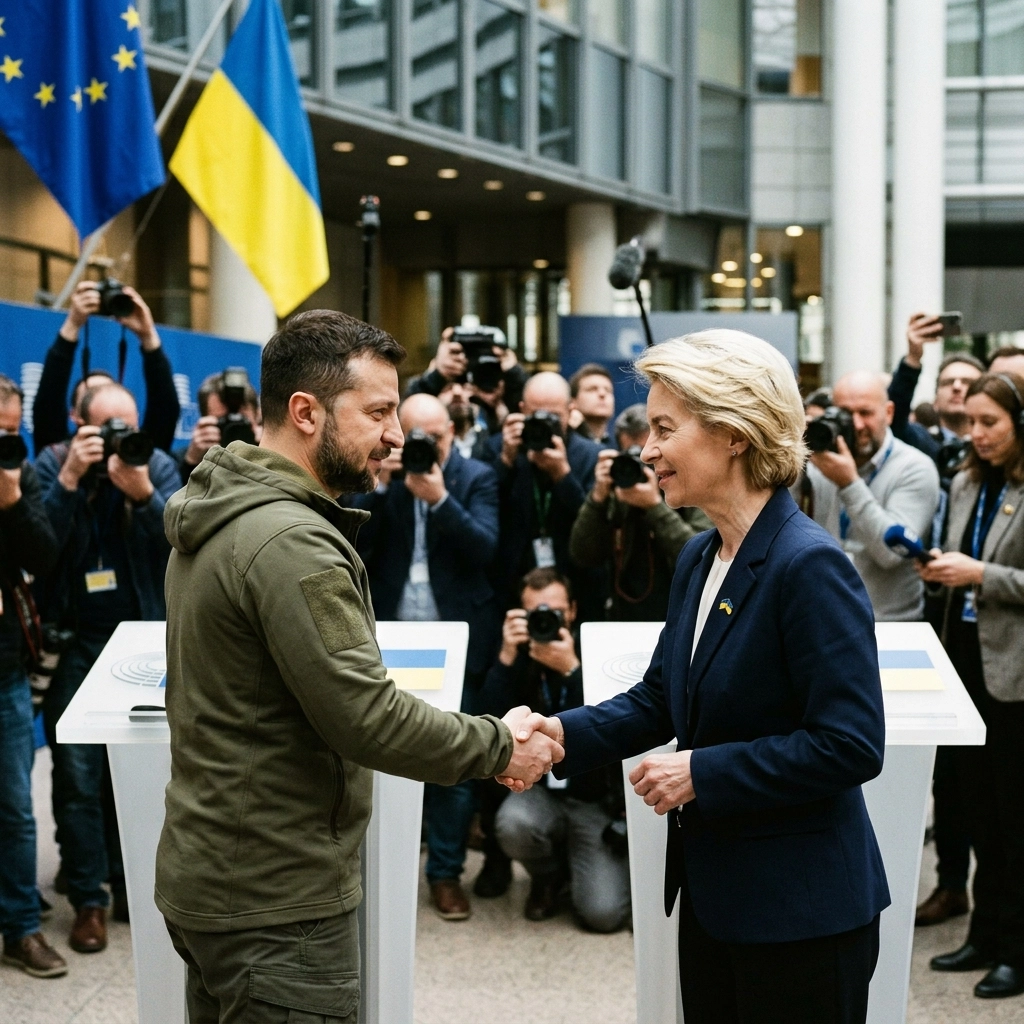
The road to this “€90bn handshake” was anything but smooth. The primary obstacle was a complex web of interests frequently cited as the “pipeline deadlock.” At its heart, this was a disagreement over how energy transit and infrastructure costs should be shared among member states as they transition away from historical dependencies. Some nations felt that the financial burden of rerouting energy supplies was not being shared equitably, leading them to withhold their support for the broader Ukraine package as a bargaining chip.
The use of “enhanced cooperation” was the key that finally turned the lock. In EU law, this mechanism allows a group of at least nine countries to establish advanced integration or cooperation in an area within the EU structures without the other member states being involved. By utilising this, the EU was able to bypass the vetoes or opt-outs of Czechia, Hungary, and Slovakia. While this move solved the immediate problem of getting the money to Kyiv, it has sparked a wider conversation about the future of EU decision-making. Can the bloc continue to function with a “multi-speed” approach, or does this set a precedent that might weaken the union in the long run?
Despite these internal disagreements, the final approval of the package was a moment of theatre in the European Parliament. It was a clear signal that the strategic goal of European stability outweighs the transactional nature of regional politics. The resolution of the pipeline dispute involved significant concessions on energy infrastructure funding elsewhere, but it ultimately allowed the EU to present a semi-unified front to the world. For observers of independent news uk, the story is as much about the survival of European diplomacy as it is about the financial aid itself.
What This Means for Global Stability
The implications of this €90 billion package extend far beyond the borders of Ukraine or the meeting rooms of Brussels. It is a fundamental message to Moscow that the “fatigue” often predicted by political analysts has not materialised in the way some might have hoped. By structuring the loan around future reparations, the EU is also making a legal and political statement about the eventual accountability they expect to see at the end of the conflict.
Furthermore, the package serves as a blueprint for how the EU might handle future crises. The integration of defence spending with macro-financial aid suggests a more holistic approach to foreign policy. It isn’t just about sending tanks or paying for schools; it’s about ensuring the entire ecosystem of a partner nation remains viable. This “lifeline” is also tied to strict conditions regarding democratic reforms. Ukraine is expected to continue its work on judicial independence and anti-corruption measures, effectively aligning its domestic policies more closely with EU standards as it moves toward potential future membership.
For the international community, this move stabilises a major piece of the global economic puzzle. A bankrupt or collapsed Ukraine would have sent shockwaves through the global wheat markets, energy prices, and refugee systems. By underwriting the survival of the Ukrainian state, the EU is essentially purchasing a degree of predictability for the global economy. As we move deeper into 2026, the focus will likely shift from “if” Ukraine can be supported to “how” that support will transition into a massive reconstruction effort once the guns fall silent.
The approval of this €90 billion package represents a defining moment in contemporary European history. It balances the immediate, brutal necessities of a defence budget with the forward-looking requirements of economic and democratic stability. While the political deadlock over pipelines and regional interests nearly derailed the process, the eventual “handshake” proves that the European Union is still capable of making big, historic moves when the stakes are at their highest. For those following the situation through independent news uk, this marks the beginning of a new chapter in the relationship between the EU and its eastern neighbours, one defined by unprecedented financial scale and a long-term commitment to a shared future.