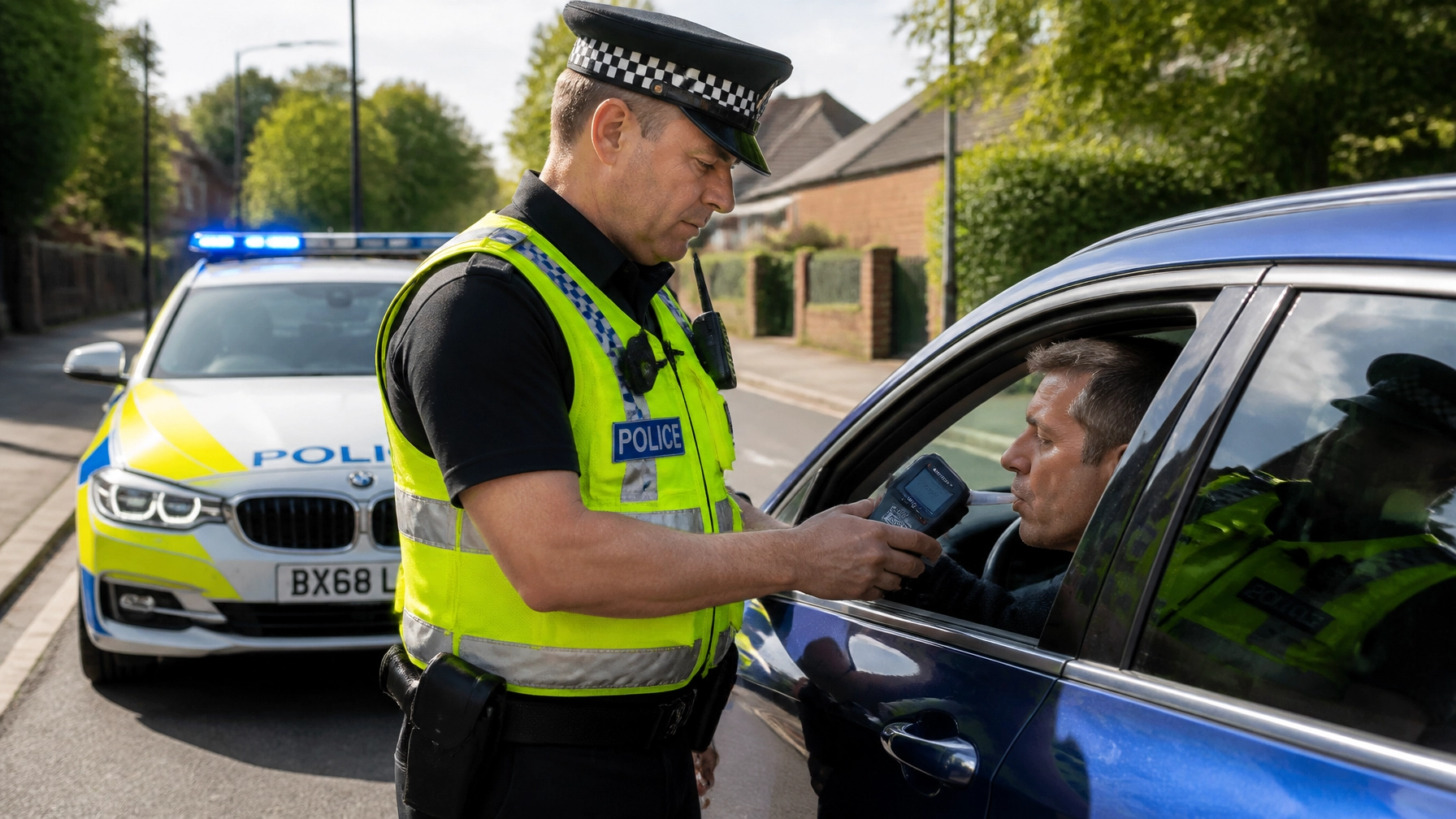
The landscape of British road safety is undergoing a significant transformation this month as police forces in southern England launch a pioneering trial of the world's first roadside breathalyser designed to detect nitrous oxide. For years, the substance commonly known as laughing gas or "NOS" has presented a unique challenge for law enforcement. Unlike alcohol or cannabis, there has been no quick, reliable method for officers to prove a driver is under the influence of nitrous oxide at the side of the road. This technological gap has often left police with their hands tied, even when the signs of impairment are obvious. Now, a joint operation between Hampshire and Isle of Wight Constabulary and Thames Valley Police aims to close that loophole for good.
Nitrous oxide was reclassified as a Class C drug in November 2023, making possession for the purpose of inhalation a criminal offence. Despite this change in the law, the use of the gas behind the wheel has remained a growing concern. Young drivers, in particular, are frequently seen with the distinctive silver canisters, often inhaling the gas while parked or, more dangerously, while in motion. The effects of the gas are rapid and intense, causing a brief feeling of euphoria but also dizziness, blurred vision, and a loss of coordination. In the high-stakes environment of a public road, these symptoms can be fatal. The current trial, which is set to run until early June, represents the first real effort to bring science-based enforcement to this specific form of drug driving.
The Mechanics of the Nitrous Oxide Detection Trial
The technology at the heart of this trial has been developed by Respira Technologies, building on extensive academic research conducted at Vrije Universiteit Amsterdam. The device itself is a portable, handheld unit that functions much like a traditional alcohol breathalyser. However, its internal sensors are finely tuned to detect the specific chemical signatures of nitrous oxide in a person’s breath. One of the most significant hurdles in developing such a device was the short half-life of the gas in the human body. Nitrous oxide is processed quickly, meaning any test must be administered shortly after the substance has been inhaled to provide an accurate reading.
During the current trial period, officers are testing the device’s ability to identify use within a two-period window after inhalation. This timeframe is critical for roadside enforcement, as it covers the most dangerous period of impairment following use. When a driver is stopped and suspected of using the gas, they are asked to provide a breath sample into the device. The technology then processes the sample in real-time, delivering a result within minutes. This speed is essential for maintaining the flow of traffic and ensuring that officers can quickly determine whether further action, such as a blood test at a police station, is required.
The trial is not just about the technology itself but also about the practicalities of using it in the field. Officers are evaluating how the device stands up to the rigours of daily police work, including its durability in various weather conditions and the ease with which data can be recorded for evidence. By deploying the units across various locations in Hampshire and the Thames Valley, the forces are gathering a wide range of data points. This information will be vital in determining whether the device is ready for a wider rollout across the United Kingdom. If successful, the trial could provide the blueprint for a national strategy to combat nitrous oxide use on the roads.
Rising Risks and the Legal Response to Drug Driving
The decision to trial this technology comes against a backdrop of increasing concern regarding drug-related road accidents. While traditional drink driving has seen a long-term decline due to social pressure and strict enforcement, drug driving has proven more resilient and harder to track. Nitrous oxide, once seen as a "legal high," has transitioned into a significant public health and safety issue. The littering of silver canisters in car parks and on street corners is a visible reminder of how prevalent the habit has become. For the police, the challenge has always been one of evidence. Without a roadside test, proving impairment often relies on subjective observations, which can be difficult to uphold in a court of law.
The reclassification of nitrous oxide as a Class C drug was a clear signal from the government that the substance is no longer being treated as a harmless party trick. Under the current legislation, those found in possession of the gas for inhalation can face up to two years in prison, while those involved in its supply can face up to fourteen years. When it comes to driving, the penalties are even more severe. A conviction for drug driving can lead to a minimum twelve-month driving ban, an unlimited fine, and a criminal record. In the most tragic cases, where drug driving leads to a fatality, the maximum penalty is life imprisonment.
Despite these heavy penalties, the lack of a reliable roadside test has acted as a barrier to prosecution. Many drivers have operated under the false impression that they are "safe" from detection if they choose laughing gas over alcohol or other drugs. This trial aims to shatter that illusion. By providing officers with a scientific tool that produces immediate results, the police are sending a message that no form of impairment will be tolerated on British roads. The trial is also serving as a data-gathering exercise to understand the scale of the problem. Early reports from the field suggest that the presence of the device alone is acting as a deterrent, as drivers become aware that the police now have the means to catch them.
Future Implications for Road Safety in the United Kingdom
If the results from the southern England trial are positive, the implications for road safety across the UK could be profound. A successful rollout would mean that every traffic officer in the country could eventually be equipped with the means to detect nitrous oxide. This would bring enforcement of the gas in line with alcohol and cannabis, creating a more comprehensive safety net for the public. The data collected during this period will be closely analysed by the Home Office and the Department for Transport to determine the next steps for national implementation.
Beyond the immediate legal consequences for individual drivers, the introduction of this technology could lead to a shift in public perception. Much like the breathalyser changed the social acceptability of drink driving in the 1960s and 70s, a roadside NOS test could help to de-normalise the use of laughing gas in vehicles. Public awareness campaigns often struggle to change behaviour when there is no perceived risk of getting caught. By making the risk of detection real and immediate, the authorities hope to encourage young people to think twice before using the gas, especially if they have access to a vehicle.
As we look toward the conclusion of the trial in June 2026, the focus will remain on the reliability and legal standing of the breathalyser’s results. For the technology to be truly effective, it must be able to withstand the scrutiny of the judicial system. This means ensuring that the readings are accurate enough to be used as primary evidence or at least as a robust basis for further testing. The success of this trial represents a major step forward in the ongoing effort to keep British roads among the safest in the world. By embracing innovation and responding to emerging threats, law enforcement is demonstrating its commitment to protecting all road users from the dangers of drug-impaired driving.