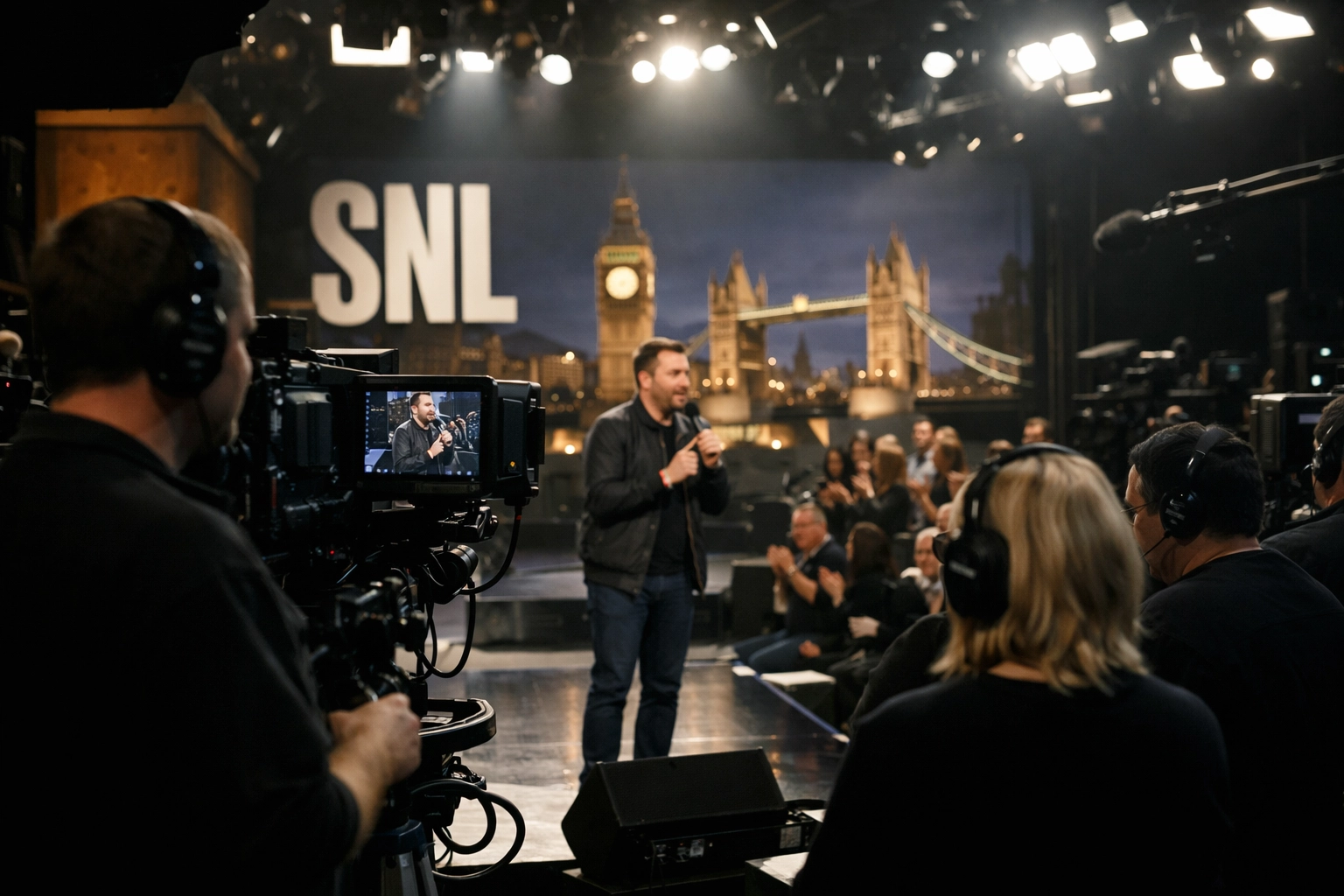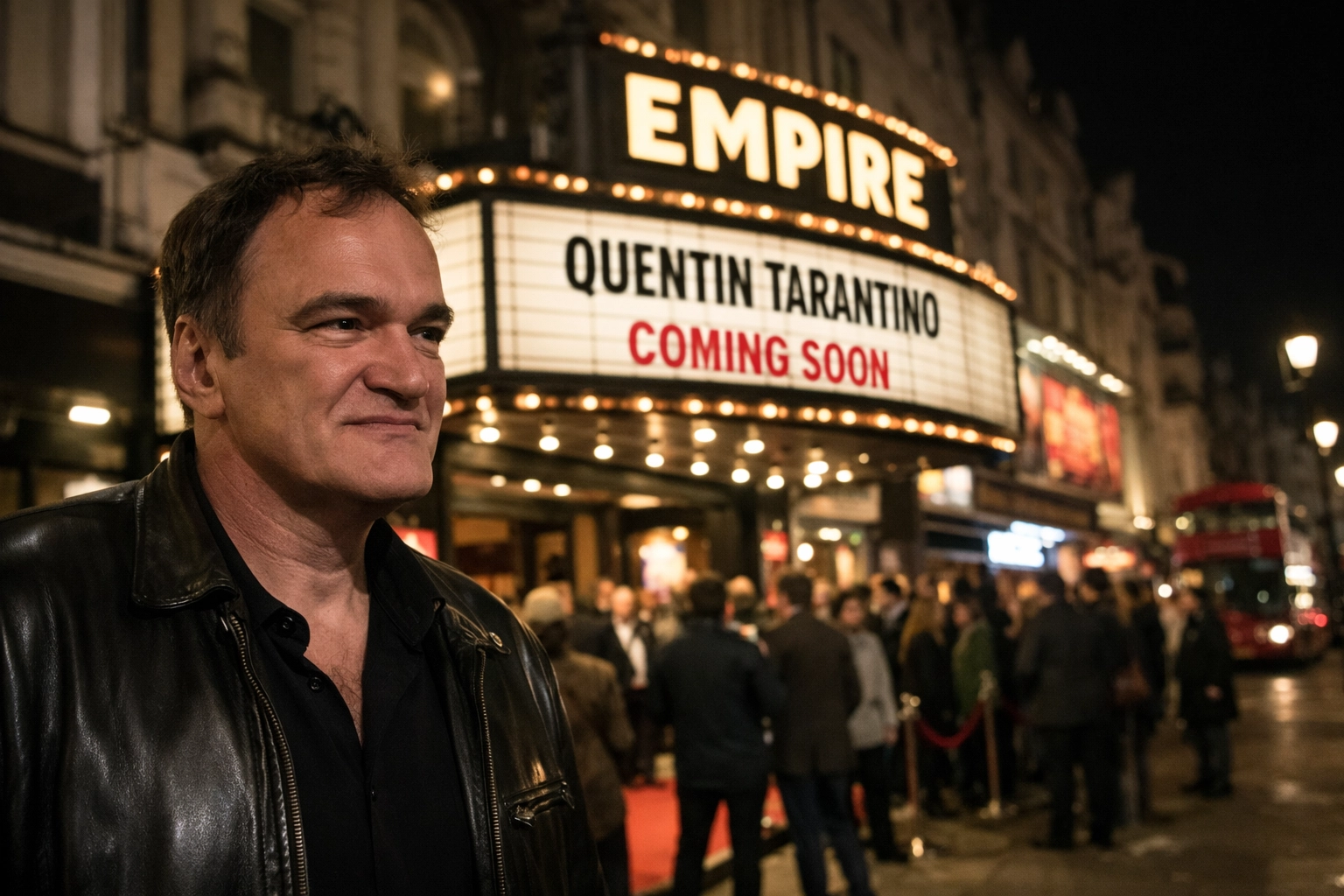
Quentin Tarantino is officially trading the director’s chair for the stage as he prepares for a multi-year residency in London.
The acclaimed filmmaker has confirmed his West End debut with an original production titled 'The Popinjay Cavalier'.
Scheduled to open in early 2027, the move marks a significant departure for a creator synonymous with modern American cinema.
Tarantino is expected to relocate to the UK capital for at least eighteen months to oversee the project’s development and execution.
This commitment represents one of the most high-profile artistic migrations to the West End in recent history.
The production is being handled by Sonia Friedman Productions, the powerhouse behind some of the most successful stage shows of the last decade.
Sony Pictures Entertainment is also a primary partner, indicating a significant corporate backing for the theatrical venture.
Unlike his previous cinematic works, 'The Popinjay Cavalier' is not based on any existing Tarantino intellectual property.
It is described as a standalone period comedy farce that will test the director's ability to command a live audience.
Industry analysts suggest the move could redefine the relationship between Hollywood’s elite and the British stage.
A Shift from Celluloid to Center Stage
The transition from a controlled film set to the unpredictable nature of live theatre is a calculated risk for Tarantino.
He has long expressed an interest in the "theatricality" of dialogue, a trait that has defined his filmography since the early 1990s.
In London, he will find a theatrical infrastructure that supports large-scale, high-concept productions.
Tarantino’s residency is expected to involve a deep immersion into the local creative community.
He has indicated that he plans to spend nearly two years in the city, focusing entirely on the play’s success.
This timeframe suggests a rigorous rehearsal process and a potentially long-running engagement.
The West End has a storied history of welcoming Hollywood directors, but few have committed to such a lengthy stay.
For Tarantino, the move is reportedly about capturing the "energy of the room" that cinema often lacks.
He has noted that in comedy, the audience functions as a live character whose reactions dictate the pace of the show.
This visceral connection is the primary driver behind his temporary abandonment of the film studio.
The relocation also signals a vote of confidence in London’s status as a global leader in the performing arts.
Despite economic pressures, the West End continues to attract the world’s most significant creative talents.
Tarantino’s presence is anticipated to generate a substantial boost for the local hospitality and tourism sectors.
Ticketing platforms are already preparing for unprecedented demand when the box office eventually opens.
The director’s loyal global fanbase is expected to travel specifically to see his first foray into live drama.
The Mechanics of the Popinjay Cavalier
The play itself is set in 1830s Europe, a period characterized by significant social upheaval and romanticism.
It is described as a "sweeping celebration of theatre" involving complex layers of deception and disguise.
The farce genre requires precise physical comedy and impeccable timing, a new challenge for the director.
While Tarantino is known for sharp dialogue, the 1830s setting offers a different linguistic palette.
The "Popinjay" of the title likely refers to a character given to vain displays or empty chatter, a classic trope of European comedy.
This fits within Tarantino’s history of creating verbose, often self-important characters.
Sonia Friedman’s involvement ensures the production will have the highest possible technical and creative standards.
Friedman has a reputation for managing complex, star-driven shows that achieve both critical and commercial success.
The partnership with Sony Pictures suggests that the play is being viewed as more than just a stage show.
The 1830s setting will require elaborate costume and set design to transport the audience to post-Napoleonic Europe.
Observers expect the director’s signature visual flair to manifest in the play's staging and lighting.
Though casting has not been finalized, the project is expected to attract high-profile Hollywood and West End talent.
Tarantino has hinted at seeking a "major star" for the lead role of the cavalier.
The production will likely serve as a masterclass in the intersection of cinematic storytelling and theatrical tradition.
Sony’s backing also points toward a potential for the play to be filmed for a limited digital or cinematic release later.
However, Tarantino has emphasized that the primary experience must be live and unrepeatable.
The High Stakes of a London Residency
The timing of this debut is particularly relevant to the ongoing discussion regarding Tarantino’s retirement.
He has famously maintained that he will retire from filmmaking after his tenth feature.
'The Popinjay Cavalier' could serve as a pivotal bridge between his film career and a future in other mediums.
The director has stated that if the play is a success, he may adapt it as his final cinematic work.
This would make the West End residency the literal blueprint for his "Tenth Film."
Conversely, if the play fails to find an audience, Tarantino has suggested he might "be done very quickly."
This creates a high-stakes environment for everyone involved in the early 2027 opening.
The project is an experiment in brand extension for one of the world’s most recognizable directorial names.
It also highlights a growing trend of film studios investing in live entertainment to diversify their portfolios.
The West End stands to gain a permanent piece of cultural history if the play lives up to its immense hype.
Critics are already questioning how Tarantino's use of violence and non-linear narrative will translate to the stage.
Stage farces typically rely on a linear progression of escalating chaos, which may clash with his usual style.
However, his ability to subvert genre expectations is exactly what his audience expects.
The relocation to London allows him to work away from the immediate pressures of the Hollywood studio system.
It provides a sanctuary for artistic experimentation that is increasingly rare in modern filmmaking.
As the 2027 premiere approaches, the global arts community remains focused on this unprecedented cross-over.
The "Tarantino effect" is poised to dominate the West End conversation for the foreseeable future.
For now, the director is focused on the transition from the lens to the limelight.