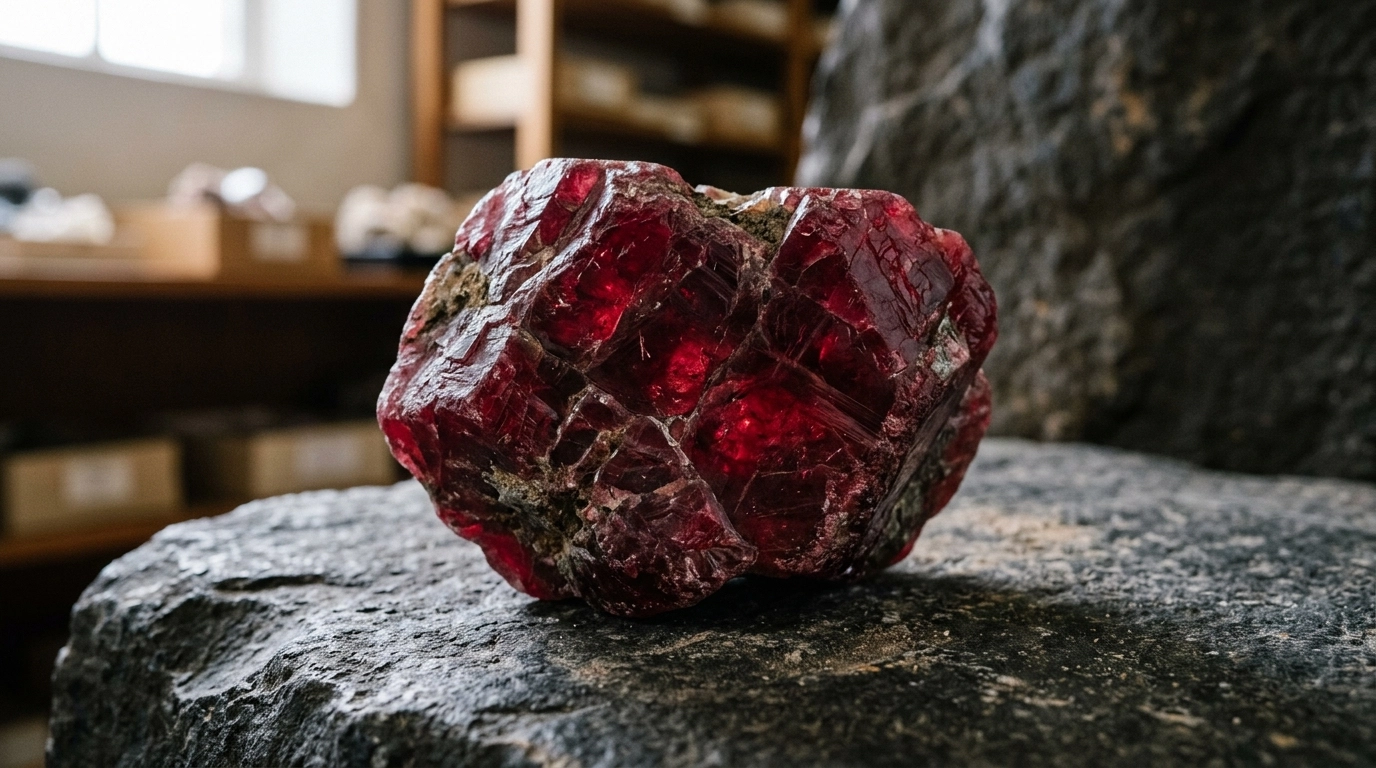
Miners in the rugged terrain of northern Myanmar have unearthed a gemstone of such staggering proportions that it has sent ripples through the global jewellery industry and the political corridors of Southeast Asia. The ruby, weighing in at approximately 4.8 pounds or 2.2 kilograms, was discovered in the renowned Mogok region, an area famously dubbed the Valley of Rubies. Clocking in at 11,000 carats, this raw specimen is being hailed as the second-largest ruby ever found in the country’s long and storied history of gemstone extraction. However, experts and state officials are already suggesting that while it may not be the heaviest on record, its internal quality and colour saturation could make it the most valuable find in a generation.
The discovery occurred in mid-April 2026, just as the nation was celebrating its traditional New Year festival. The timing of the find has been viewed by local workers as a sign of immense good fortune, though the reality of the gemstone trade in Myanmar remains deeply entangled with the country’s ongoing internal conflicts. The stone was transported under heavy guard to the capital, where it was recently inspected by senior officials. Initial reports describe the ruby as possessing a deep purplish-red hue with distinct yellowish undertones, a combination that is highly sought after by collectors in the Asian market. Despite its massive size, which often leads to significant internal inclusions or “silk,” early assessments suggest a degree of transparency that is rarely seen in stones of this magnitude.
A Stone of Historic Proportions
To understand the significance of an 11,000-carat ruby, one must look back at the history of Myanmar’s mineral wealth. The current record-holder for weight is a massive 21,450-carat stone discovered in 1996. While that earlier find remains twice the weight of the new discovery, it was famously marred by poor clarity and a brownish tint that limited its use in high-end jewellery. The 2026 ruby, by contrast, is being praised for its superior colour grade. In the world of gemstones, weight is often secondary to the “four Cs”: colour, clarity, cut, and carat: and this five-pound giant appears to have the first two in abundance.
The Mogok Stone Tract, where the ruby was found, is a geological anomaly. Formed millions of years ago during the collision of the Indian and Eurasian tectonic plates, the region’s marble-hosted rubies are considered the finest in the world. The intense heat and pressure of this mountain-building event forced chromium into the limestone, creating the vibrant red colour that defines a true ruby. Because these stones are born in marble, they typically contain very little iron, which allows them to fluoresce under ultraviolet light, giving them a “glow” that rubies from other regions, such as Thailand or East Africa, often lack. This new 11,000-carat find is expected to exhibit that same legendary fluorescence, further driving up its potential auction value.
The practicalities of handling a five-pound gemstone are immense. Most rubies used in engagement rings or necklaces are less than five carats. A stone that is 2,200 times that size presents a unique challenge for lapidaries. Cutting such a stone requires a master’s touch; one wrong move could shatter the crystal along internal stress lines, turning a multi-million-pound asset into a pile of red gravel. It is likely that the stone will remain in its rough state for some time while experts use advanced 3D scanning and imaging technology to map the internal structure before a single blade touches the surface.
The Valley of Rubies Under Pressure
Mogok has been a centre of gemstone mining for over 800 years, yet the conditions for the people living and working there have rarely been more precarious. The region is located in the upper Mandalay division, a territory that has become a flashpoint in the civil war that has gripped Myanmar since the 2021 military coup. Control of the mines is a strategic necessity for both the military junta and the various ethnic armed organisations and People’s Defence Forces operating in the hills. The revenue generated from a single stone like the 11,000-carat ruby can fund military operations for months, making the mines high-value targets.
The mining process itself is gruelling and dangerous. While some large-scale industrial mines operate with heavy machinery, much of the work in Mogok is still done by hand or with small-scale hydraulic equipment. During the monsoon season, the risk of landslides increases exponentially as the red earth becomes saturated and unstable. Thousands of independent miners, known locally as “kadayasee,” search through the tailings of larger mines, hoping to find a small scrap of red gold that could change their lives. For these workers, the discovery of a giant ruby is a double-edged sword; while it brings attention to the region’s wealth, it also brings increased military presence and tighter restrictions on movement.
Recent reports suggest that control of the specific area where the ruby was unearthed has changed hands multiple times in the last year. Guerrilla forces have frequently targeted the supply lines leading into Mogok, attempting to choke off the military’s access to gemstone revenue. The fact that this stone was successfully extracted and moved to a government-controlled facility indicates the level of security the junta is willing to deploy to protect its most valuable assets. The image of the country’s leadership examining the stone serves as a potent piece of propaganda, intended to signal stability and continued control over the nation’s natural resources despite the chaos of the conflict.
Global Trade and the Ethics of Red Gold
The international community’s reaction to the discovery of the five-pound ruby is likely to be complicated. Myanmar produces approximately 90 per cent of the world’s rubies, but for many years, these stones have been labelled “blood rubies” by human rights organisations. The concern is that the gemstone trade provides a vital financial lifeline to a regime accused of widespread human rights abuses and the suppression of democratic movements. In response, many Western nations, including the United States and members of the European Union, have implemented sanctions that specifically target the state-owned Myanmar Gems Enterprise.
These sanctions mean that the new 11,000-carat ruby cannot be legally sold in most Western markets. High-end auction houses in London and New York are prohibited from handling stones that originate from state-controlled mines in Myanmar. However, the global demand for rubies remains high, and much of the trade has shifted to markets in Thailand, China, and the Middle East. Bangkok, in particular, serves as the world’s primary hub for gemstone processing. Once a stone is cut and polished in a third country, its origin can become difficult to trace, allowing it to enter the global supply chain through various loopholes.
For the ethical consumer and the luxury brand, this discovery highlights the ongoing difficulty of sourcing gemstones responsibly. While some companies have committed to full transparency, the opaque nature of the Myanmar gemstone market makes it nearly impossible to guarantee that a ruby did not fund armed conflict. Human rights groups continue to urge a total boycott of Myanmar rubies, arguing that as long as the military controls the mines, every purchase contributes to the violence. As this massive ruby prepares for its eventual sale, it stands as a symbol of both the incredible natural beauty of the Myanmar landscape and the deep, enduring scars of its political reality. The “red gold” of Mogok remains one of the world’s most coveted prizes, but its true cost is often measured in more than just carats.