








Nairobi is currently grappling with a humanitarian crisis of staggering proportions as relentless torrential rains have left the Kenyan capital largely submerged, claiming dozens of lives and displacing thousands of families.
What began as a seasonal transition in early March 2026 has rapidly descended into a national emergency, with the death toll officially rising to 83 as of Monday morning. The scale of the devastation has exposed the fragility of the city’s infrastructure and highlighted the harrowing human interest stories emerging from the most vulnerable informal settlements.
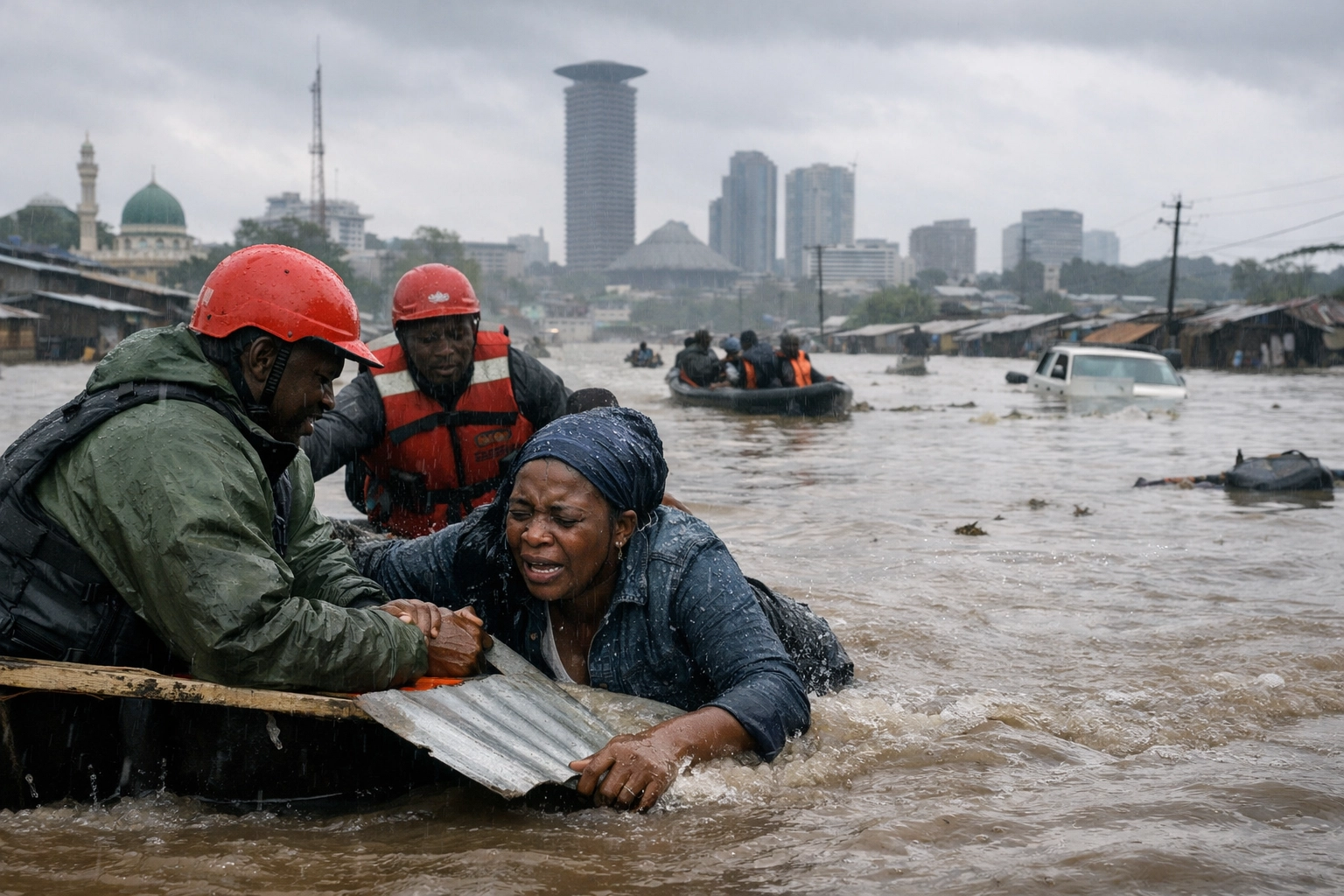
The meteorological data paints a grim picture of the atmospheric conditions that triggered the catastrophe. Within a single 24-hour window between March 6 and March 7, Nairobi recorded approximately 112mm of rainfall. This figure is not merely a high statistic; it represents a volume of water that exceeds the average total rainfall typically expected for the entire month of March. This sudden deluge overwhelmed the city’s drainage systems almost instantly, causing the Nairobi River to burst its banks and send a wall of water through residential areas that had little to no time to evacuate.
While the physical damage to property is extensive, the primary focus remains on the mounting loss of life. Authorities have confirmed that the majority of the casualties occurred within the Nairobi metropolitan area, where at least 36 people have died. The causes of death vary from the immediate force of flash floods to the silent danger of electrocution from downed power lines in flooded streets. Across the wider nation, the Rift Valley, Eastern region, and Nyanza have also reported significant fatalities, bringing the total count to at least 83 individuals who have perished in less than three weeks.
The escalating toll on Kenya’s capital city
The geography of the tragedy is unevenly distributed, falling most heavily on those least equipped to withstand it. In the densely populated neighbourhoods of Mukuru, Kibra, and Mathare, the floods have been nothing short of apocalyptic. These informal settlements, often built on marginal land near waterways, saw homes constructed of timber and corrugated iron simply swept away by the rising current. The human cost here is measured not just in lives lost, but in the total erasure of livelihoods.
For the 2,600 families now displaced nationwide, the immediate priority is survival. In Nairobi alone, 3,500 households have been directly impacted, forced to seek refuge in schools, churches, and temporary government shelters. These are the locations where the untold stories of the crisis are being recorded. Parents speak of holding children above their heads as the water rose to chest height in the middle of the night. Small business owners describe watching their entire inventory: often their only source of wealth: disappear into the muddy torrent within minutes.
The displacement has created a secondary crisis involving sanitation and public health. With sewage systems overflowing and mixing with floodwaters, the risk of water-borne diseases such as cholera has reached a critical level. Humanitarian agencies, including the Kenya Red Cross, are working around the clock to provide clean drinking water and basic medical supplies, but the sheer volume of those in need is stretching resources to their absolute limit. The loss of personal belongings, including identification documents and school materials, adds a layer of long-term complication for families already living on the economic brink.
Untold stories from the heart of the informal settlements
Beyond the statistics of rainfall and displacement lie the human interest stories that define the resilience of the Kenyan spirit. In Huruma and parts of Embakasi, community members formed human chains to pull neighbours from submerged vehicles and collapsing structures. These acts of bravery often go unrecorded in official government briefings but represent the primary line of defence during the initial hours of the flash floods. Many of these rescuers are themselves victims of the flood, having lost their own homes before turning their attention to others.
The economic impact on the informal sector is profound. Nairobi’s "kadogo" economy: a system of small-scale daily purchases: relies on the mobility of traders and the accessibility of local kiosks. With many of these kiosks destroyed or inaccessible, the supply chain for basic food items has been severed for thousands. This has led to a spike in the price of essential goods in the areas least affected, further punishing those who have already lost everything. The untold stories of these micro-entrepreneurs reveal a community facing a long and difficult road to financial recovery.
Furthermore, the impact on education cannot be overstated. Dozens of schools across the capital have been repurposed as emergency shelters, while others remain under several feet of water. For many children in these settlements, school is not only a place of learning but also a primary source of nutrition through school feeding programmes. With these facilities closed or occupied, a generation of vulnerable youth is facing an interruption in both their education and their food security. The psychological trauma of the event, particularly for children who witnessed the destruction of their homes, is a quiet crisis that will require years of intervention.
A city at a standstill and the urgent road to recovery
The infrastructure of Nairobi, a regional hub for business and transport, has been significantly compromised by the flooding. Major arterial routes, including Mombasa Road, the Thika Superhighway, and Uhuru Highway, were rendered impassable, effectively cutting off parts of the city from the central business district. The disruption extended to the skies, with Jomo Kenyatta International Airport (JKIA) experiencing significant operational challenges. Several flights were diverted to Mombasa as the airport’s drainage failed to cope with the intensity of the storm, highlighting the vulnerability of even the most critical national assets.
Energy security has also been hit, with widespread power outages reported across the city. Kenya Power has been forced to disconnect electricity in several submerged neighbourhoods to prevent further cases of electrocution, leaving thousands in the dark as they attempt to salvage what remains of their property. The contamination of the city’s water supply remains a top concern for the Water Resources Authority, which has issued stern warnings regarding the consumption of untreated water.
As the rains are forecasted to wane by March 24, the focus is shifting toward the potential for further disaster. A high alert remains in place for residents living downstream of the Nairobi Dam. Rising water levels have put the structural integrity of the dam under immense pressure, leading to precautionary notices for hundreds of residents to relocate immediately. The Kenya Defence Forces (KDF) and National Police Force have been deployed to assist with these mandatory evacuations, but the logistical challenge of moving such a large population on short notice is immense.
The road to recovery for Nairobi will involve more than just rebuilding physical structures. It will require a fundamental reassessment of urban planning and disaster preparedness in the face of increasingly volatile weather patterns. The 2026 floods have demonstrated that the current drainage infrastructure is inadequate for the climate realities of the mid-21st century. While the immediate humanitarian response is the priority, the long-term untold stories of this event will likely focus on whether this tragedy serves as a catalyst for genuine systemic change in how the city protects its most vulnerable citizens.