It is a summer day in July 1986. The sun is shining over Fulham, and 25-year-old Suzy Lamplugh is doing what she does best: working hard as an estate agent. She grabs her keys, hops into her white Ford Fiesta, and heads out to show a house to a potential client. She’s expected back at the office for a late lunch, but that lunch never happens. In fact, nothing like it ever happens again. Suzy Lamplugh simply vanishes into thin air, leaving behind a mystery that has gripped the nation for four decades.
As we mark the 40th anniversary of her disappearance, the case remains one of the most haunting entries in the archives of independent news uk. It is a story that redefined how we think about personal safety and one of those untold stories that refuses to be forgotten, despite the passage of time and the changing face of London.
The Day That Changed Everything in Fulham
On 28 July 1986, the world was a very different place. There were no mobile phones to track, no GPS in cars, and no Ring doorbells capturing every movement on a suburban street. Personal safety was often taken for granted. Suzy was an outgoing, professional woman working for Sturgis and Sons. Her diary for that Monday afternoon had a simple entry: "12.45 Mr. Kipper, 37 Shorrolds Road."
Witnesses later reported seeing Suzy waiting outside the property. Some mentioned seeing her talking to a man who looked smart, perhaps in his late 20s or early 30s. He was carrying a briefcase. It looked like a standard, everyday business transaction. But when Suzy failed to return to the office, her colleagues started to worry. By 6:45 PM that evening, her car was discovered about a mile away from the property on Shorrolds Road. It was parked poorly: wheels on the kerb, doors unlocked, and her ignition keys missing. Her handbag was still in the car, but Suzy was gone.
The police response was massive. It was one of the largest missing person investigations in the history of the Metropolitan Police. They searched the River Thames, they combed through derelict buildings, and they interviewed thousands of people. Yet, from the very beginning, the trail went cold. The identity of "Mr. Kipper" became the central puzzle piece that never quite fitted anywhere. Was it a real name? A nickname? Or a calculated alias used by someone who knew exactly how to stay off the radar?
The lack of forensic evidence in 1986 was a significant hurdle. Without the DNA technology we have today, the police were forced to rely on shoe-leather detective work and witness statements that were often contradictory. The Shorrolds Road house itself yielded no clues of a struggle. It was as if Suzy had walked away from her car and stepped out of existence.
The Shadows of Mr. Kipper and John Cannan
Over the next forty years, the investigation shifted from a missing person case to a murder inquiry, even though a body was never found. In 1993, Suzy was officially declared dead, a heartbreaking moment for her parents, Diana and Paul Lamplugh, who had spent every waking hour searching for their daughter.
The name that has most frequently been linked to the case is John Cannan. A convicted kidnapper and murderer, Cannan was already serving a life sentence for the killing of Shirley Banks in 1987. The similarities between the cases were hard to ignore. Cannan was known to use the nickname "Kipper" while in prison, and he bore a resemblance to the photofits released by the police in the 80s.
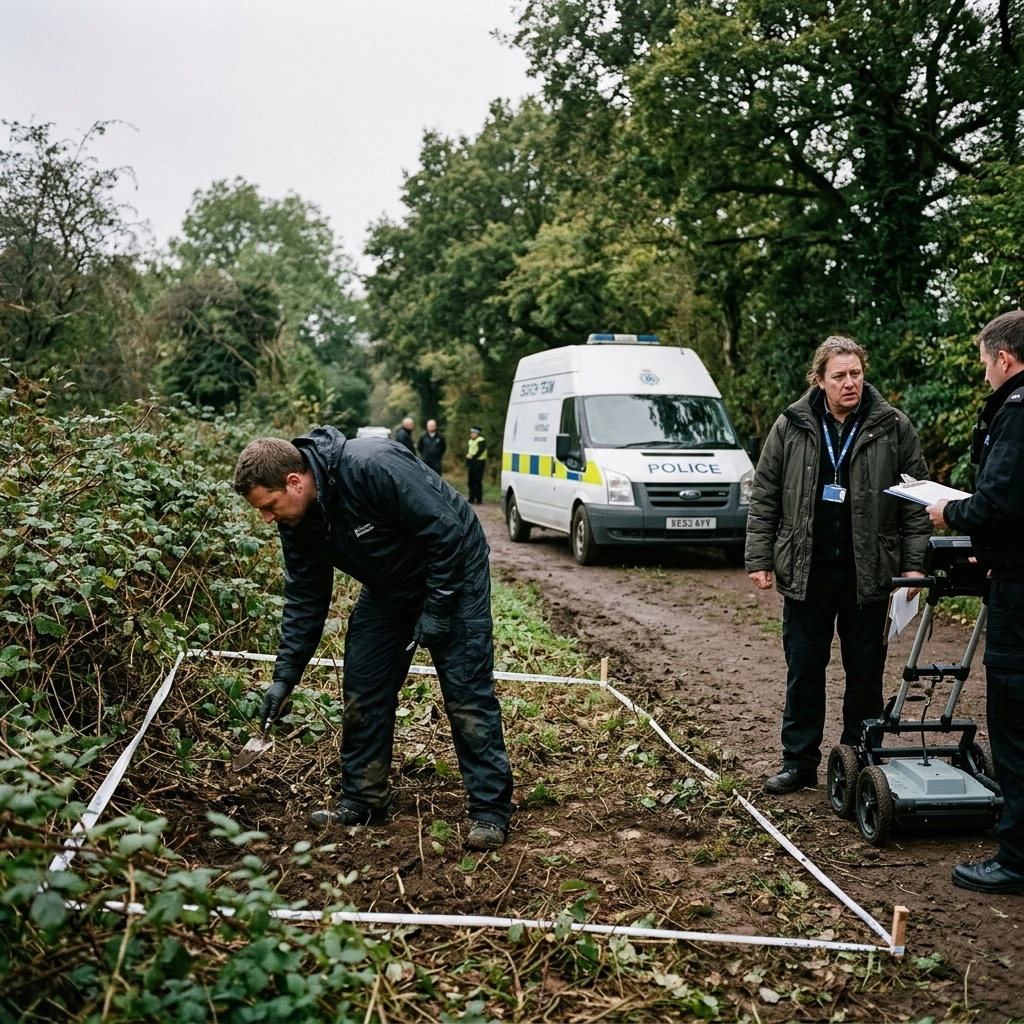
Despite the circumstantial links, the evidence was never enough to charge him. The police conducted several high-profile searches based on tips regarding Cannan’s history. In 2018, they spent days excavating the garden of a house in Sutton Coldfield that had once belonged to Cannan's mother. They found nothing. A year later, they searched a site in Pershore. Again, nothing. The frustration for the investigators and the family was palpable. Each new lead felt like it might finally be the one to break the silence, only to end in another dead end.
John Cannan recently died in prison, taking whatever secrets he held to the grave. His death felt like a door slamming shut on one of the most promising avenues of the investigation. While the police have never officially closed the file, the chances of a forensic breakthrough diminish with every passing year. The "Mr. Kipper" mystery remains a placeholder for a predator who managed to outsmart a generation of detectives. It is one of those untold stories where the ending is missing, leaving a void that four decades of speculation haven't been able to fill.
A Legacy of Safety and the Search for Answers
While the search for Suzy’s remains has been a story of tragedy and frustration, her disappearance sparked a revolution in how we approach personal safety in the UK. In the wake of the tragedy, Diana and Paul Lamplugh founded the Suzy Lamplugh Trust. They were determined that no other family should have to endure the agony of a disappearance that might have been prevented with better safety protocols.
Before 1986, the concept of "lone working" safety was almost non-existent. People went to appointments, met strangers, and travelled alone without a second thought or a check-in system. The Trust changed all of that. They lobbied for better licensing for minicabs, pushed for the Protection from Harassment Act, and created training programmes for businesses across the country. Today, if you work as an estate agent or in any role that involves meeting the public alone, the safety procedures you follow are likely a direct result of Suzy’s legacy.
Her parents’ tireless campaigning turned their private grief into a public service. They became the face of a movement, and though they both passed away without ever knowing what happened to their daughter, their impact on British society is immeasurable. They ensured that Suzy’s name stood for something more than just a cold case; it stood for the right of every person to be safe at work and in their daily lives.
As we look back 40 years later, the mystery of the Fulham estate agent remains a stark reminder of the fragility of safety. The Shorrolds Road property has seen many tenants since 1986, and the streets of London have changed beyond recognition, but the question still lingers in the air every July: where is Suzy?
The case continues to be a focal point for those interested in independent news uk and the history of British crime. It serves as a reminder that behind every headline and every police file is a human being: a daughter, a friend, and a colleague who went to work one day and never came home. The search for the truth may have spanned four decades, but for those who remember Suzy, the hope for an answer never truly fades.
The disappearance of Suzy Lamplugh is a complex narrative of missed opportunities, forensic limitations, and the enduring strength of a family’s love. While the physical evidence may be lost to time, the lessons learned from that summer day in 1986 continue to protect people every single day. The mystery remains, but the legacy is clear.