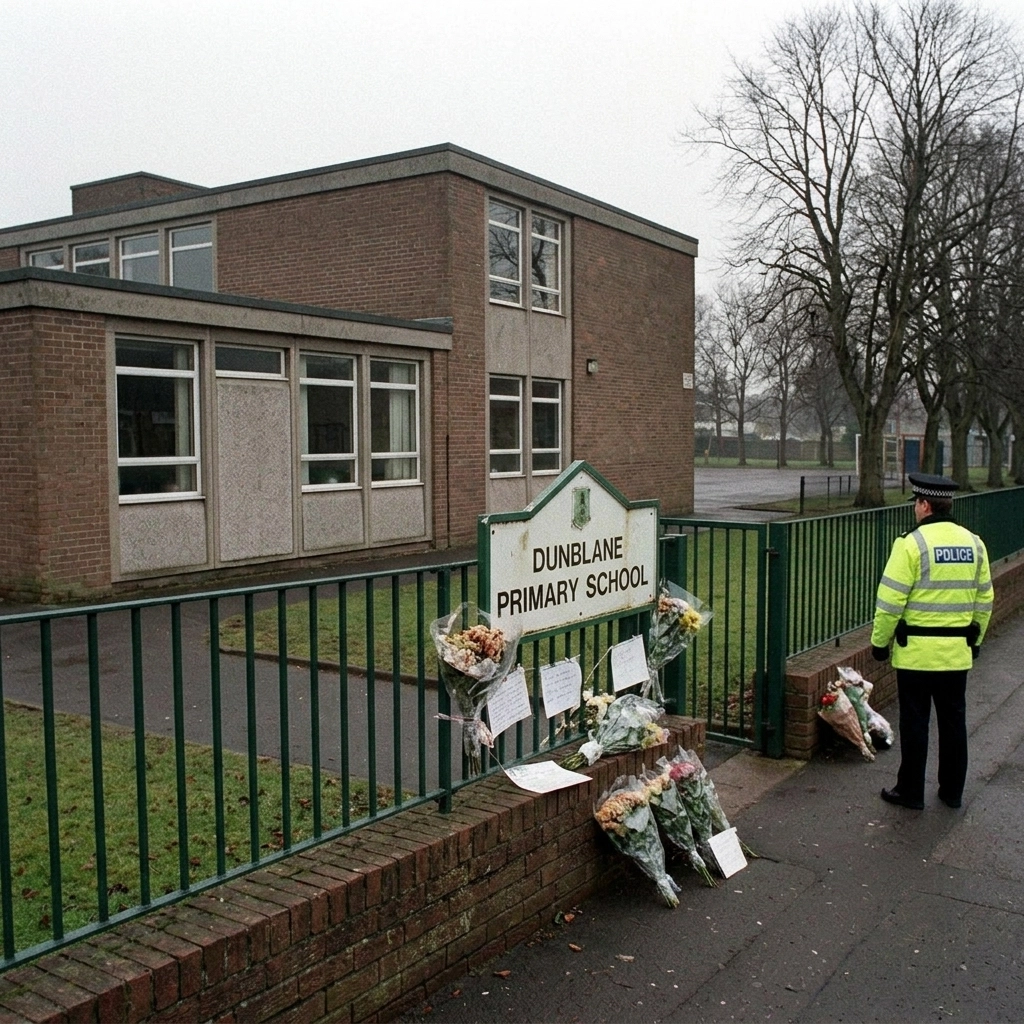
It is a morning that remains etched into the collective memory of the British public, even three decades later. On March 13, 1996, the small, quiet town of Dunblane, nestled near Stirling in Scotland, became the site of a tragedy so profound that it fundamentally reshaped the nation’s identity and its laws. Today, as we mark the 30th anniversary of that darkest school day, we look back not just at the horror of the event, but at the incredible resilience of a community and the lasting legacy of peace it fought to secure.
For those who provide independent news uk, telling these stories is about more than just relaying facts; it is about honouring the victims and understanding how a single moment can alter the course of history. The Dunblane massacre was not just a local tragedy; it was a turning point for the entire United Kingdom. It forced a conversation about safety, childhood, and the responsibilities of a civilised society that continues to resonate in 2026.
The Morning That Changed Everything
The day started like any other Wednesday. In the gym at Dunblane Primary School, a class of five and six-year-olds: Primary One: were preparing for their physical education lesson. They were children at the very beginning of their journeys, full of the energy and innocence that defines early childhood. Their teacher, Gwen Mayor, was a dedicated professional who was loved by her pupils and respected by her peers.
Shortly after 9:30 am, the peace was shattered. Thomas Hamilton, a local man known to the community but harbouring a deep-seated resentment, entered the school gym armed with four legally owned handguns. In a span of just three or four minutes, he unleashed a wave of violence that left the nation reeling. Sixteen children and Gwen Mayor were killed. Another 15 people, including 12 children and three adults, were injured. Hamilton then turned one of the weapons on himself, ending the immediate threat but leaving behind a vacuum of grief that seemed impossible to fill.
The immediate aftermath was a blur of shock and disbelief. Dunblane, a place where people felt safe and where everyone knew their neighbours, was suddenly the focus of global attention. The images of small shoes left outside the school and the bewildered faces of parents waiting for news became symbols of a national trauma. In those early hours, there were many untold stories of bravery: of teachers who shielded their students and emergency responders who faced a scene of unimaginable devastation with professionalism and grace.
The town of Dunblane was forced into a spotlight it never asked for. Yet, even in the depths of their sorrow, the people of the town showed a quiet dignity that would eventually become their hallmark. They didn't just mourn; they began to ask how such a thing could have been allowed to happen in the first place. This was a community that refused to let their tragedy be the end of the story.
A Legacy Forged in Grief and Action
In the months following the massacre, the grief of Dunblane transformed into a powerful, grassroots movement for change. This was the birth of the Snowdrop Campaign, named after the only flower in bloom at the time of the shooting. Led by the families of the victims and local residents, the campaign sought a total ban on the private ownership of handguns in the UK. They weren't interested in half-measures or political compromises; they wanted to ensure that no other parent would ever have to go through what they had endured.
The petition for a ban gathered over 750,000 signatures, a staggering number that demonstrated the strength of feeling across the country. It was a clear message to the government that the public’s sense of safety was more important than the interests of gun lobbyists or hobbyists. The Cullen Inquiry, which investigated the circumstances of the shooting, provided a platform for these voices, and the subsequent political response was swift.
The UK Government, under both John Major and later Tony Blair, introduced two successive Firearm (Amendment) Acts. By 1997, the private ownership of almost all handguns was banned in Great Britain. It was one of the strictest pieces of gun legislation in the world. Looking back from 30 years away, the impact of these laws is undeniable. While no law can stop every act of violence, the mass shooting at Dunblane remains the deadliest in British history, and the legislative wall built in its wake has served as a powerful deterrent.
The success of the Snowdrop Campaign is a testament to what can be achieved when a community unites behind a common goal. It is one of those untold stories of political triumph born from personal tragedy. For many who follow independent news uk, the story of Dunblane is often cited as the gold standard for how a country should react to a national crisis: with empathy, swift action, and a commitment to the common good.
Beyond the laws, the legacy of Dunblane is also found in the way we think about school safety and the protection of children. It prompted a complete review of security measures in educational settings across the country, ensuring that schools remained sanctuaries for learning and growth. The ripple effects of that day are still felt in the protocols and standards we use today, many of which are detailed in our own editorial-standards-ethics-policy regarding how we handle sensitive national tragedies.
Remembering the Thirty-Year Journey
As we reach this 30-year milestone, the focus naturally shifts to those who have lived with the weight of that day every single day since. For the survivors and the families of the victims, the passage of time doesn't necessarily heal the wound; it simply changes how they carry it. Rachael Irvine, whose brother Ross was among the children killed, has often spoken about how the loss is "a wound that's there forever." Now in her late 20s, her perspective represents a generation that grew up in the shadow of the massacre but chose to turn their pain into purpose.
Rachael joined the Gun Control Network, an organisation established in the wake of Dunblane to continue campaigning for safety and transparency. Her story, like many others from Dunblane, is one of quiet resilience. It’s about finding the strength to go to work, to raise families, and to contribute to the community while holding the memory of those lost close to the heart. On this anniversary, the people of Dunblane will likely mark the day as they always have: with candles in windows, private moments of reflection, and a communal sense of support.
The town itself has changed, of course. The children who survived are now adults with their own lives and careers. The school has been rebuilt and renovated, continuing its mission to educate the next generation. But the memorial garden remains a focal point: a place of peace and stillness where the names of the sixteen children and Gwen Mayor are etched in stone. It is a reminder that while the news cycle moves on, the history of a place is permanent.
For the rest of the UK, the 30th anniversary is an opportunity to reflect on our values. It’s a moment to appreciate the safety we often take for granted and to acknowledge the courage of those who fought to make the country safer. At NowPWR, we believe in telling these stories with the respect and depth they deserve. Whether you are reading about the history of the town on our about page or looking for more in-depth coverage in our inside section, the goal is always to provide a platform for stories that matter.
In the end, the story of Dunblane is not just about a dark day in 1996. It is about the thirty years that followed. It is about a town that refused to be defined solely by its trauma and a nation that listened to the cries of its people. As we look at the quiet Scottish town today, we see a place of strength, a place of memory, and above all, a place that reminded the world that even in the face of the unthinkable, there is always a path toward hope and change.
The memory of those lost in Dunblane will never fade. Their names are a permanent part of our national story, a reminder of why we strive for a world where every child can go to school without fear. As the candles flicker in the windows of Stirling and beyond tonight, we stand in solidarity with a community that gave the UK its hardest lesson and its most enduring legacy of peace.