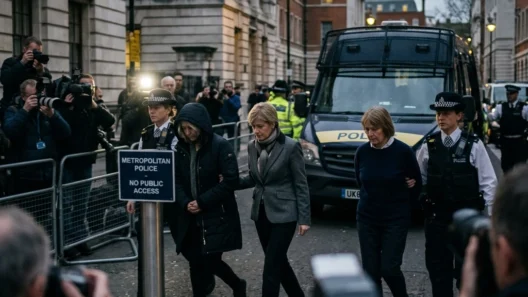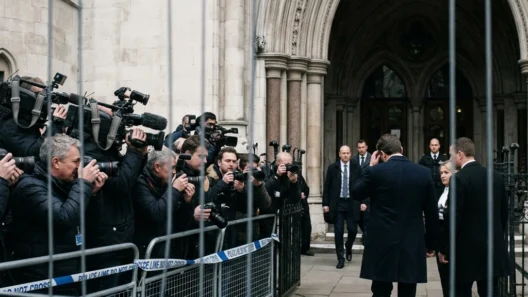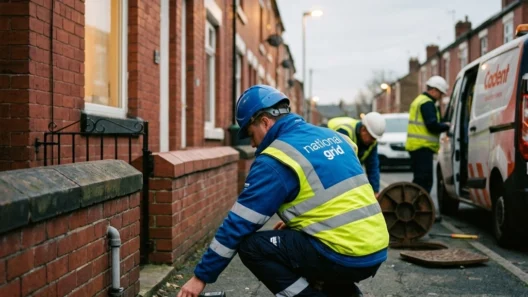
If you live in a busy corner of London or any major British city, the sight of a high-vis jacket and a liveried van isn't exactly unusual. But when those vans belong to Immigration Enforcement, the atmosphere changes instantly. There is a specific kind of tension that fills the air when a raid begins. People stop, phones come out, and the "spectacle" of law enforcement takes centre stage. We see the dramatic entries at car washes and the sudden closures of nail bars, and for many watching, the assumption is simple: an arrest has been made, so a deportation must follow.
However, the reality on the ground is far more complex and often ends in an anticlimax that the cameras rarely capture. Behind the scenes of these highly publicised operations, a significant number of the people detained are back on the street within hours or days. At NowPWR, we believe in digging into the untold stories that lie beneath the surface of these headlines. To understand why this happens, we have to look past the drama and into the legal and logistical maze that defines the UK’s current immigration system.
The High-Stakes Game of Cat and Mouse
Take, for example, the recent activity at a Lewisham car wash and a nail bar in Catford. These are the kinds of local businesses that become the frontline for enforcement. One minute, there is the smell of soap and the sound of jet washes; the next, officers are conducting interviews and checking papers. In both of these instances, arrests were made under the glare of public observation. Yet, shortly after the dust settled, many of those taken away were released.
This isn't necessarily because the Home Office made a mistake in the initial arrest. Often, the arrests are legally sound based on a person’s current status. The issue arises the moment the individual enters the administrative system. For independent news UK, reporting on these events means looking at why the "success" of a raid is so often temporary. In many cases, those arrested in places like Lewisham or Catford are found to have pending applications or legal grounds to stay that haven't been fully processed.
The spectacle of the raid serves a political purpose: it shows "action": but the legal reality is a different beast entirely. When an officer enters a business, they are looking for immediate evidence of illegal working. But once that person is in custody, they have rights. They have access to legal counsel, and they have the right to challenge their detention. In a system already buckling under the weight of backlogs, these challenges often lead to a swift release while their case is re-evaluated.
The Red Tape Keeping People on the Streets
The logistical hurdles are perhaps the biggest reason why people "walk free" after a high-profile raid. First, there is the issue of detention space. The UK has a limited number of beds in its immigration removal centres. If a raid is successful and twenty people are arrested, but there are only five beds available across the country, the Home Office has to make a choice. They must prioritise who stays in custody based on perceived risk or the likelihood of imminent removal. If someone doesn't fit the high-priority criteria, they are often released on immigration bail.
Then there is the matter of travel documents. You cannot deport someone without a valid passport or an emergency travel document issued by their home country. This is where many cases hit a brick wall. If a country of origin refuses to recognise a person as their citizen, or simply takes months to respond to a request for documents, the UK cannot legally hold that person indefinitely. The law is quite clear: if there is no "realistic prospect of removal within a reasonable timeframe," the individual must be released.
In the Catford nail bar raid, this was exactly the scenario for several individuals. Despite the initial arrest, the lack of immediate pathways to removal meant that detention was no longer legally justifiable. This creates a cycle that can feel frustrating for everyone involved: the public, the officers, and the migrants themselves. It’s a story that NowPWR finds recurring across the country, highlighting a system that is often better at starting a process than finishing it.
Furthermore, legal barriers like modern slavery claims or asylum applications often emerge the moment someone is detained. In businesses like car washes and nail bars, there is a high prevalence of potential exploitation. If a person claims they have been trafficked or forced to work against their will, the government is legally obligated to investigate these claims before any deportation can occur. These investigations take time: often months or even years: during which the person is usually allowed to live in the community.
Beyond the Headlines and Into the Reality
Understanding the gap between an arrest and a removal requires a look at the human rights framework that governs the UK. While the rhetoric around immigration is often heated, the legal protections in place are robust. Judicial reviews are a common tool used by solicitors to halt removals at the last minute. Even if a flight is booked and a person is at the airport, a single legal intervention can stop the process in its tracks. This is why the images of people being led away in handcuffs in Lewisham don't always tell the whole story.
As an independent news UK outlet, we see that the focus on "raids" often ignores the broader systemic failures. It is much easier to stage a raid on a local car wash than it is to fix the administrative backlogs at the Home Office or negotiate complex bilateral return agreements with other nations. The raids are a visible symptom of a policy that prioritises enforcement theatre over long-term solutions.
For the residents of areas like Catford and Lewisham, these raids become part of the local scenery, but the outcomes remain hidden. We see the vans, but we don't see the release papers signed in a detention centre three days later. We don't see the years of legal limbo that follow. By focusing on these untold stories, we can begin to see the immigration system not as a series of successful or failed "busts," but as a complex, often contradictory piece of national machinery.
The individuals who "walk free" are not necessarily escaping the system; they are often becoming even more deeply entangled in its slower, more bureaucratic parts. They live on bail, reporting weekly to centres, unable to work legally, yet unable to be removed. It is a state of permanent temporariness that serves neither the taxpayer nor the individual.
The reality of immigration raids in 2026 is one of high-octane starts and grindingly slow finishes. While the public might see the arrest as the end of a story, for the legal system and the individuals involved, it is often just the beginning of a very long and expensive chapter. The barriers to removal: ranging from a lack of detention space to complex human rights claims: ensure that for every dramatic door-knock, there is likely a quiet release just around the corner. Focusing on these nuances is the only way to truly understand the state of enforcement in Britain today.