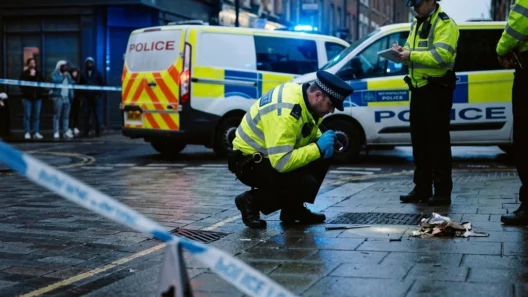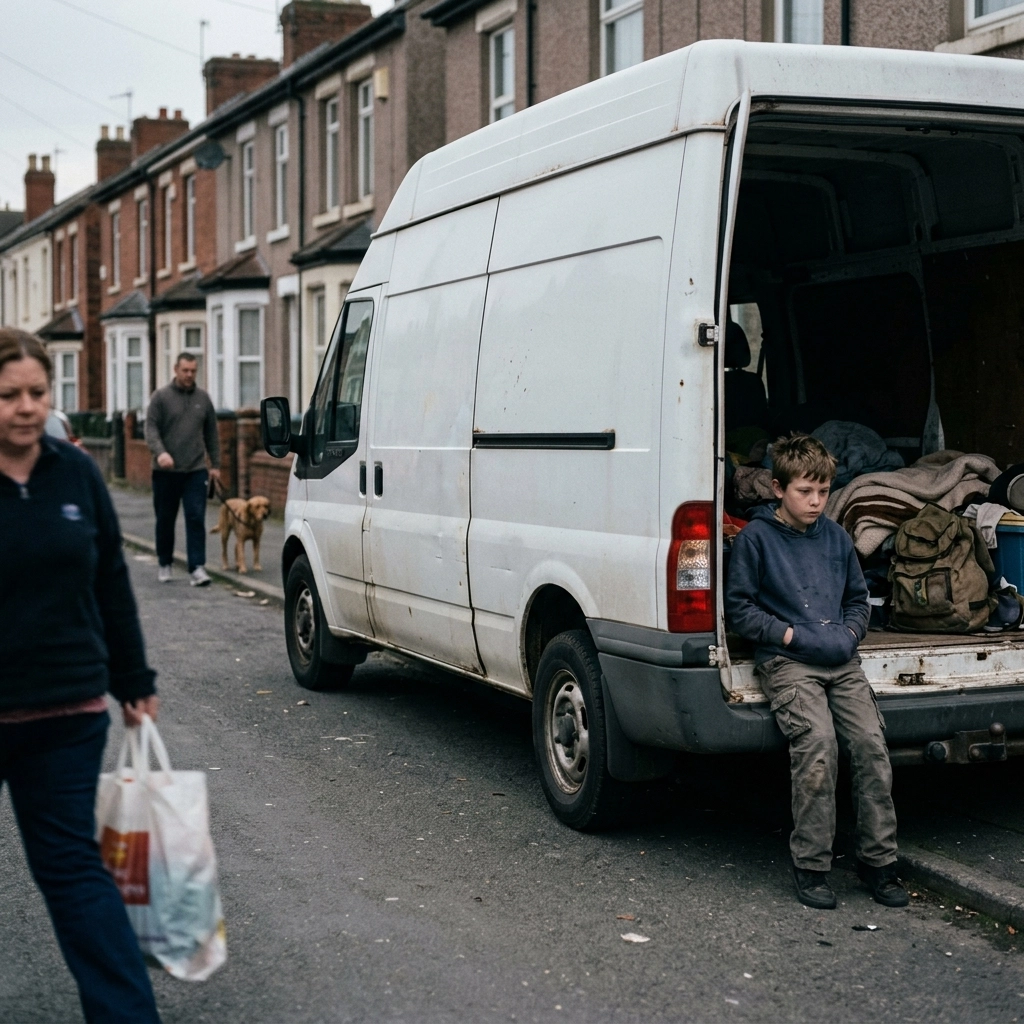
It was a Tuesday morning, not much different from any other in a quiet suburb on the outskirts of the city. The bins had been collected, the school run was over, and the usual hum of a working week was settling in. But for the residents of one particular cul-de-sac, the peace was shattered by the sharp blue flicker of emergency lights. At the centre of the commotion was a battered white transit van that had been parked in the same spot for nearly two years. When the doors were finally prised open, a story began to emerge that has left the local community, and the wider country, reeling.
Inside that van was a nine-year-old boy. He had been there since 2024. As the news broke, the questions quickly piled up. How does a child spend two years living in a vehicle on a residential street without anyone raising the alarm? This is not just a story about a crime. It is also a story about a collective failure of the system and the silence of a community that had stopped looking at its own doorstep. At NowPWR, we focus on untold stories and the human impact behind the headlines, with the perspective of independent news uk.
The Ghost on the Kerbside
The van itself was an unremarkable sight. Rust-streaked and sporting a flat tyre that had long since surrendered to the weight of the vehicle, it had become part of the urban furniture. Neighbours reported that they assumed it belonged to a tradesman or was simply an abandoned eyesore waiting for the council to tow it away. In reality, it was a prison. The interior had been modified with makeshift insulation and a small bedding area, shielded from the outside world by thick, grimy curtains and stacks of old newspapers.
The boy, whose identity remains protected for legal reasons, had effectively become a ghost. Having been kept in the vehicle since he was seven years old, he had missed the formative years of his education and social development. The sheer logistics of his existence are harrowing to contemplate. How was he fed? How did he stay warm during the biting winters of 2024 and 2025? Preliminary reports suggest he was rarely allowed out during daylight hours, with his movements restricted to late-night ventures when the street was deserted.
This level of isolation in a densely populated area highlights a growing trend of social fragmentation. We live in an era where we are more connected than ever digitally, yet we often know less about the person living ten feet away from us than we do about a stranger on the other side of the world. The "boy in the van" lived in the peripheral vision of dozens of people, yet he remained invisible because no one felt able, or concerned enough, to look closer. It is a stark reminder that when we stop engaging with our physical communities, the most vulnerable people are often the ones who pay the price.
A Systemic Fracture in Social Care
While it is easy to point fingers at the neighbours, the deeper failure lies within the institutions designed to protect children. The investigation into this case has already begun to pull back the curtain on a series of missed opportunities. The boy had reportedly been "home-schooled," a status that often allows children to slip under the radar of local education authorities if not properly monitored. When a child is removed from the school system, the safety net becomes incredibly thin, relying almost entirely on the honesty of the caregivers.
There are also significant questions regarding the funding and resources of local authorities. The disparity in how different regions handle child welfare is a well-documented issue. In many cases, social workers are juggling caseloads that are physically impossible to manage, leading to a "firefighting" approach where only the most immediate, visible crises receive attention. A child hidden in a van, not making any noise and not appearing in any police reports, simply does not trigger the system's alarms.
Furthermore, the rise in poverty and the cost-of-living crisis across the UK has pushed many families into "off-grid" living situations. While most of these are choices made by adults, children often have no say in the matter. When families fall through the cracks of the economy, they often fall through the cracks of the social care system as well. The boy in the van was the victim of a system that is too stretched to look for those who are not asking to be found.
Moving From Silence to Action
The recovery of the boy has sparked a wave of guilt and reflection within the local area. Floral tributes and toys have been left near the spot where the van once stood, a common but perhaps hollow gesture after years of inaction. The real work now begins in the courts and within the social services departments that must explain how this was allowed to happen. More importantly, the boy now faces a long and incredibly difficult journey toward some semblance of a normal life. The psychological trauma of being confined to a small, dark space for two years at such a pivotal age cannot be overstated.
As a society, we have to ask ourselves what we want our communities to look like. Do we want to live in places where we "mind our own business" to the point of negligence, or do we want to foster environments where looking out for one another is the norm? This case has shown that the "untold stories" aren't always in far-flung locations; sometimes, they are parked right in front of our houses. It takes a certain level of bravery to report a suspicion, and many people fear being wrong or being seen as a "grass." However, the alternative: as we have seen this week: is far worse.
At NowPWR, we are committed to following this story as it develops, ensuring that the focus remains on the systemic changes needed to prevent a repeat of this tragedy. We approach sensitive topics with care, clarity and respect. The boy in the van is safe now, but the silence that kept him there still exists in many parts of our country. Breaking that silence is the first step towards a safer society for every child.
The investigation into the guardians of the boy is ongoing, with several individuals currently in custody. As the legal process unfolds, more details about the boy's life during those two years will likely emerge. It is our hope that this tragedy serves as a catalyst for reform in how home-schooling is monitored and how social services are funded across the UK. Until then, we must all keep our eyes open to the world around us, ensuring that no other child is left to live a life of invisibility in the middle of a crowded street.