For decades, the hilltop palaces of Damascus were more than just residences; they were the physical embodiment of an iron fist. Cloaked in secrecy and guarded by layers of elite security, these structures loomed over the Syrian capital as symbols of a regime that many believed would never budge. But as history has shown us time and again, when the end comes for a long-standing dictatorship, it doesn't just tap on the door: it kicks it down and invites the neighbours in for tea.
The collapse of the Assad regime on 8 December 2024 was a moment of pure, unadulterated chaos that felt like a fever dream for the Syrian people. After fifty years of rule under the Assad family, the sudden departure of Bashar al-Assad to Russia left a power vacuum that was filled almost instantly by a mix of jubilation, disbelief, and a very literal ransacking of the state's most private sanctuaries. For those of us following the independent news uk landscape, the images coming out of Damascus weren't just news; they were a visceral deep dive into the crumbling of an era.
The Golden Keys to a Crumbling Kingdom
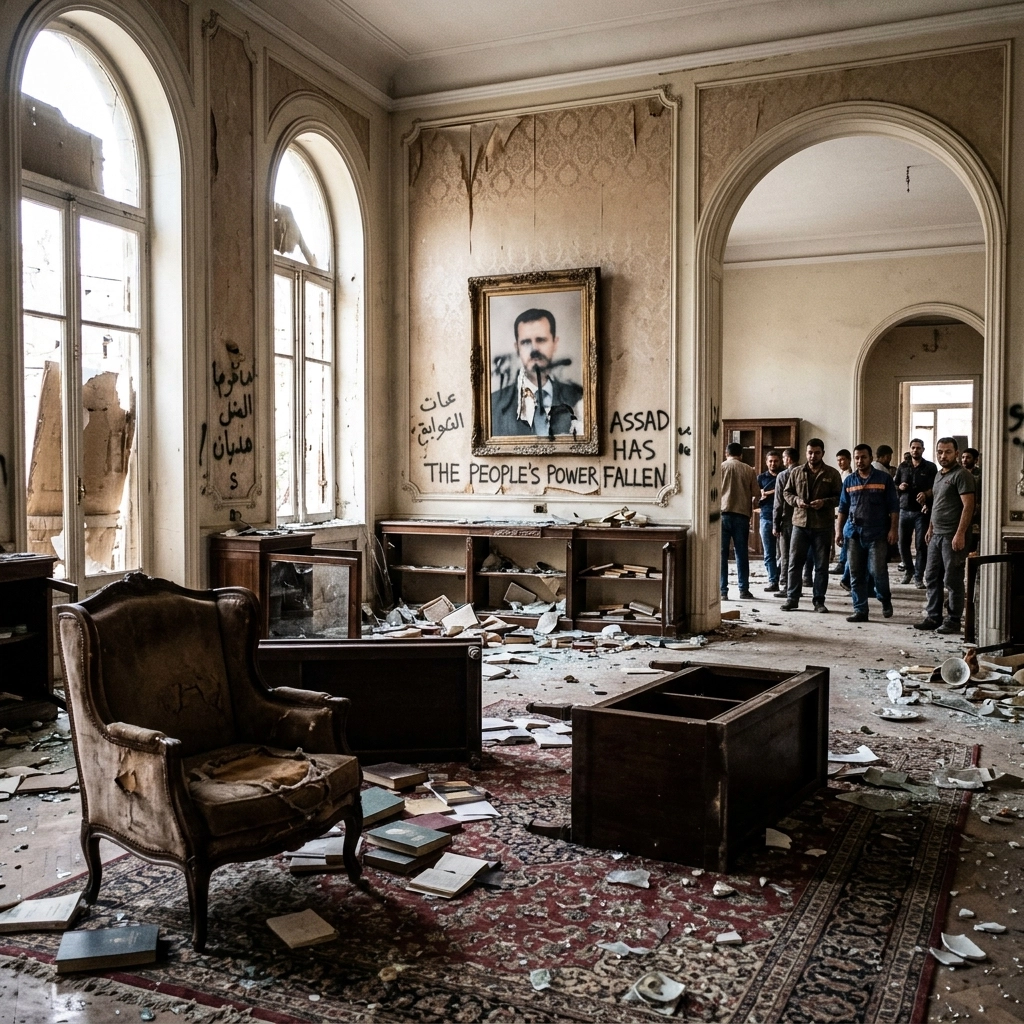
Walking through the gates of a dictator’s villa is a bit like entering a museum of bad taste and excessive paranoia. When the people of Damascus finally breached the walls of Assad’s primary residence, they didn't find a statesman’s modest home. They found a fortress of opulence that felt entirely disconnected from the reality of a country ravaged by over a decade of civil war. This wasn't just a house; it was a psychological playground.
Inside, the scene was one of absolute disarray. Opposition forces and ordinary citizens wandered through rooms that were, until hours prior, the most dangerous places on earth to visit without an invitation. The contrast was staggering. In one room, you had wood-paneled libraries and Italian marble; in the next, the hasty remains of a life interrupted. Reports describe finding master bedrooms with Jacuzzis still half-full of water, or electric keypads and bullet-proof glass that failed to protect the regime from the sheer weight of public action needed and external pressure.
The witty irony of the situation wasn't lost on the looters. People who had spent years struggling to find bread or fuel were suddenly lounging on French-designed sofas, flipping through the dictator's personal library. It was the ultimate "open house," though the previous tenants had neglected to clean up before they left. The bold reality was that the fear which had kept these gates shut for fifty years had evaporated in a matter of days. As the rebels and residents moved from room to room, the "untold stories" of the regime's inner circle began to spill out. Personal correspondence, high-end electronics, and even half-eaten meals were left behind, painting a picture of a family that truly believed they had more time.
The Ghost of Saydnaya and Untold Truths
While the villas provided a look at the regime's vanity, the real heart of the story lay in the darker corners of the state’s infrastructure. As the palaces were being picked clean of their gold-plated fixtures, another set of gates was being forced open: the prisons. Places like Saydnaya, often referred to by human rights organisations as a "human slaughterhouse," were finally exposed to the light of day. This is where the narrative shifts from the bold and witty to the deeply somber.
The "untold stories" emerging from these facilities are the ones that will define the legacy of this transition. For years, the regime maintained a facade of order while thousands vanished into a labyrinth of detention centres. When the opposition forces reached these prisons, they found a reality that no amount of palace luxury could mask. The liberation of prisoners: many of whom hadn't seen the sun in years: provided a stark counterpoint to the scenes of looting in the villas. It served as a reminder that the ransacking of the palaces wasn't just about greed; it was about the reclamation of a stolen country.
Independent news outlets have been instrumental in documenting these moments, capturing the raw emotion of families reunited and the grim discovery of what happens when a dictatorship is allowed to operate in total secrecy. The fall of the villas was the theatre; the opening of the prisons was the truth. It highlighted the systemic failure of a government that prioritised bullet-proof glass over the basic human rights of its citizens. The transition from a state of total fear to one of absolute exposure is a process that Syria is still navigating, and the remnants found in those ransacked halls are the first chapters of a new, albeit complicated, history.
A Geopolitical Exit Strategy
How does a regime that survived the Arab Spring and a decade of intense warfare simply "melt away" in a week? The answer lies in a perfect storm of geopolitical shifts. Assad’s primary backers: Russia and Hezbollah: found themselves distracted and drained by their own conflicts. Russia, preoccupied with its ongoing invasion of Ukraine, no longer had the bandwidth or the appetite to prop up a crumbling dictator in Damascus. Meanwhile, Hezbollah’s engagement with Israel had severely hampered its ability to act as the regime’s regional enforcer.
Without his bodyguards, the dictator was just a man in a very large, very expensive house. When the offensive led by Hay'at Tahrir al-Sham (HTS) and the Syrian National Army (SNA) began its rapid sweep through Aleppo and Hama, the Syrian military didn't just lose; they evaporated. Officers abandoned their posts, and soldiers traded their uniforms for civilian clothes, realising that the "eternal" leader was already packing his bags for Moscow.
Assad’s flight to Russia was the final admission of defeat. He was granted asylum, leaving behind a nation to pick through the pieces of his failed experiment in absolute power. The ransacked villa serves as a metaphor for the entire regime: a grand, imposing facade that was surprisingly hollow on the inside. As the dust settles, the focus shifts to what comes next. Transitioning from a decades-long dictatorship to a functional state is an immense challenge. The politics of the region are more volatile than ever, and the groups now holding the keys to the palace have their own complex histories and agendas.
The fall of Assad isn't just a Syrian story; it's a global lesson in the fragility of power. It reminds us that no matter how many bullet-proof doors you install, you cannot lock out the inevitability of change. The untold stories of those who suffered under his rule are finally being heard, and the independent news uk community continues to provide a platform for these voices as they navigate a future without a dictator.
The transition remains precarious. The looting of the villas was a cathartic release, but the hard work of rebuilding a nation: and its institutions: is only just beginning. The images of the ransacked palace will remain a powerful symbol of 2024: a year when one of the world's most entrenched regimes proved to be nothing more than a house of cards, waiting for a breeze to become a gale.
The collapse of the Assad regime marks a definitive turning point in Middle Eastern history. While the immediate aftermath has been characterised by the chaotic reclaiming of state assets and the liberation of political prisoners, the long-term stability of Syria remains an open question. The international community continues to monitor the situation as the new authorities attempt to establish order and address the profound humanitarian needs of a population that has endured decades of repression and conflict.