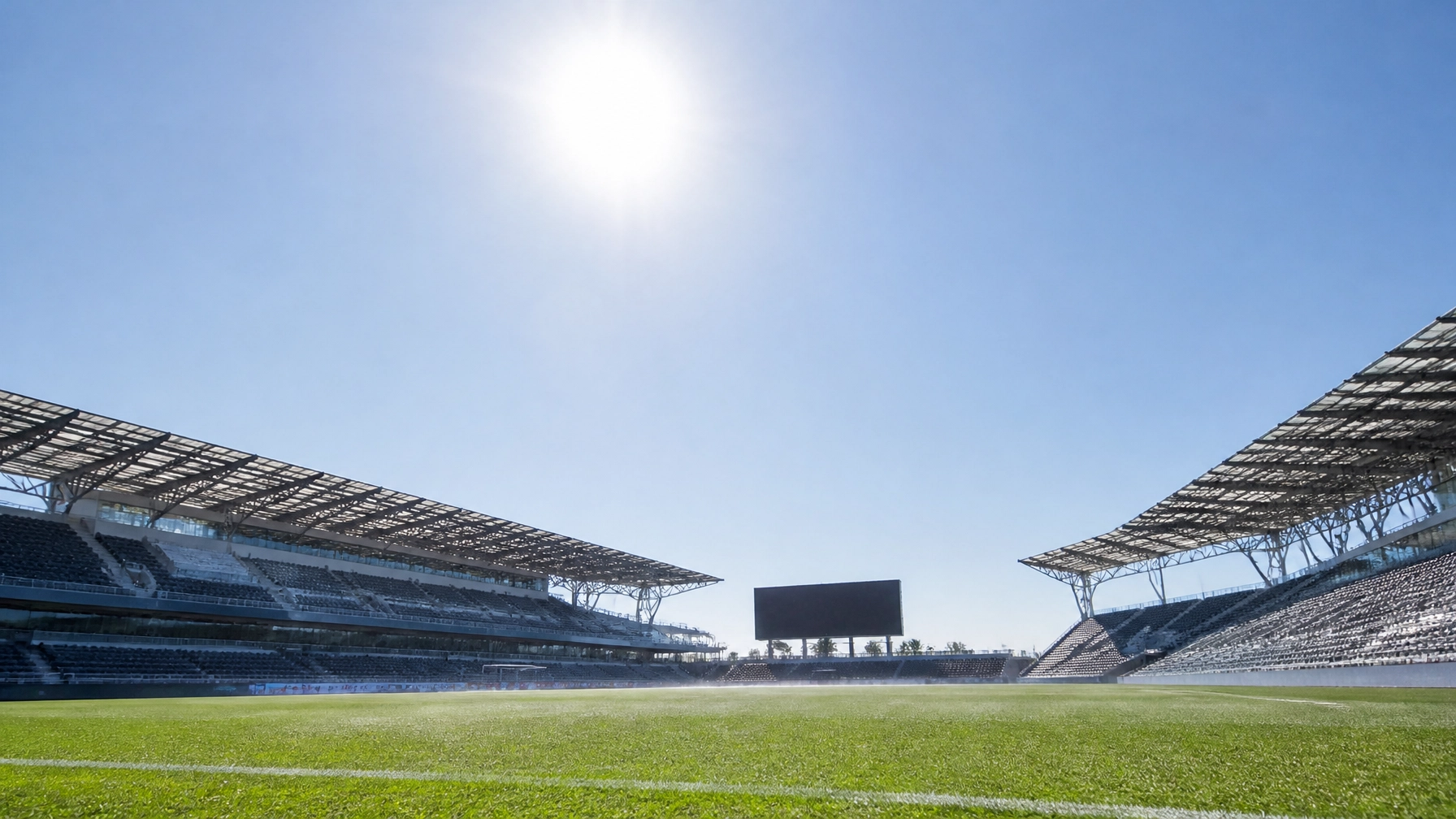
The 2026 FIFA World Cup is set to be the largest in the history of the competition, featuring 48 teams and 104 matches played across three nations: Canada, Mexico, and the United States. While the expansion of the tournament promises a global celebration of football, a new scientific report has highlighted a significant and dangerous threat to the safety of players and spectators alike. Research conducted by the World Weather Attribution group indicates that approximately one quarter of the matches scheduled for the June and July tournament could be played under hazardous levels of heat and humidity. The study suggests that human-induced climate change has already increased the intensity of extreme heat events at the host venues by between 0.7°C and 1°C, creating conditions that were significantly less likely during the last North American World Cup in 1994.
The tournament, which runs from 12 June to 19 July 2026, will see matches held in 16 different host cities ranging from the high altitudes of Mexico City to the humid coastal environments of Miami and Houston. Scientists used the Wet Bulb Globe Temperature (WBGT) index to assess the risk, a metric that combines air temperature, humidity, wind speed, and solar radiation to determine the level of heat stress on the human body. The findings are stark: 14 of the 16 host venues are already situated in regions that exceed safe-play thresholds during the summer months. As global temperatures continue to rise due to the burning of fossil fuels, the probability of dangerous "wet bulb" events has increased dramatically, posing a direct risk of heatstroke and physical exhaustion for elite athletes performing at high intensities.
The Dangerous Physics of Wet Bulb Temperatures
The primary concern for health experts and sports scientists is the combination of high temperatures and high humidity, often referred to as the "wet bulb" effect. When the air is saturated with moisture, the human body's primary cooling mechanism: the evaporation of sweat: becomes significantly less effective. At a certain threshold, the body can no longer dissipate heat, causing the internal core temperature to rise to dangerous levels. The World Weather Attribution study found that roughly 25 per cent of the 104 matches in the 2026 schedule are expected to exceed a WBGT of 26°C. At this level, international player unions and health organisations recommend mandatory cooling breaks to prevent internal overheating.
Even more concerning are the matches projected to exceed 28°C WBGT. FIFPRO, the global union for professional footballers, has previously stated that temperatures reaching this level should trigger the postponement or delay of matches to protect player health. The study identifies at least five matches in the 2026 schedule that are likely to hit this critical danger zone. When players are forced to compete in such conditions, the risk of exertional heatstroke increases, which can lead to organ failure or death if not treated immediately with aggressive cooling measures. For fans, many of whom will be travelling from cooler climates and may not be acclimatised to North American summer heat, the risk of dehydration and heat exhaustion in crowded, sun-exposed stadiums is equally high.
The intensity of these heat events is no longer a natural anomaly. Scientists have concluded that the extreme heat seen across the continent in recent years would have been virtually impossible without the influence of atmospheric warming caused by carbon emissions. Since the late 19th century, the Earth’s average surface temperature has risen by approximately 1.3°C. In the context of a 90-minute football match involving high-speed sprinting and physical contact, even a 1°C increase in environmental temperature can be the difference between a manageable sporting event and a medical emergency. The data shows that the current climate has made the type of heatwaves expected in 2026 much more frequent and more intense than those experienced during the 1994 World Cup.
Infrastructure Gaps and Scheduling Challenges
One of the most significant hurdles facing the 2026 organisers is the lack of climate-controlled infrastructure across the host venues. Of the 16 stadiums selected for the tournament, only three are equipped with full air conditioning. The remaining 13 venues are open-air or partially covered structures that offer little protection from the ambient heat and humidity. This is particularly problematic given that many high-stakes matches, including the final, a third-place playoff, and two quarter-finals, are scheduled to take place in open-air stadiums where temperatures are expected to be at their peak.
The scheduling of matches also compounds the risk. To accommodate global broadcast audiences, particularly those in Europe and Africa, many games are likely to be played during the middle of the day or in the early afternoon. This coincides with the period of maximum solar radiation and the highest daily temperatures. While FIFA has introduced "cooling breaks" in previous tournaments, experts argue that these brief pauses are insufficient when the WBGT exceeds safe limits. The physical demands on players in a modern World Cup are higher than ever, with teams often covering more ground at higher speeds than in previous decades. Competing at this intensity in 30°C plus temperatures with high humidity puts a strain on the cardiovascular system that even the most fit athletes may struggle to sustain.
The geographic spread of the tournament adds another layer of complexity. Players will be required to travel thousands of miles between matches, moving from the relatively mild conditions of Vancouver or Seattle to the sweltering humidity of the American South or the thin, hot air of central Mexico. This constant change in environment makes it difficult for the body to maintain a steady state of acclimatisation. While some teams may choose to set up base camps in hotter regions to prepare, the rigorous travel schedule and the short recovery times between matches in the knockout stages leave little room for the physiological adjustments needed to safely navigate extreme heat.
A Warning for the Future of International Sport
The findings of the 2026 climate report serve as a broader warning about the viability of hosting major summer sporting events in a warming world. Projections indicate that if global temperatures continue to rise at their current rate, nearly 90 per cent of the 2026 host stadiums will face unsafe extreme heat conditions by the middle of the century. This suggests that the 2026 tournament could be the last of its kind in North America to follow the traditional summer format. We are approaching a point where the traditional sporting calendar is no longer compatible with the realities of the global climate, necessitating a radical rethink of how and when international competitions are held.
Future tournaments may be forced to follow the lead of the 2022 World Cup in Qatar, which was moved to the winter months to avoid the life-threatening heat of the Gulf summer. However, shifting the calendar creates significant friction with domestic league schedules and commercial interests. The alternative: investing billions in fully enclosed, air-conditioned stadiums: is both financially prohibitive for many nations and environmentally counterproductive, as the energy required to cool such massive structures contributes further to the carbon emissions driving the problem. The 2026 World Cup will act as a live test case for how international sports federations manage the intersection of elite performance and a hostile environment.
The research also highlights a growing "adaptation gap" in professional sport. While elite teams have access to sophisticated monitoring, hydration strategies, and medical staff, the broader infrastructure of the game: including fan zones, transport links, and open-air seating: remains vulnerable. For the millions of fans expected to attend, the experience of the 2026 World Cup may be defined as much by the search for shade and water as by the action on the pitch. As the tournament approaches, the pressure will be on FIFA and the local organising committees to implement robust heat-action plans that go beyond simple water breaks, including the possibility of flexible kick-off times and enhanced medical facilities at every venue.
The intensity of extreme heat in the 16 host cities has been increased by approximately 0.7°C to 1°C due to human-caused climate change. Currently, 1 in 4 matches is expected to hit a WBGT of 26°C or higher, while 14 of the 16 selected venues already experience conditions that exceed safe-play thresholds. Without a significant shift in how climate risks are managed, the 2026 World Cup stands as a stark example of the challenges facing global sport in an era of unprecedented environmental change.