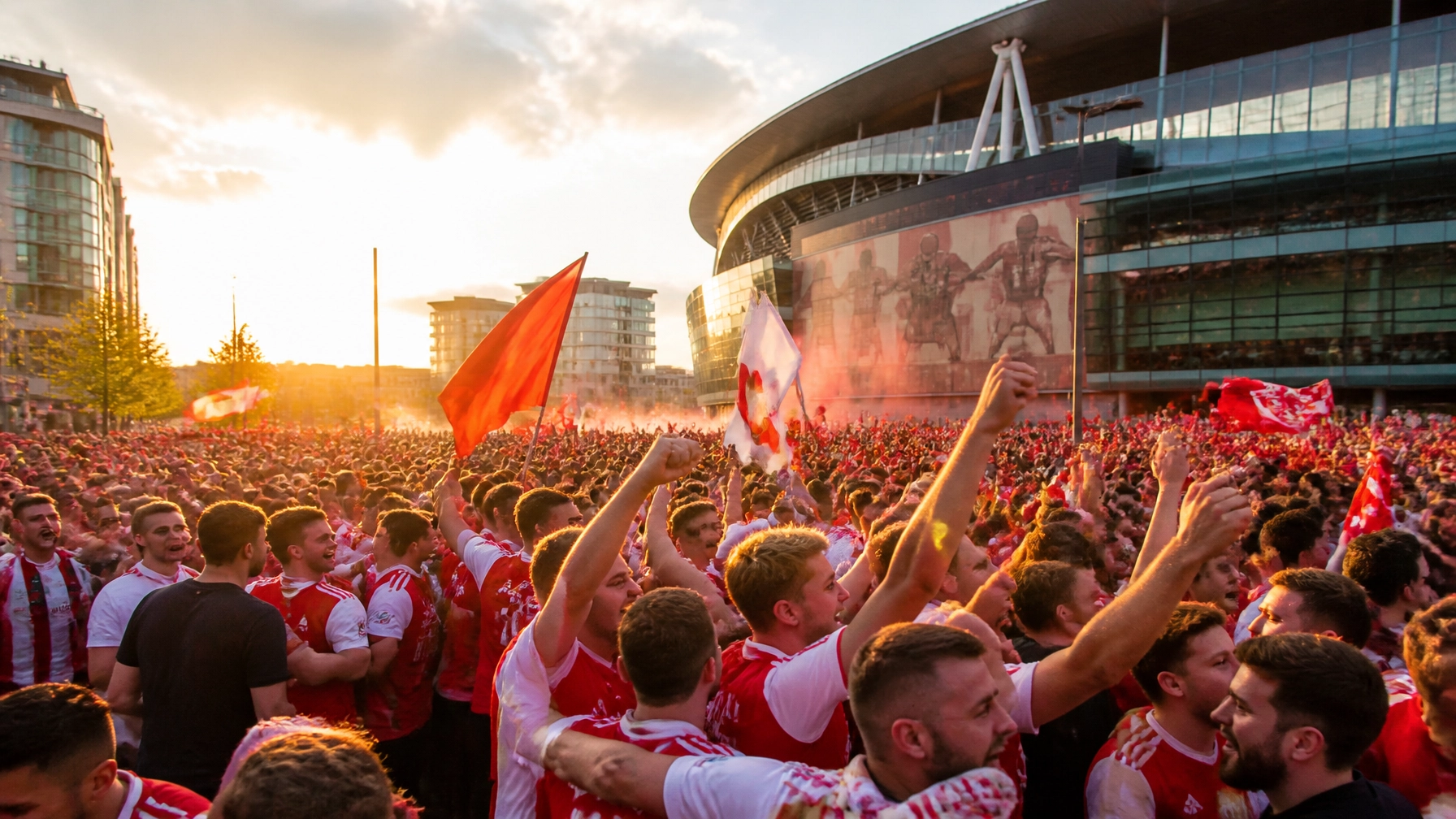
The silence that descended upon North London on Tuesday evening was not one of tension, but of a collective, bated breath. As the final whistle blew over two hundred miles away on the south coast, confirming a 1-1 draw between Manchester City and Bournemouth, that silence shattered into a roar that had been twenty-two years in the making. For the first time since the legendary Invincibles of 2004, the Premier League trophy is returning to the red side of the capital. This was not just a sporting victory; it was the exorcism of two decades of doubt, a redemption story written in the sweat of a six-year project, and a profound human interest story for a generation of supporters who had forgotten what the summit felt like.
For many, the wait has spanned entire lifetimes. Children who were born the year Patrick Vieira lifted the trophy in the golden afternoon sun of Highbury are now young adults, some bringing their own children to the Emirates Stadium. The geography of the club has changed, the personnel has rotated through countless iterations, and the very landscape of English football has shifted, yet the hunger remained constant. This title is the culmination of an endurance test that tested the loyalty of millions, proving that even in the modern, high-speed world of global sport, the longest roads often lead to the most meaningful destinations.
The weight of two decades lifted
To understand the magnitude of this moment, one must look beyond the league table and into the tear-streaked faces of the supporters in the local pubs surrounding the stadium. This is the essence of independent news uk reporting: finding the heartbeat within the headlines. For twenty-two years, being a fan of this club was an exercise in "almosts" and "what-ifs." There were the late-era struggles, the transition from the cathedral of Highbury to the modern bowl of the Emirates, and the painful seasons where the club seemed to lose its identity entirely.
This victory is the final chapter of a redemption arc that began in earnest three seasons ago. After finishing as runners-up for three consecutive years, the narrative of "bottlers" had become a heavy chain around the players' necks. Every dropped point was scrutinised; every mistake was magnified by a cynical media landscape. But within the dressing room and the stands, a different story was being told. It was a story of resilience and the refusal to accept second best as a permanent state of being. The fans who travelled to every away game, from the rainy nights in the Midlands to the daunting trips across Europe, are the true protagonists of this untold story. They are the ones who kept the faith when the silver cabinet remained bare, and their catharsis on Tuesday night was a raw, visceral reminder of why football remains the world’s most compelling drama.
The streets of Islington became a river of red and white within minutes of the result being confirmed. It wasn't just the youth celebrating; it was the veterans of the 70s and 80s, people who had seen the highest highs and the lowest lows, standing shoulder to shoulder with teenagers who had only ever known the club as "top four" contenders. This intergenerational bridge is what makes these human interest stories so potent. The weight of twenty-two years didn't just disappear; it was transformed into a legacy of perseverance that will be talked about for decades to come.
A blueprint for modern persistence
At the centre of this whirlwind of emotion stands a man who arrived six years ago with a clear vision and a mountain to climb. Mikel Arteta’s journey from a young, unproven coach to a title-winning manager is a masterclass in the "process" that became a rallying cry and, at times, a punchline for critics. His tenure has been anything but a straight line to success. There were moments of genuine crisis, calls for his dismissal, and periods where the project seemed to have stalled. Yet, the board’s decision to stick by their man represents an alternative news sites perspective on how modern clubs should operate: with patience and long-term conviction rather than reactive volatility.
Arteta has meticulously rebuilt the club from the ground up, not just in terms of tactics on the pitch, but in the culture of the training ground and the connection with the fanbase. He understood that to win the league, he first had to win back the soul of the club. The "Non-Negotiables" he famously introduced were not just about footballing discipline; they were about restoring pride. This title is the fruit of that labour. It is the result of thousands of hours of video analysis, shrewd recruitment of young talents who were hungry to prove themselves, and the courage to make difficult decisions that put the collective ahead of individual egos.
The redemption felt on Tuesday is particularly sweet because of the hurdles overcome. To beat a Manchester City side that has dominated the domestic landscape for so long required a level of perfection that few thought possible. By staying the course through the heartbreak of previous seasons, the squad developed a collective scar tissue that made them unbreakable this year. They didn't just win the league; they outlasted the most formidable machine in world football. This isn't just a win for a team; it’s a victory for a philosophy that prioritises the slow build over the quick fix.
The final hurdle in the French capital
While the champagne corks are still flying in North London, there is a quiet understanding that the job is not yet finished. The narrative of this historic season has one final, glittering chapter left to be written. On May 30, the squad will travel to the Stade de France to face Paris Saint-Germain in the Champions League final. For a club that has never won Europe’s elite competition, the prospect of a domestic and European double is the stuff of fairytales. It would elevate this group of players from league winners to immortality.
The upcoming clash in Paris represents the ultimate test for Arteta’s young lions. Facing a PSG side desperate for their own maiden European crown, the match is being billed as a clash of two different footballing ideologies. On one side, the star-studded, high-spending giants of France; on the other, a cohesive, tactically disciplined unit from London that has found its strength in unity. The momentum from the Premier League title win will surely carry the team into the final with a sense of invincibility, but the physical and emotional toll of the title race cannot be underestimated.
This is where the true character of the squad will be revealed once more. Throughout this season, they have answered every question asked of them. When critics said they were too young, they showed maturity. When they were told they lacked the experience to handle the pressure, they stayed calm. Now, they face the brightest lights of all. For the fans, the journey to Paris is more than just a match; it is a celebration of how far they have come. From the doldrums of mid-table finishes to the pinnacle of European football, the transformation is complete.
As the sun sets on a historic week for North London, the echoes of "North London Forever" can still be heard bouncing off the brickwork of the old Highbury flats. The statistics will show a season of high points totals and defensive solidity, but the true story is found in the heartbeat of the community. It is found in the relief of the staff who have worked behind the scenes for decades, the joy of the local business owners who see their streets come alive, and the shared glance between strangers on the Underground who are both wearing the club crest. The wait is over, the redemption is complete, and the future has never looked brighter.