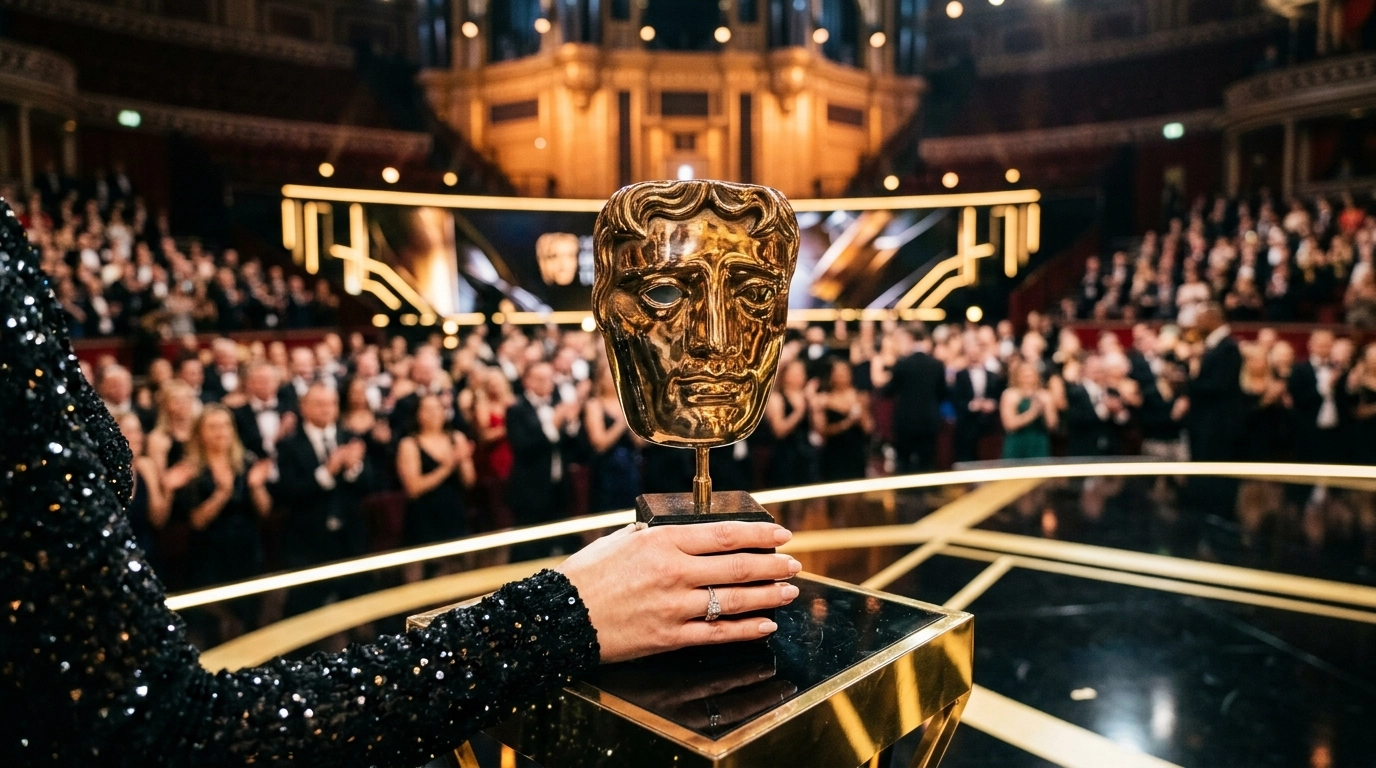
The 2026 BAFTA Television Awards ceremony took place on 11 May 2026, marking a significant milestone in the history of British broadcasting. Held at the Royal Festival Hall in London, the event celebrated the very best in television talent from the past year. The evening was defined by the overwhelming success of the Netflix limited drama series Adolescence, which secured four major trophies, making it the most successful single project in the history of the awards. This dominance reflects a growing appetite for gritty, realistic storytelling that explores the complexities of modern life, moving away from traditional police procedurals toward deep, character-driven narratives.
The record-breaking night saw Adolescence take home the awards for Limited Drama, Leading Actor, and Supporting Actor, with other major honours spread across a field packed with standout performances and a few properly surprising turns. Industry experts have noted that the success of the series indicates a shift in the British television landscape, where viewers are increasingly drawn to projects that tackle difficult social issues with nuance and empathy. The ceremony itself was attended by the industry’s elite, but the stories celebrated on stage were far removed from the glamour of the red carpet. Instead, they focused on the lived experiences of ordinary people facing extraordinary circumstances, a theme that resonated throughout the entire nominations list for 2026.
A Historic Sweep for Hard-Hitting Drama
The series Adolescence emerged as the clear frontrunner early in the evening. As a limited drama series, it had already garnered significant critical acclaim and massive viewership figures since its debut, but the scale of its victory at the BAFTAs still turned heads. The project was lauded for its uncompromising look at the British youth justice system and the ripple effects of crime on families and communities. It collected several of the biggest prizes of the night and kept its place firmly at the centre of the conversation, even if the ceremony made room for a broader spread of winners than the early chatter suggested.
Stephen Graham, who has long been a staple of high-quality British drama, took home the award for Leading Actor. His portrayal of a father navigating the complexities of the legal system was described by judges as a masterclass in emotional restraint and power. This win further solidifies Graham’s position as one of the most significant actors of his generation, known for choosing roles that highlight real-world problems and human interest stories. The series succeeded not just because of its high production values, but because it dared to tell a story that felt authentic to a modern audience tired of sanitised depictions of British life.
The night also delivered a few headline-grabbing wins beyond Adolescence. Code of Silence took Best Drama Series for ITV1, while Steve Coogan won for How Are You? It's Alan (Partridge), proving that sharp comedy and awkward brilliance still have plenty of room on a stage usually dominated by heavier fare. In other words, it was not all grim stares and prestige lighting.
The win for Limited Drama was particularly poignant, as it beat out several high-budget international co-productions. It proved that stories rooted in local communities and specific British experiences can have a global impact. For those of us involved in independent news uk, the success of such a series is a reminder of the power of narrative to bridge gaps in understanding. It shows that there is a massive audience for the types of untold stories that mainstream news often misses or oversimplifies. The series Adolescence did not shy away from the harsh realities of its subject matter, which is exactly why it resonated so deeply with both critics and the public.
The Human Stories Behind the Statues
While the collective success of the show was the headline of the night, the individual stories of the winners provided the most emotional moments of the ceremony. Narges Rashidi won the BAFTA for Leading Actress for Prisoner 951 on BBC One, a win that many have called a long-overdue recognition of her immense talent. Her performance was praised for its control, intensity and emotional precision, giving the category one of its strongest winning turns in years. Rashidi’s win is significant not just for her career, but for what it represents in terms of representation and the types of voices that are being elevated in the industry today.
Another standout moment was the victory of Owen Cooper in the Supporting Actor category. At just 16 years old, Cooper became one of the youngest ever recipients of a BAFTA TV Award. His performance was hailed as a breakout turn, bringing a raw honesty to the screen that is rarely seen in younger actors. The inclusion of young, diverse talent in major categories highlights a positive trend in British television toward more inclusive casting and storytelling. These are the kinds of human interest stories that we believe deserve more attention, as they reflect the changing face of our society in ways that traditional media often overlooks.
Christine Tremarco also secured a win for Supporting Actress, adding to an evening that balanced big-name recognition with a few genuinely sharp choices from voters. These wins are about more than just trophies; they are about the validation of a specific style of storytelling that prioritises the human element over spectacle. For anyone interested in alternative journalism and the exploration of real-life problems, the recognition of these performances is a heartening sign that the industry is moving in a more grounded direction.
There were also two honorary moments that landed exactly as they should. Dame Mary Berry received the BAFTA Fellowship, a fitting nod to a broadcasting career that has somehow managed to be both institutionally beloved and endlessly watchable. Martin Lewis picked up the Special Award, recognising the very real public impact of his consumer journalism and advice work. Not every standing ovation is created equal, but these ones felt pretty earned.
Why This Win Matters for Independent Media
The dominance of Adolescence at the 2026 BAFTA TV Awards is more than just a win for Netflix; it is a win for the idea that real conversations and real problems belong at the forefront of our culture. In an era where mainstream media is often accused of being out of touch, the popularity of such a gritty and honest series suggests that people are looking for more than just entertainment. They are looking for truth. This aligns perfectly with the mission of independent news outlets to provide a space for stories that are often neglected by the larger corporations.
As one of the leading alternative news sites, we have always maintained that the most important stories are those that focus on the individuals behind the headlines. The BAFTAs this year proved that the public agrees. By focusing on the youth justice system and the personal toll of legal battles, Adolescence brought an untold story to the masses. It used the medium of drama to perform a function that is usually the domain of investigative reporting, highlighting flaws in the system and the human cost of those flaws. This crossover between entertainment and social commentary is where the most impactful storytelling happens.
The growth of independent news uk and alternative journalism is driven by a desire for this kind of depth. When major awards bodies like BAFTA recognise work that is this challenging and this relevant, it encourages other creators to take risks. It suggests that there is a viable path for projects that do not fit the standard commercial mould. For those of us who follow independent news outlets, the shift is clear: the audience is ready for more complex, honest, and human-centred content. The 2026 BAFTA TV Awards will be remembered as the night the industry finally caught up with the reality of its audience’s expectations.
The final list of winners across all categories was confirmed by the Academy following the ceremony on 11 May 2026. The evening concluded with a standing ovation for the night’s biggest winners and honorary recipients, marking the end of a memorable night for British television. For readers interested in independent news uk, untold stories, human interest stories, alternative news sites, independent news outlets and alternative journalism, the results offered a useful reminder that television still has the power to push difficult themes into the mainstream without losing its audience.
Exclusive Full List
Best Drama Series
Winner: Code of Silence (ITV1)
Nominees: A Thousand Blows, Blue Lights, This City Is Ours
Limited Drama
Winner: Adolescence
Nominees: I Fought The Law, Trespasses, What It Feels Like For A Girl
Leading Actor
Winner: Stephen Graham, Adolescence
Nominees: Colin Firth, Lockerbie; Ellis Howard; James Nelson-Joyce; Matt Smith; Taron Egerton
Leading Actress
Winner: Narges Rashidi, Prisoner 951
Nominees: Aimee Lou Wood, Film Club; Erin Doherty, A Thousand Blows; Jodie Whittaker, Toxic Town; Sheridan Smith; Siân Brooke
Supporting Actor
Winner: Owen Cooper, Adolescence
Nominees: Ashley Walters; Fehinti Balogun; Joshua Mcguire; Paddy Considine; Rafael Mathé
Supporting Actress
Winner: Christine Tremarco, Adolescence
Nominees: Aimee Lou Wood, The White Lotus; Chyna McQueen; Emilia Jones; Erin Doherty; Rose Ayling-Ellis
Actor in a Comedy
Winner: Steve Coogan, How Are You? It’s Alan (Partridge)
Nominees: Jim Howick; Jon Pointing; Lenny Rush; Mawaan Rizwan; Oliver Savell
Actress in a Comedy
Winner: Katherine Parkinson, Here We Go
Nominees: Diane Morgan; Jennifer Saunders; Lucy Punch; Philippa Dunne; Rosie Jones
Fellowship
Winner: Dame Mary Berry
Special Award
Winner: Martin Lewis