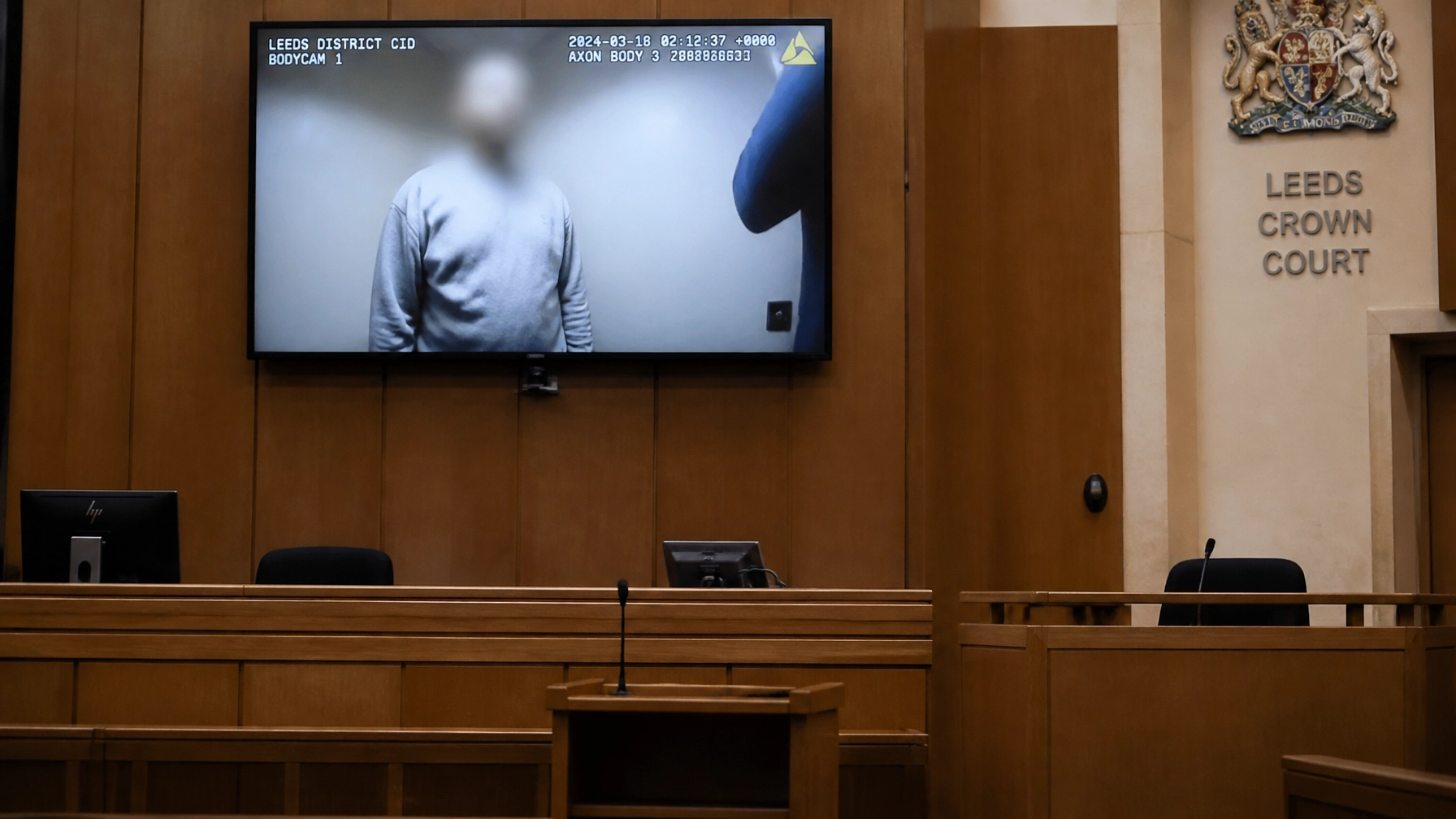
The trial of two inmates accused of the murder of former Lostprophets singer Ian Watkins has reached a pivotal stage at Leeds Crown Court. Jurors have been presented with bodycam footage from prison officers, capturing the immediate aftermath of the fatal assault inside HMP Wakefield. The evidence, which includes both digital recordings and witness testimony from prison staff, aims to illustrate the state of mind and actions of the defendants in the moments following the discovery of the victim.
Ian Watkins, who was serving a significant sentence for high-profile child sex offences, died following an incident in his cell on the morning of 11 October 2025. The prosecution alleges that the attack was a coordinated effort by fellow prisoners Rico Gedel and Samuel Dodsworth. The courtroom remained silent as the grainy, high-contrast footage from an officer’s body-worn camera was played, showing a frantic scene as staff responded to reports of a stabbing on the B-wing of the high-security facility.
The footage primarily focuses on the interactions between prison officers and the defendants shortly after the alarm was raised. Prosecutors pointed specifically to the demeanour of 25-year-old Rico Gedel. Officers who were present at the scene described his behaviour as strikingly calm, even suggesting he appeared pleased with the unfolding events. In the video, Gedel is seen being escorted through the wing, his expression described by one witness in court as a "smirk" or "smug" look that contrasted sharply with the gravity of the medical emergency taking place nearby.
Analysis of the Prosecution’s Evidence and CCTV Tracking
Beyond the bodycam footage, the prosecution has built a detailed timeline using the prison’s internal CCTV system. The court was shown a sequence of events beginning shortly after 9:00 am, when the cell doors were unlocked for the morning routine. The footage appears to show Gedel entering Watkins’ cell and remaining inside for approximately twenty seconds. According to the prosecution, this brief window was when the fatal injuries were inflicted. The court heard that Watkins was stabbed three times in the head and neck with a sharpened, makeshift weapon.
Samuel Dodsworth, the second defendant, is alleged to have acted as a lookout and assisted in disposing of the weapon. CCTV footage presented to the jury shows Dodsworth loitering near the staircase during the time Gedel was inside the victim’s cell. Further footage shows the two men making brief contact in a hallway shortly after the alleged attack. Prosecutors claim that a bundle, possibly a towel or dressing gown, was used to conceal the homemade knife as it was passed from Gedel to Dodsworth. A bloody weapon was later recovered from a waste bin within the prison, which forensic experts have linked to the injuries sustained by Watkins.
The court also heard testimony regarding notes discovered in the prison that hinted at escalating tensions. Two handwritten letters were found, one of which reportedly blamed Watkins for the transfer of another inmate and another demanding money. The prosecution suggests that these notes indicate a premeditated motive, driven by a combination of personal grievances and a general disdain for Watkins' presence on the wing. One officer testified that Gedel had previously expressed strong negative feelings about sharing a living space with sex offenders, describing the arrangement as unacceptable.
Witness Testimony and the Behaviour of the Accused
Prison officers who took the stand provided chilling accounts of the defendants' remarks following the incident. One officer recounted a conversation with Gedel while he was being moved to a segregation unit. According to the witness, Gedel made several remarks indicating he was aware of the victim’s notoriety. The jury was told that Gedel said, "If I’ve killed him, you could be talking to someone famous," and allegedly joked about the quality of his future sleep compared to that of the victim. These statements are being used by the prosecution to argue that the attack was not only intentional but carried out with a degree of pride.
Medical staff from the prison and paramedics who arrived at the scene also gave evidence. They described the scene inside the cell as chaotic, with Watkins appearing at the doorway with significant bleeding from his neck before collapsing. Despite resuscitation efforts that lasted for nearly an hour, the injuries to his carotid artery and jugular vein were too severe. The cause of death was confirmed as multiple stab wounds and significant blood loss. The speed and precision of the attack, as argued by the prosecution, suggest a level of intent designed to ensure a fatal outcome rather than just a warning or minor injury.
The defence, however, has begun to challenge these interpretations. Rico Gedel has denied the charges of murder and possession of a bladed article. His legal team has suggested that the prosecution's reliance on "demeanour" is subjective and that his client’s comments were misinterpreted or made under the extreme stress of being accused of a crime. During cross-examination, Gedel’s representatives argued that there is no direct visual evidence of the stabbing itself, as there are no cameras inside the individual cells. They contend that the prosecution’s case is largely circumstantial, built on inferences drawn from CCTV timings and the controversial bodycam footage.
Defence Arguments and the Role of the Second Defendant
Samuel Dodsworth’s defence centres on a lack of prior knowledge. His legal team told the court that while Dodsworth admits to handling the weapon after the event, he did so out of a sense of panic and confusion rather than as part of a pre-arranged murder plot. He denies being a lookout, claiming that he was merely standing in the hallway waiting for the morning exercise period to begin. The defence argues that Dodsworth only became aware that a serious assault had occurred when he saw Watkins stumble from his cell covered in blood, and that his actions thereafter were a result of shock rather than criminal intent.
The trial also touched upon the safety protocols at HMP Wakefield, often referred to as "Monster Mansion" due to the high-profile nature of many of its inmates. Questions were raised about how a makeshift weapon could be fashioned and concealed in such a high-security environment. The prosecution noted that the knife was a "classic prison shank," made from sharpened plastic and metal fragments. The ease with which the defendants were allegedly able to meet and coordinate the attack has become a secondary point of interest for the jury, highlighting the ongoing challenges of managing volatile populations within the UK prison system.
As the trial continues, the jury is expected to hear from forensic pathologists and more prison personnel. The bodycam footage remains one of the most contentious pieces of evidence, as the prosecution believes it reveals the true character of the men involved, while the defence argues it is being used to prejudice the jury based on emotional response rather than hard facts. The proceedings at Leeds Crown Court are expected to last several weeks as both sides present their full cases regarding the death of one of the UK’s most notorious modern criminals. The verdict will ultimately hinge on whether the jury believes the prosecution has proven that the two defendants acted together with the specific intent to kill.