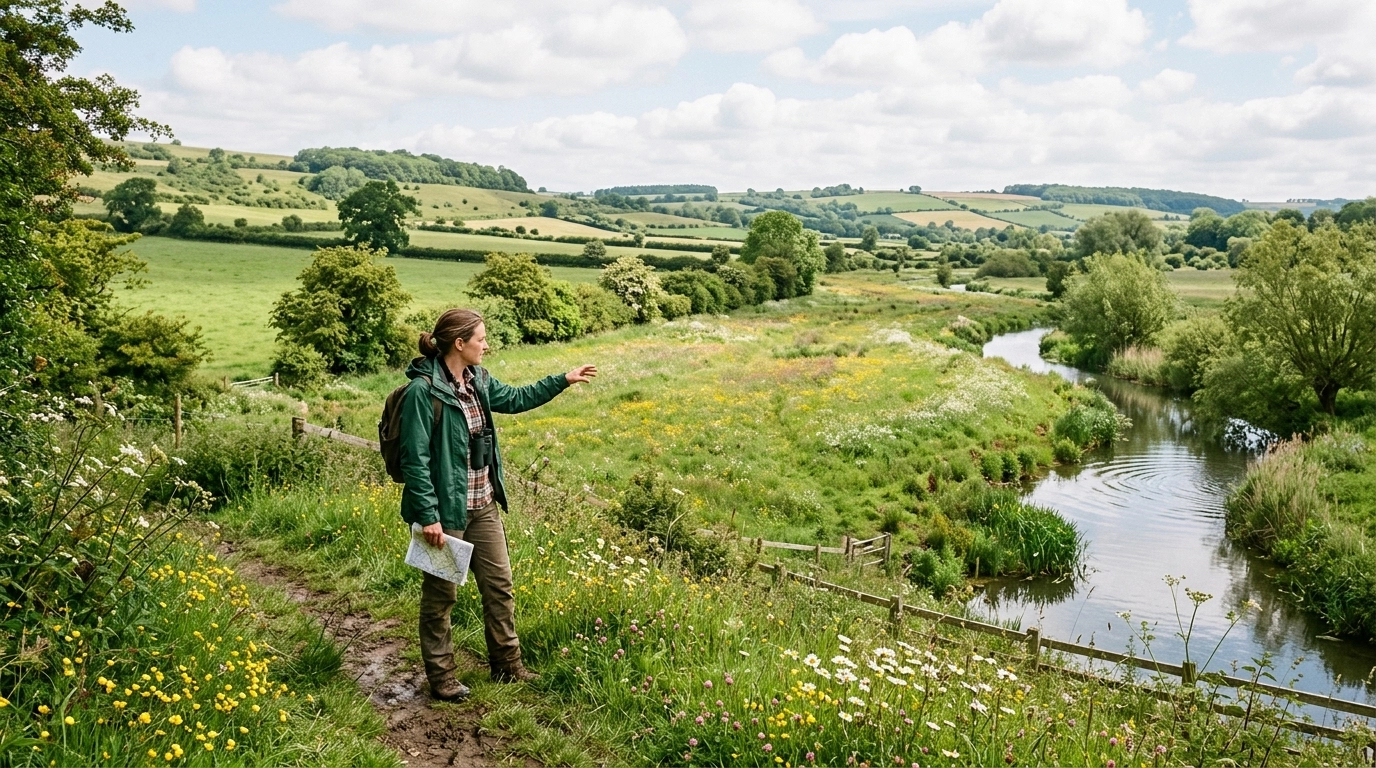
Oxfordshire is often celebrated for its rolling hills, honey-coloured stone villages, and prestigious academic history, but a quieter revolution is currently unfolding across its meadows and floodplains.
For decades, the relationship between farming and nature has been viewed through a lens of conflict, where the need for food production seemed at odds with the preservation of the wild. However, a group of forward-thinking farmers in the heart of England is rewriting this narrative. Through the government’s ambitious Landscape Recovery scheme, they are demonstrating that the land can be both a source of sustenance and a sanctuary for biodiversity.
The shift marks a significant departure from the old ways of doing things. For years, the agricultural sector operated under the Common Agricultural Policy, which often prioritised sheer volume of output over environmental health. Since leaving the European Union, the UK has been charting its own course with the Environmental Land Management schemes, or ELMS. The most radical of these is Landscape Recovery, which encourages large-scale, long-term projects designed to restore entire ecosystems. In Oxfordshire, this isn’t just a theoretical policy written in a Whitehall office; it is a reality being shaped by the boots on the ground.
These farmers are not just caretakers of the soil; they are becoming the architects of a more resilient landscape. By coming together in clusters, they are moving beyond the boundaries of individual holdings to manage the land at a scale that nature actually understands. Rivers do not stop at property lines, and neither do the species that rely on them. By collaborating, Oxfordshire’s agricultural community is proving that large-scale environmental restoration is not only possible but can be the backbone of a modern farm business.
A New Vision for the Great British Countryside
The core philosophy driving this change is the concept of "public money for public goods." In the past, subsidies were often linked to the amount of land owned or the quantity of crops produced. Today, the focus has shifted toward the benefits that the wider public receives from well-managed land. This includes cleaner water, reduced flood risk, carbon sequestration, and the return of iconic British wildlife. For a farmer in the Cotswolds or the Vale of White Horse, this means their role is expanding. They are no longer just food producers; they are environmental stewards being compensated for the vital services they provide to society.
This new vision requires a long-term commitment that has rarely been seen in agricultural policy. While previous schemes might have lasted five years, Landscape Recovery agreements can span twenty years or more. This longevity allows for the kind of "radical" change that nature needs to truly recover. It provides the financial security for farmers to take bold steps, such as re-meandering straightened rivers or allowing floodplains to once again act as natural sponges. It is a slow process, but one that promises to leave the land in a far better state for the next generation.
The casual observer might look at a wilder field or a messy riverbank and see neglect, but for the modern Oxfordshire farmer, these are signs of a healthy, functioning ecosystem. It is about working with natural processes rather than trying to dominate them. By reducing chemical inputs and encouraging diverse grasslands, farmers are seeing the return of insects, birds, and small mammals that had all but disappeared. This isn’t about turning back the clock to a pre-industrial age; it is about using modern ecological science to build a sustainable future where the countryside can thrive on multiple levels.
The Evenlode and Ock Initiatives in Focus
Nowhere is this progress more evident than in the Evenlode and Ock catchments. The Evenlode Landscape Recovery Project is a standout example of what happens when local knowledge meets large-scale ambition. Led by the North East Cotswold Farming Cluster and supported by experts from the University of Oxford, this project spans thousands of hectares across Oxfordshire and into neighbouring counties. With more than £100 million in potential implementation funding over two decades, the scale of the investment reflects the scale of the challenge.
Over 50 farmers are involved in the Evenlode project, working together to protect the river from pollution and soil runoff. By restoring over 3,000 hectares of priority habitat, they are creating a corridor of life that benefits everything from otters to rare wildflowers. The project is also a pioneer in "blended finance," where government funding is paired with private investment. This might come from water companies looking to improve water quality or businesses aiming to offset their environmental impact. It creates a robust financial model that ensures the work can continue even as political winds change.
Further south, the Ock and Thame Farmers are embarking on their own journey of discovery. This project, which involves more than 90 landowners, is currently in its development phase, mapping out the best ways to restore freshwater wildlife and floodplain habitats. These are areas that have historically been drained for intensive agriculture but are now being recognised for their incredible value in mitigating the effects of climate change. By allowing these rivers to breathe and spill onto their natural floodplains during heavy rain, farmers are helping to protect downstream towns and villages from the increasing threat of flooding.
Balancing Food Security with Environmental Stewardship
A common concern raised when discussing landscape recovery is what happens to our food security. If we are turning fields into wetlands and meadows, will we still be able to feed the nation? The farmers in Oxfordshire are providing a nuanced answer. The Landscape Recovery scheme is not about abandoning food production; it is about finding a better balance. Many of the areas being restored are "marginal" land: places that were always difficult to farm intensively or were prone to flooding. By moving production to the most productive areas and using the rest for nature, farmers can actually improve the overall efficiency and resilience of their businesses.
In many cases, the environmental work actually supports the farming side of the operation. Better soil health leads to better crop yields in the long run. Restoring hedgerows and wildflower margins provides habitats for pollinators and natural predators of agricultural pests, reducing the need for expensive and harmful pesticides. Many farmers are also integrating livestock into their restoration plans, using traditional breeds of cattle and sheep to graze the new meadows. This "conservation grazing" produces high-quality, sustainable meat while maintaining the diversity of the grasslands.
Ultimately, the Oxfordshire projects are about resilience. A landscape that is rich in biodiversity and has healthy, functioning water systems is far better equipped to handle the extremes of weather that are becoming more common. By diversifying their income streams through these schemes, farm businesses are also becoming more economically resilient. They are no longer solely dependent on the volatile global markets for grain or meat. Instead, they have a steady, long-term income derived from the very health of the land they walk every day. It is a positive, forward-looking approach that proves farming and nature are two sides of the same coin.
The success of these initiatives depends on the continued collaboration between the government, private investors, and the farming community. As the projects in the Evenlode and Ock catchments move from planning to implementation, they will serve as a blueprint for the rest of the country. The farmers of Oxfordshire are at the forefront of this movement, showing that with the right support and a bit of vision, the Great British countryside can have a bright and green future. They are proving that landscape recovery is not just about saving the planet; it is about sustaining the people and the businesses that call the countryside home.