Schedule: 20 April 2026, 13:00
It starts with a simple post on a local social media group: "Cheap rubbish removal, same-day service, fully licensed." For a busy homeowner or a small business owner looking to clear out a garage, it looks like a bargain. But behind those friendly profile pictures and competitive prices often lies a much darker reality. The UK is currently facing an epidemic of illegal waste disposal, driven not by lazy individuals, but by what law enforcement is calling the "Waste Mob": organised criminal gangs who have swapped traditional illicit trades for the lucrative, low-risk world of illegal tipping.
For those seeking independent news uk, the scale of this problem is staggering. It is no longer just about a few bin bags left in a country lane. We are talking about industrial-scale dumping that ruins landscapes, destroys local ecosystems, and costs the British taxpayer a fortune. This is one of the many untold stories shaping the modern UK economy, where the grey market of waste disposal has become a playground for organised gangs. These groups operate with a level of sophistication once associated with other serious criminal activity, using fleets of lorries, fake companies, and aggressive tactics to dominate the market.
How illegal tipping became organised
The transition from petty fly-tipping to organised waste crime has been rapid. Criminal gangs have identified that the penalties for illegal dumping are often far lower than those for other serious offences, while the profit margins remain high. By undercutting legitimate waste disposal companies, these groups attract a steady stream of customers who are often unaware that their rubbish is destined for a lay-by or a farmer's field. The method is slick: they often use stolen or cloned vehicles to avoid number plate recognition cameras, and they regularly pose as legitimate businesses with forged Environment Agency licences.
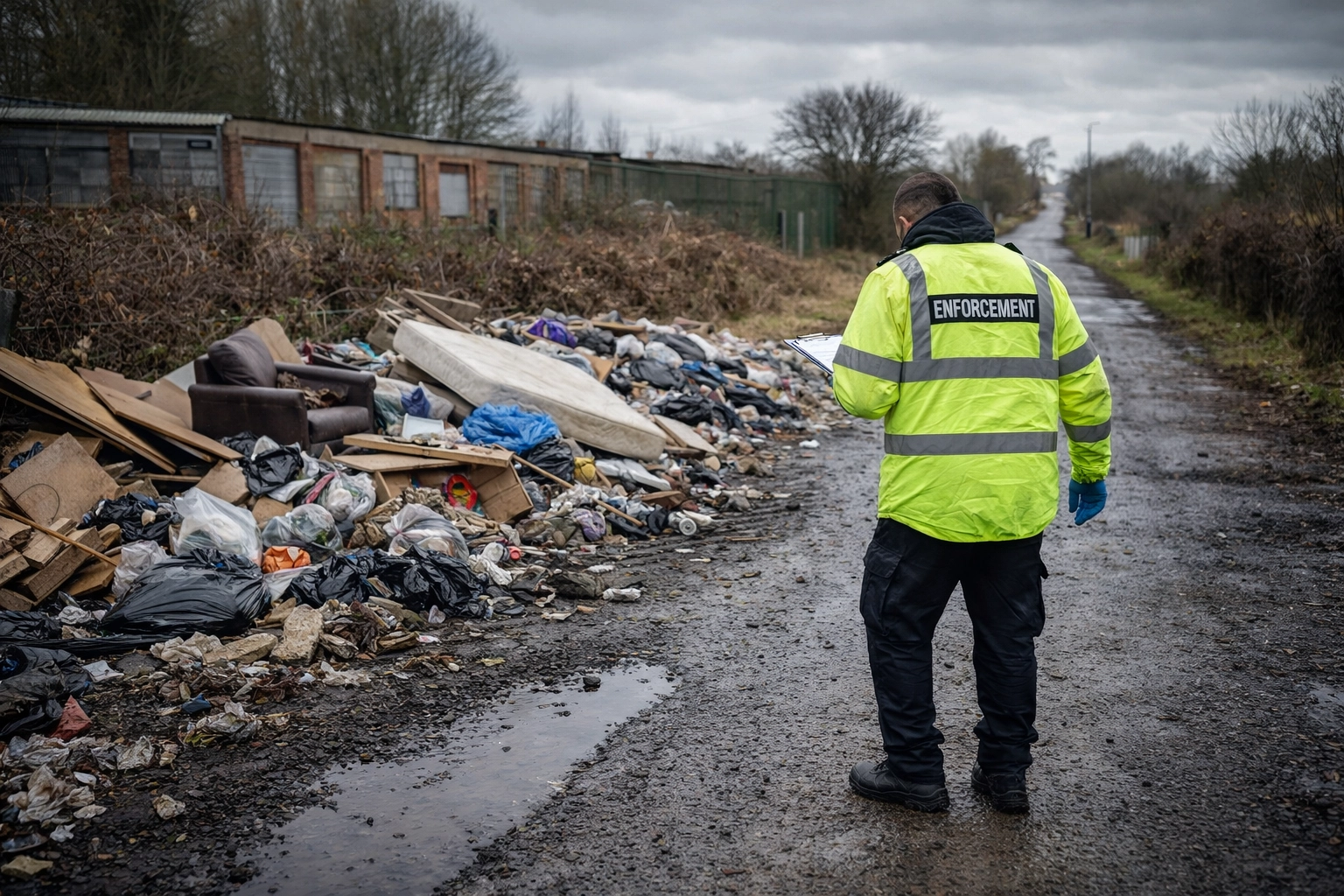
These gangs are not just operating in the shadows of rural areas. They are active in the heart of our cities, taking advantage of the high demand for quick turnarounds in the construction and renovation sectors. In many cases, these criminals will rent a warehouse or a plot of land under a false name, fill it from floor to ceiling with hazardous waste, and then disappear overnight, leaving the landowner or the local council with a clean-up bill that can reach hundreds of thousands of pounds. This is a far cry from the accidental fly-tipping of the past; this is a calculated, strategic assault on our infrastructure.
The impact on local communities is profound. When a "Waste Mob" moves into an area, it brings more than just rubbish. There are often reports of intimidation of local residents and farmers who try to intervene. For many people living in rural hotspots, the sight of a convoy of unmarked tipper trucks has become a source of genuine fear. These are the untold stories of people who feel abandoned by a system that seems unable to keep up with the sheer speed of criminal innovation. The rise of this illegal industry is directly linked to the increasing costs of legitimate waste disposal, creating a vacuum that the Waste Mob is only too happy to fill.
The environmental and economic damage
The environmental consequences of this activity are devastating. Unlike authorised landfill sites, illegal dumps have no liners to prevent toxic chemicals from leaching into the soil and groundwater. When criminal operators dump a mountain of tyres, plastic, and construction debris, they are not just creating an eyesore; they are creating a long-term environmental hazard. In many cases, these sites become prone to arson, leading to massive fires that release toxic fumes into the atmosphere and require days of emergency service intervention to extinguish.
Financially, the burden is equally heavy. The Environment Agency has estimated that waste crime costs the UK economy around £1 billion every year. This includes lost tax revenue from landfill taxes, the cost of clean-up operations, and the economic damage to legitimate businesses that simply cannot compete with criminal operators' rock-bottom prices. The hidden cost often lands with local authorities. Every pound spent clearing up an illegal dump is a pound taken away from schools, social care, or road repairs.
Furthermore, the "Waste Mob" often targets areas of natural beauty, including National Parks and Sites of Special Scientific Interest (SSSI). The damage to biodiversity is often irreversible. When hazardous materials are dumped near watercourses, the impact on local wildlife can be catastrophic. For an independent news uk audience, it is vital to understand that this isn't just a matter of aesthetics; it's a direct threat to the UK's commitment to protecting its natural heritage. The sheer volume of waste: estimated at 34 million tonnes handled by illegal operators: is equivalent to filling dozens of major stadiums, a visual that helps illustrate the overwhelming scale of the crisis.
What might help stop it
The response to the rise of organised waste crime has seen a shift in tactics from local authorities and the police. Recognising that traditional fines are no longer much of a deterrent, the government has introduced tougher measures. This includes the power to seize and crush vehicles used in illegal dumping, a move designed to hit criminals where it hurts most: their logistics. Across the country, task forces are being formed, combining the expertise of the Environment Agency, local police, and HMRC to track money trails and dismantle the corporate structures these gangs hide behind.
Technology is playing a crucial role in this fight. Drones are now regularly used to monitor hotspots and provide high-resolution evidence that can be used in court. Mobile CCTV units and smart bins that alert authorities when they are being tampered with are also becoming more common. However, the criminals are adaptable too. They use encrypted messaging apps to coordinate their movements and avoid detection. It is a constant game of catch-up that demands investment and persistence.
Education is the other side of the coin. Many people are still unaware of their duty of care when it comes to waste. If you hire a man with a van and your waste is found dumped illegally, you as the homeowner can be held legally responsible and face a significant fine or even a criminal record. By raising awareness of how to verify a waste carrier's licence and encouraging people to use legitimate facilities, authorities hope to cut off the customer base behind these untold stories. The fight against illegal tipping is not just about enforcement; it is also about changing how we value our environment and community spaces.
The rise of the UK Waste Mob represents a significant challenge for the mid-2020s. It is a complex issue that intersects with organised crime, economic pressure, and environmental protection. As the UK continues to grapple with these "Mafia 2.0" tactics, the focus remains on strengthening the laws and empowering local communities to protect their surroundings. The transition from simple fly-tipping to industrial-scale crime has changed the landscape of British waste management forever, necessitating a response that is as organised and determined as the criminals it seeks to stop.
The ongoing battle against illegal tipping requires a multi-faceted approach that combines rigorous law enforcement, public awareness, and technological innovation. While the "Waste Mob" continues to find new ways to exploit the system, the resilience of local communities and the dedication of environmental agencies provide a roadmap for reclaiming the UK's landscape from the clutches of organised waste crime. Monitoring these developments remains a priority for anyone interested in the future of the UK's environment and economy.