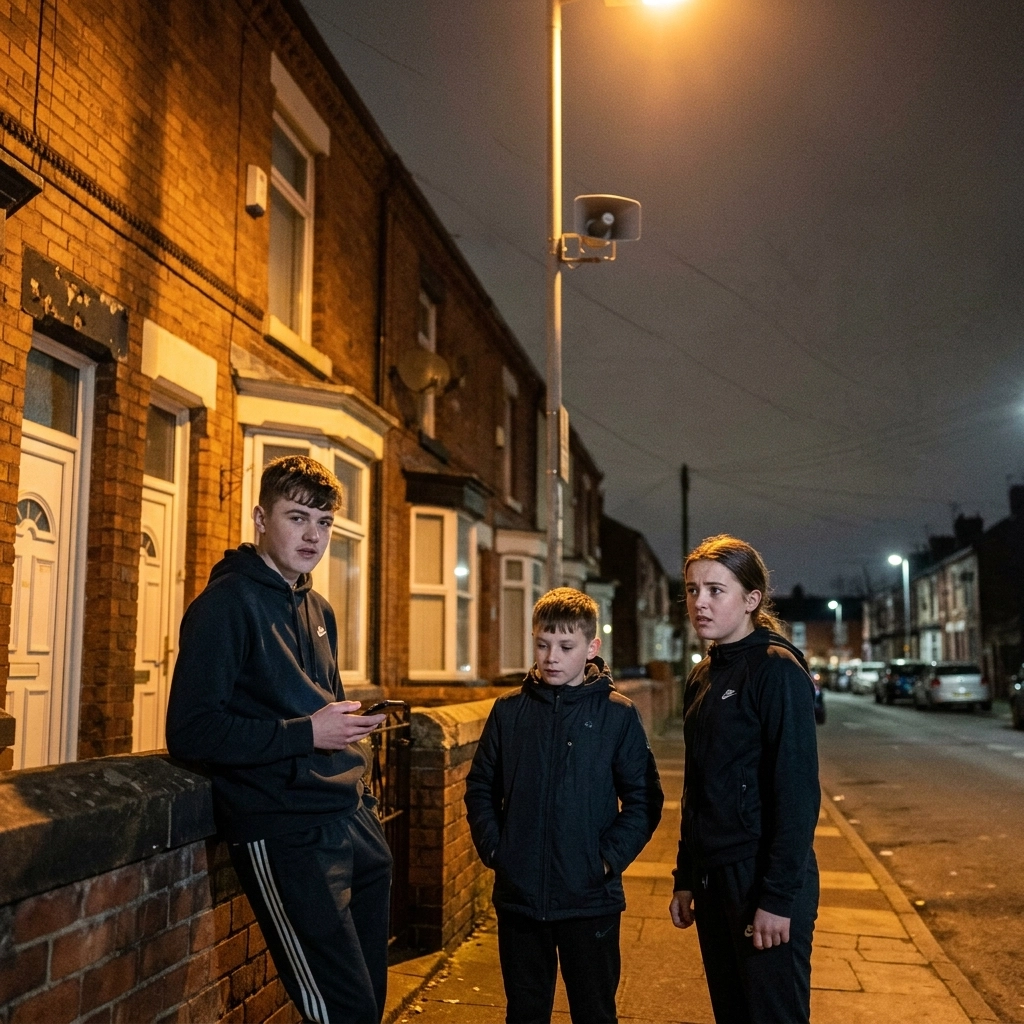
If you find yourself wandering through certain parts of Liverpool after the sun goes down, you might notice something a bit peculiar. It isn't the smell of the Mersey or the distant hum of a late-night chippy. Instead, it is the soaring, intricate melodies of Wolfgang Amadeus Mozart. But this isn't an outdoor gala or a tribute to the greats. It is what some local authorities consider a tactical deployment. In the world of independent news uk, this is the kind of story that usually hums in the background, but the reality of Liverpool’s "sonic war" is one of those untold stories that says a lot about how we view public space and the people who inhabit it.
The premise is simple: play classical music through tannoys to discourage "anti-social behaviour" among the youth. Apparently, nothing sends a group of teenagers packing quite like a bit of The Marriage of Figaro. But is it a stroke of genius, or is it a slightly snobbish attempt to weaponise high culture against the working class?
Q: So, are we really saying that Bach and Beethoven are the new bouncers on the block?
A: Essentially, yes. For a few years now, various transport hubs and shopping centres across Liverpool have been experimenting with what is effectively "auditory repellent." The logic is that classical music creates an environment that feels "uncool" or even physically uncomfortable for teenagers who are looking for a place to hang out. While a middle-aged commuter might find a bit of Vivaldi’s Four Seasons soothing during a damp Tuesday evening commute, the local youth allegedly find it about as appealing as a lecture on tax dividends.
This isn’t just a Liverpool quirk, although the city has embraced it with a certain idiosyncratic flair. It is a form of "hostile architecture," but instead of putting spikes on window sills to stop people sitting down, the authorities are putting violins in the air to stop people standing around. It’s a passive-aggressive way of saying, "This space isn’t for you," without actually having to say a word.
The Psychology of the Sonic Bouncer
Q: What is the actual science here? Does Mozart actually trigger a "flight" response in anyone under the age of 20?
A: It isn’t that the music is inherently painful: unless, of course, you have a very specific grudge against the harpsichord. The effectiveness of this tactic lies in a combination of social psychology and neurobiology. There is a concept known as "dopamine-mediated preference." Simply put, we like the music that reflects our identity. For many young people, classical music represents the establishment, the "posh," and the strictly controlled. By flooding a public space with it, you are effectively signalling that the space is "adult-only" in a cultural sense.
There is also the "annoyance factor." Classical music is complex; it has huge variations in volume and tempo. Unlike the predictable, bass-heavy thumping of modern drill or pop, classical music requires a certain type of attention that can be grating if you aren’t in the mood for it. In some cases, authorities even use high-frequency sounds that only younger ears can hear: the infamous "Mosquito" alarms: but music is seen as a "friendlier" alternative. It’s much easier to defend Mozart in a council meeting than it is to defend a device that emits a piercing shriek.
Q: Is there any proof that it actually works, or are we just making teenagers listen to better music by accident?
A: The data is surprisingly consistent, though a bit skeptical if you look closely. Transport authorities often report a drop in "loitering" and minor vandalism when the strings start playing. The theory is that if you can't hear your mates talking over a crescendo, or if the "vibe" of the station feels like a museum rather than a hangout spot, you’ll move on.
However, critics point out that this doesn't actually solve anti-social behaviour; it just moves it three streets down where there aren't any speakers. It’s the urban equivalent of sweeping dust under a rug. You haven't addressed why the youths are congregating or provided them with a better alternative; you've just made it annoying for them to exist in that specific square mile. As far as untold stories go, the displacement of youth from public squares is a major chapter in the decline of the "social contract" in British cities.
High Art or High-Handed Exclusion?
Q: Isn't there something a bit elitist about using Mozart as a weapon?
A: That is the heart of the debate. By using classical music as a deterrent, the authorities are implicitly stating that classical music is "good" and "civilised," while the presence of young people is "bad" and "uncivilised." It frames high art as a tool for policing rather than something to be enjoyed by everyone. There is a certain irony in taking some of the most beautiful human expressions ever composed and using them to clear a bus station of 16-year-olds in tracksuits.
It also raises the question: who is the city for? If a public space is only "public" as long as you are moving through it or spending money in it, then it isn't really a public space at all. By weaponising Mozart, we are essentially curated who belongs in our city centres. It suggests that if you don’t fit the demographic that enjoys a midnight symphony, you aren't welcome to loiter. In a city like Liverpool, which prides itself on its gritty, inclusive, and rebellious musical history, using the "snobbery" of the concert hall to keep kids off the street feels like a bit of a betrayal of the local spirit.
Q: What do the teenagers actually think? Are they stage-diving to Vivaldi yet?
A: Sadly, there haven't been many reports of mosh pits breaking out to The Magic Flute. Most local youths interviewed about the phenomenon describe it as "proper weird" or "just annoying." There is a certain level of defiance, though. Some have taken to bringing their own Bluetooth speakers to drown out the violins with bass-heavy tracks, leading to a literal "sonic war" in the middle of shopping precincts.
It’s a bizarre arms race. On one side, you have a council-funded sound system playing 300-year-old German compositions, and on the other, you have a teenager with a smartphone playing 140 BPM grime. It’s a clash of cultures played out through decibels. Skeptics argue that this only increases the tension between the youth and authority, making the "forbidden" areas even more attractive as a place of rebellion.
The Future of the Liverpool Soundscape
Q: Where does this end? Are we going to start seeing opera singers at every street corner?
A: If the trend continues, the future of urban management might sound a lot like a Classic FM marathon. But the skepticism is growing. As we look at independent news uk reports on urban planning, more people are starting to ask if there are better ways to engage with the younger generation than just blasting them with "posh" noise.
There are alternative movements that suggest "inclusive soundscapes." Instead of using music to drive people away, some cities are using it to bring people in: hosting local street performers, allowing youth groups to curate playlists, or creating dedicated "zones" where different types of music are celebrated. The "Mozart as a weapon" approach is a blunt instrument. It assumes that the only way to manage a city is through exclusion and irritation.
Q: Is there any chance this could backfire and create a new generation of classical music fans?
A: It’s a funny thought, isn't it? Imagine a group of Liverpool teenagers accidentally becoming world-class experts on the Baroque period because they spent every Friday night outside a Boots chemist listening to Handel. But in reality, when you associate a certain type of music with being told to "move along," you aren't exactly fostering a love for the arts. You’re just teaching people that the violin is the sound of a "keep off the grass" sign.
The "Sonic Youth War" in Liverpool is a fascinating look at the hidden ways our cities are controlled. It’s a story about class, culture, and the battle for the soul of public spaces. Whether you think it’s a brilliant bit of lateral thinking or a desperate act of cultural snobbery, one thing is certain: the next time you hear a string quartet while waiting for the 86A bus, you’ll know it isn't just for your entertainment. It's a tactical manoeuvre in a very quiet, very polite, and very strange war.
Ultimately, the use of classical music as a deterrent reflects a broader struggle in modern Britain. As public spaces become more privatised and "curated," the tolerance for anything that doesn't fit a specific, quiet, and consumer-friendly mould is shrinking. Liverpool’s musical experiment might be effective in the short term, but it leaves us with a nagging question about what kind of society we are building: one where the arts are used to bridge gaps, or one where they are used to build invisible walls.