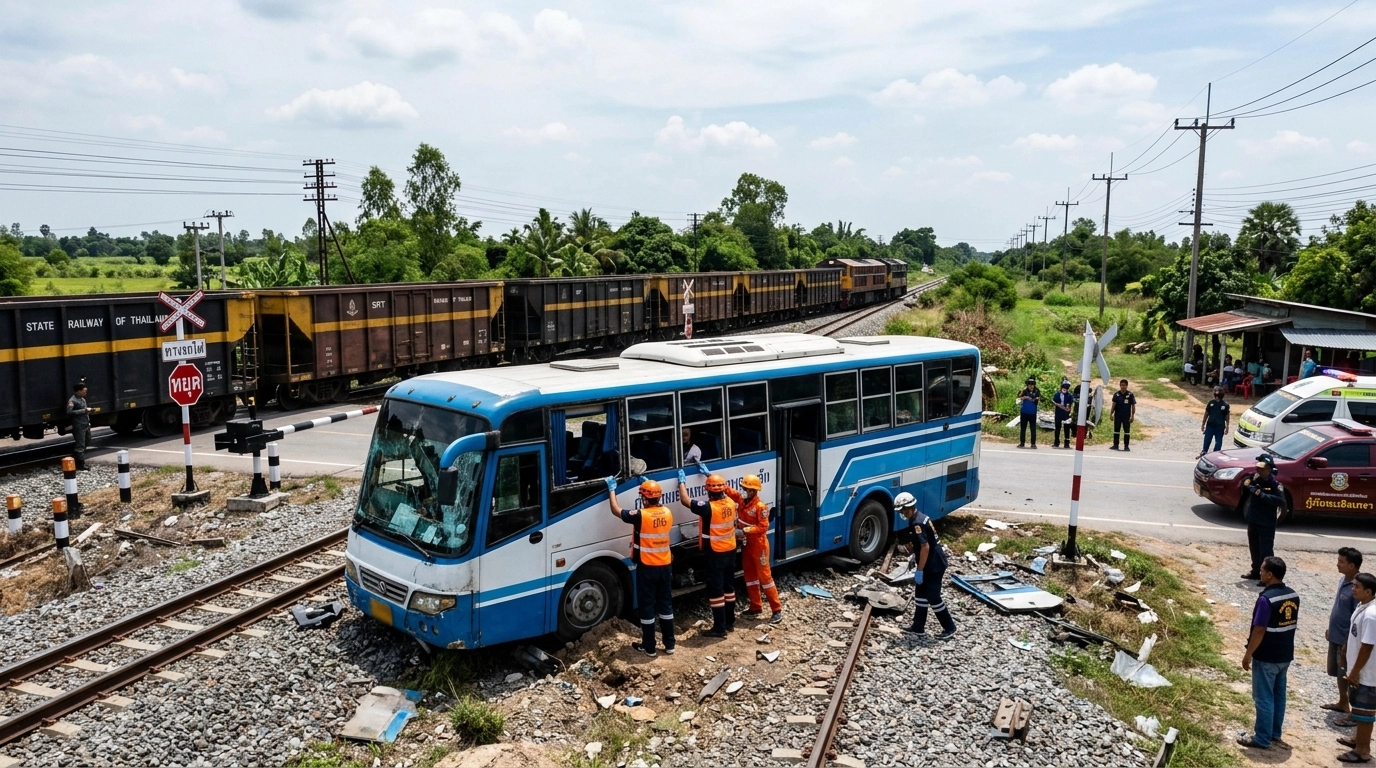
The silence of the rural landscape in Chachoengsao province was shattered by a sound that has become tragically familiar in the eastern corridors of Thailand. In the early hours of a Thursday morning, the routine commute for dozens of workers turned into a scene of absolute devastation. A freight train, hauling its heavy cargo along the tracks that dissect the Ban Pho district, collided with a passenger bus at a level crossing. The force of the impact was so significant that it did more than just mangle metal; it ended eight lives in an instant and left more than thirty others grappling with injuries that will likely change the trajectory of their lives forever. This was not just another traffic accident in a country known for its perilous roads; it was a systemic failure of infrastructure and safety protocols that demands a serious, hard-hitting examination.
When we talk about transportation in Thailand, the focus often drifts toward the bustling streets of Bangkok or the scenic routes of the north. However, the industrial and agricultural heartlands like Chachoengsao rely on a complex and often antiquated rail network that shares space with local road traffic. The collision at this specific crossing was not an isolated freak occurrence but rather the latest entry in a grim ledger of rail-related fatalities. Emergency responders who arrived at the scene were met with a harrowing sight: the passenger vehicle, which had been carrying local residents and workers, was pushed hundreds of yards down the tracks by the sheer momentum of the freight train. The debris field stretched along the ballast, a mixture of personal belongings, shattered glass, and the remains of a vehicle that offered its occupants almost no protection against a multi-ton locomotive.
The immediate aftermath saw a desperate scramble as local rescue foundations and medical teams worked under the harsh morning sun to extricate those trapped within the wreckage. For the families of the eight deceased, the news was a crushing blow, delivered in the sterile environment of hospital waiting rooms or at the side of the tracks where they came to identify their loved ones. For the thirty-two survivors, the physical pain was compounded by the psychological trauma of witnessing such a violent event. As the dust settled and the wreckage was cleared, the focus inevitably shifted from the immediate rescue operation to the underlying questions of how this could happen again in a province that has already seen its fair share of railway tragedy.
The Anatomy of a Rail Disaster in Chachoengsao
Understanding the specifics of the collision requires a look at the physics of the encounter. A freight train, by its very nature, possesses an immense amount of kinetic energy. Even when travelling at moderate speeds, the braking distance for a cargo-laden train can be measured in kilometres, not metres. When the bus entered the crossing, the train driver would have had almost no opportunity to avoid the impact. Reports from the scene suggest the bus was struck broadside, the most vulnerable point for any passenger vehicle. The impact zone was concentrated on the middle of the bus, which explains the high number of casualties as the structural integrity of the vehicle was completely compromised.
Witnesses and early investigators noted that the crossing in question was one of many across the country that lack sophisticated automated barriers. In many rural areas of Thailand, rail crossings are marked by nothing more than a sign or a flashing light, placing the entire burden of safety on the driver of the road vehicle. In this instance, there are conflicting reports about whether the bus driver failed to notice the oncoming train or if they believed they had sufficient time to clear the tracks. Regardless of the individual driver’s decision-making in those final seconds, the reality is that a system which allows a passenger bus to be in the path of a freight train is a system that is fundamentally broken.
The mechanical failure of the bus or a momentary lapse in judgement by the driver are often the first points of inquiry for the authorities. However, we must also look at the environmental factors. Visibility at rural crossings can often be obscured by vegetation or the angle of the sun, and the noise of a busy bus can drown out the whistle of an approaching locomotive. In Chachoengsao, the eastern rail line is a vital artery for the movement of goods to and from the deep-sea ports, meaning train traffic is frequent and heavy. This high volume of rail traffic, combined with the increasing density of road traffic in industrialising zones, creates a high-risk environment where the margin for error is razor-thin.
Infrastructure Failures and Systemic Risks
To view the Chachoengsao collision as an isolated incident is to ignore a clear and present danger that has existed in Thailand for decades. The country has one of the highest road fatality rates in the world, and rail crossings are a significant contributor to these statistics. This latest disaster draws painful parallels to the October 2020 crash, also in Chachoengsao, where eighteen people were killed when a train hit a bus carrying passengers to a religious ceremony. The fact that such a similar, large-scale tragedy could occur in the same province within a few years points to a catastrophic failure in implementing safety reforms that were promised after previous incidents.
The core of the problem lies in the sheer number of unauthorised or “illegal” crossings that have cropped up as communities expand near rail lines. While the State Railway of Thailand maintains thousands of official crossings, many others are informal paths created by locals for convenience. Even at official crossings, the standard of protection varies wildly. Automated barriers, which are the gold standard for rail safety, are expensive to install and maintain. Consequently, many crossings remain “passive,” relying solely on the vigilance of motorists. In a fast-developing nation, this reliance on human vigilance in the face of heavy industrial machinery is a recipe for disaster.
Furthermore, there is the issue of grade separation. In most developed nations, busy rail lines are separated from road traffic by bridges or underpasses. While Thailand has made strides in this area, particularly with its high-speed rail projects and urban transit systems in Bangkok, the rural and provincial lines often remain at grade. The investment required to bridge every crossing in a province like Chachoengsao is substantial, but when weighed against the cost of human life and the economic disruption caused by these accidents, the argument for inaction becomes impossible to defend. The persistent delay in upgrading these crossings is a reflection of skewed priorities where industrial output and logistical efficiency are seemingly valued over the safety of the citizenry.
The Human Cost and the Path to Reform
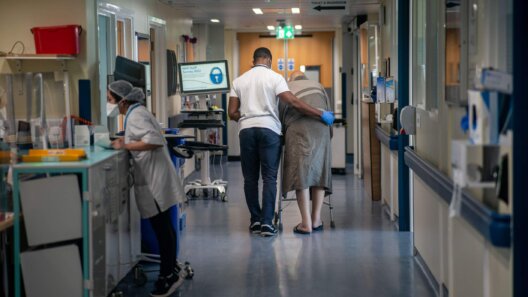
Beyond the statistics and the structural analyses, there is the raw human cost of the Chachoengsao collision. The eight individuals who lost their lives were members of a community; they were breadwinners, parents, and friends. The impact of their loss ripples through the Ban Pho district, leaving a void that no amount of government compensation can fill. For the survivors, the journey toward recovery will be long and arduous. Many of the thirty-two injured are dealing with compound fractures, internal injuries, and the long-term effects of shock. The burden on the local healthcare system in Chachoengsao to manage such a sudden influx of trauma patients is also a factor that is often overlooked in the immediate aftermath of a crisis.
The public outcry following this latest collision has been significant. There is a growing sense of frustration among the Thai public that these “accidents” are being treated as inevitable rather than preventable. The path to reform must begin with a comprehensive audit of all rail crossings, starting with those in high-traffic industrial zones. This isn’t just about painting new lines on the road or installing louder sirens; it’s about a fundamental shift in how the state views its responsibility toward public safety. There must be an accelerated programme to install automated barriers at every official crossing and a decisive move to close or formalise unauthorised crossings.
Accountability is the other side of the coin. Investigations into these crashes often end with the blame being placed squarely on the driver of the vehicle, who is frequently among the deceased and unable to defend themselves. While driver education is undoubtedly important, it cannot be the only solution. The agencies responsible for rail and road infrastructure must also be held to account for their failure to provide a safe environment. If a crossing is known to be dangerous, and no action is taken to mitigate that danger, then the responsibility for any ensuing tragedy must be shared by those in positions of power. The people of Thailand deserve a transportation network that doesn’t require them to gamble with their lives every time they cross a railway track.
The tragedy in Chachoengsao serves as a grim reminder of the work that remains to be done. It is a call to action for the authorities to move beyond rhetoric and deliver the safety improvements that have been promised for years. As the community mourns its dead and supports its injured, the rest of the nation watches to see if this will finally be the turning point, or if it will simply be another headline that fades away until the next train whistles through a silent crossing, and the cycle of devastation begins anew. We must demand better, not just for the victims of this collision, but for everyone who relies on the transport networks that connect this country. The cost of silence and inaction is far too high, measured in the lives of those who never made it home.