








The long-running civil legal battle against former Sinn Féin president Gerry Adams has come to an abrupt and definitive conclusion. On 20 March 2026, the High Court in London confirmed that the case brought against the veteran republican leader by three victims of Provisional IRA bombings has been discontinued. The decision, which arrived before a formal judgment could be delivered, effectively shutters a significant chapter in the ongoing legal attempts to hold individual political figures accountable for the actions of paramilitary groups during the Troubles.
The lawsuit was led by three men who survived some of the most notorious attacks of the conflict: John Clark, who was injured in the 1973 Old Bailey explosion; Jonathan Ganesh, a survivor of the 1996 Canary Wharf bombing; and Barry Laycock, who was affected by the 1996 Manchester bombing. These claimants sought a symbolic £1 in damages, asserting that Adams was a key figure within the IRA’s leadership at the time of the attacks. Adams has always denied being a member of the IRA, a stance he maintained throughout the proceedings.
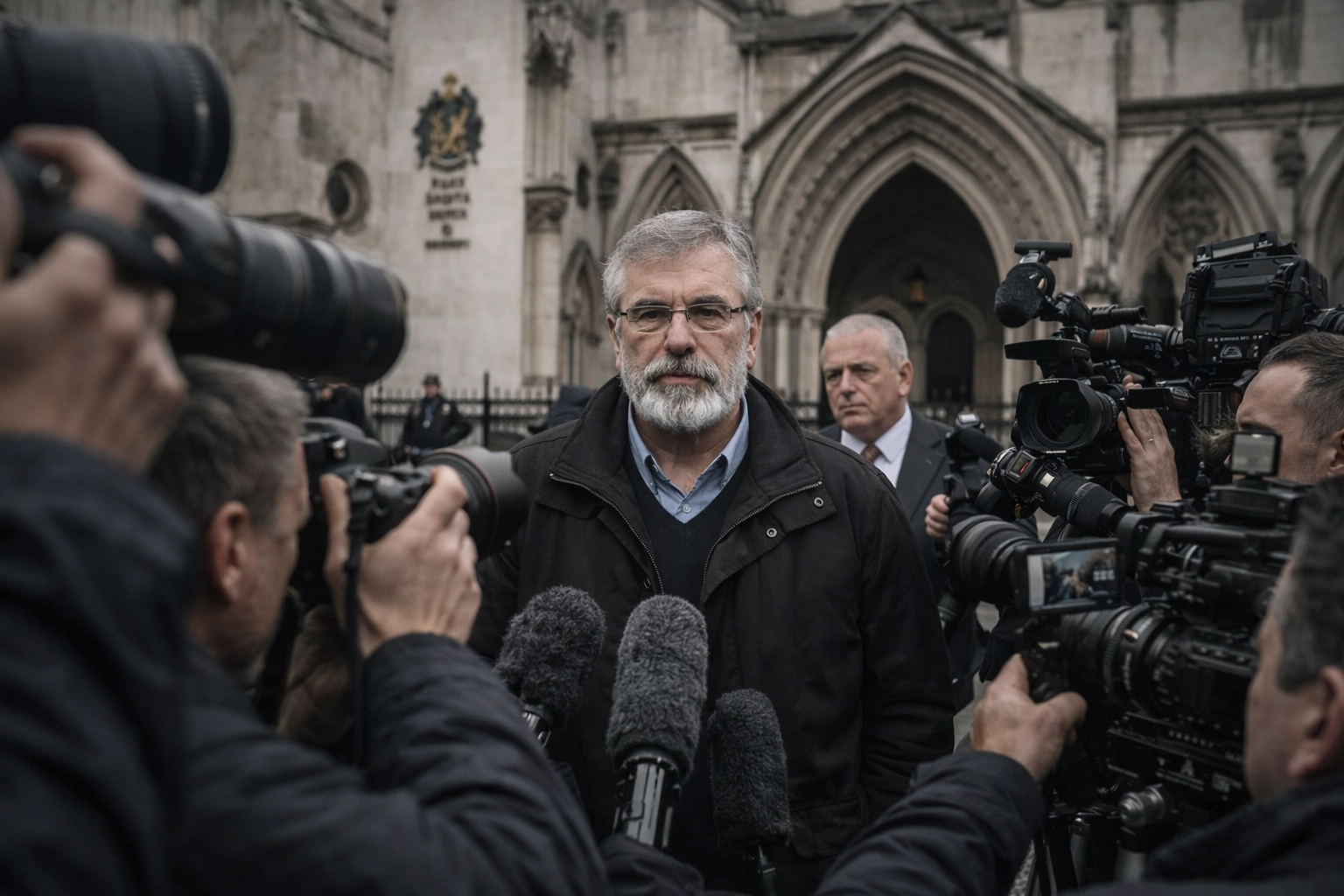
As the legal teams gathered at the Royal Courts of Justice, the atmosphere was thick with the weight of decades of history. The claimants argued that their pursuit was never about financial gain, but rather a quest for judicial recognition of the command structure they believe dictated the violence that changed their lives. However, the sudden withdrawal of the claim has left many questions unanswered and marks a turning point for victims seeking justice through civil litigation.
A symbolic pursuit ends without a ruling
The civil case against former Sinn Féin president Gerry Adams ended abruptly on 20 March 2026, when the High Court in London confirmed the claim had been discontinued.
Three men who survived Provisional IRA bombings had sought £1 in damages, aiming for a finding that Adams held responsibility within the organisation’s leadership at the time of the attacks.
Adams has consistently denied IRA membership, and the discontinuance means the court will not deliver a judgment on the evidence heard in closing arguments earlier in the week.
Why the case was hard to sustain
The claims related to incidents in 1973 and 1996, raising immediate questions around time limits for personal injury actions in England and Wales.
The claimants argued the court should take a wider view of “date of knowledge”, given the historic secrecy around IRA command structures and the gradual emergence of new research and material.
Adams’ legal team also argued the action amounted to an abuse of process, saying the £1 damages claim showed it was not a conventional bid for compensation but an attempt to litigate disputed history through the civil courts.
With decades having passed, practical issues around fair trial standards were central, including the loss of documents, the availability of witnesses, and the reliability of recollections.
What it means for Troubles legacy litigation
The withdrawal of the case underlines the limits of civil litigation as a route to accountability for Troubles-era violence, particularly where allegations rely on disputed leadership responsibility rather than direct involvement.
It also lands amid ongoing political and legal arguments over how the UK should handle legacy cases, as governments seek frameworks that balance victims’ demands for truth and justice with long-term stability in Northern Ireland.
For survivors and campaigners, the lack of a ruling leaves core questions unresolved, and the wider debate about responsibility during the conflict remains live.