








Matthew was just an infant when he was separated from his biological mother, Elaine, in 1976. For half a century, the mystery of his origins remained a constant, quiet presence in the background of his life. The search for his birth family, which began in his early twenties, would eventually span fifty years, navigating a landscape of sealed records, changing social attitudes, and a technological revolution in genetic testing.
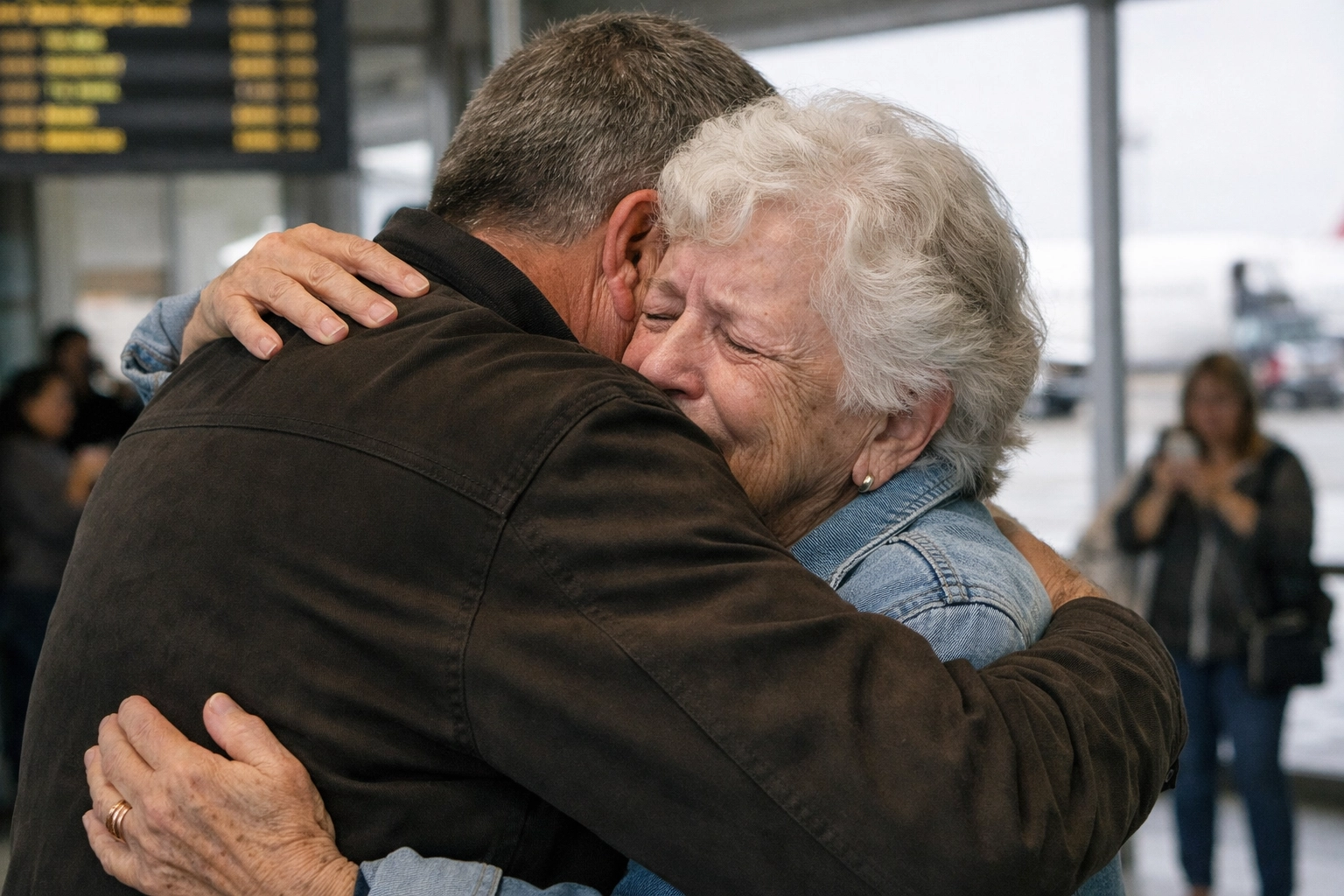
The reunion took place this month, bringing an end to one of the longest-running searches for biological kin recorded in recent years. It marks a significant moment in the growing trend of late-life familial discoveries made possible by the digitisation of public records and the accessibility of commercial DNA databases. For Matthew, the journey was not merely about finding a name on a birth certificate, but about resolving a lifelong question of identity that had persisted since his childhood in the north of England.
The narrative of Matthew and Elaine is emblematic of a specific era in social history. During the mid-1970s, closed adoptions were the standard administrative response to children born out of wedlock or into circumstances where the biological parents could not provide care. These arrangements often involved the total severance of ties and the permanent sealing of original birth records, leaving many adoptees with a "genetic bewilderment" that lasted into adulthood.
The Decades-Long Quest for Identity
The initial stages of Matthew’s search were defined by the limitations of the pre-internet era. In the 1990s, the process of locating a biological parent involved painstaking manual research. It required physical visits to the General Register Office, the scouring of microfiche records, and formal applications for access to adoption files that were often denied under the legislation of the time. For many adoptees like Matthew, the lack of a paper trail meant that the search often hit a dead end before it truly began.
Matthew’s early attempts to find Elaine were met with administrative barriers. At the time, privacy laws were strictly interpreted to protect the anonymity of birth mothers, often at the expense of the adoptee’s desire for medical or personal history. The social stigma surrounding adoption in the 1970s also meant that many records were deliberately obscured or contained minimal information. This lack of data created a vacuum that Matthew spent his thirties and forties trying to fill through private investigators and support groups for separated families.
The psychological toll of a long-term search is well-documented by genealogical experts. The uncertainty of whether a parent is still alive, or whether they wish to be found, creates a unique form of "ambiguous loss." Matthew describes this period as a cycle of hope and disappointment, where every lead turned out to be a clerical error or a different individual with a similar name. The search was not just a hobby but a fundamental drive to understand the biological context of his own existence.
Despite the hurdles, the landscape began to shift in the early 2000s. The introduction of the Adoption and Children Act 2002 in the United Kingdom provided more rights to adopted adults seeking information about their origins. While this opened some doors, it did not guarantee a successful location of a parent who might have changed their name through marriage or moved abroad. The search remained a needle-in-a-haystack endeavour until the advent of large-scale genetic genealogy.
Breaking the Digital Barrier
The turning point for Matthew came three years ago when he turned to commercial DNA testing. This technology, which compares an individual’s DNA against millions of others in a global database, has revolutionised the way families are reunited. Unlike traditional records, DNA cannot be sealed or redacted. It provides a direct link to biological relatives, even if the primary person being sought has never taken a test themselves.
Matthew’s DNA results initially linked him to several second and third cousins. This required a process known as "triangulation," where a genealogist maps out the family trees of these matches to find a common ancestor. By working backwards from these distant relatives, Matthew was able to narrow down a specific family branch in the south of England. The process was exhaustive, involving hundreds of hours of cross-referencing census data, marriage certificates, and electoral rolls.
The breakthrough occurred when a match appeared for a first cousin. Through careful communication, Matthew was able to confirm that this individual’s aunt was a woman named Elaine who had lived in the same town where Matthew was born. The data points began to align: the date of birth, the location of the hospital, and the specific details of the adoption agency involved. For the first time in fifty years, the name on the search files had a face and a verified history.
This digital shift has created a "reunion boom" globally. Experts in the field of genetic genealogy report that cases which were once considered "cold" for decades are now being resolved in a matter of months. However, the speed of these discoveries often outpaces the emotional preparation required for such a significant life event. For Matthew, the realization that Elaine was still alive and living less than a hundred miles away was both a relief and a source of profound anxiety.
The Impact of Long-Term Familial Discovery
The reunion between Matthew and Elaine took place in a neutral setting, a moment that concluded a half-century of separation. Such meetings are fraught with complexity, as both parties must reconcile the version of the person they have held in their minds with the reality of the individual standing before them. In Matthew’s case, the reunion revealed a striking physical resemblance and a shared set of mannerisms that bridged the fifty-year gap.
Elaine’s perspective adds a layer of historical context to the story. Like many women of her generation, she had been pressured into the adoption by societal expectations and a lack of support for single mothers. She had spent five decades wondering about the life Matthew had led, constrained by the belief that she had no right to contact him. The reunion offered a form of closure that is often denied to birth parents who were told to "forget and move on" by the authorities of the 1970s.
The broader implications of these late-life reunions are significant for social policy and healthcare. For Matthew, the discovery of his biological mother also meant the discovery of his full medical history, an essential component of preventative healthcare that he had previously been denied. It also introduced him to a network of half-siblings and extended family members, effectively doubling his familial circle in a single afternoon.
The story of the son’s search reflects a wider societal shift towards transparency and the recognition of the right to know one’s origins. As DNA databases continue to grow, the possibility of remaining anonymous is rapidly diminishing. For the thousands of individuals still searching for answers from the era of closed adoptions, Matthew’s success serves as a testament to the power of persistence and the transformative impact of modern science. The fifty-year search is a reminder that while time and policy can separate families, the drive to reconnect remains one of the most enduring aspects of the human experience.
As the meeting concluded, the focus shifted from the past to the future. The challenge for Matthew and Elaine now lies in building a relationship in the present, unburdened by the decades of silence. The search is over, but the process of integration is only just beginning. Their story remains an ongoing narrative, a "to be continued" in a chapter of social history that is still being written by those who refuse to stop looking.