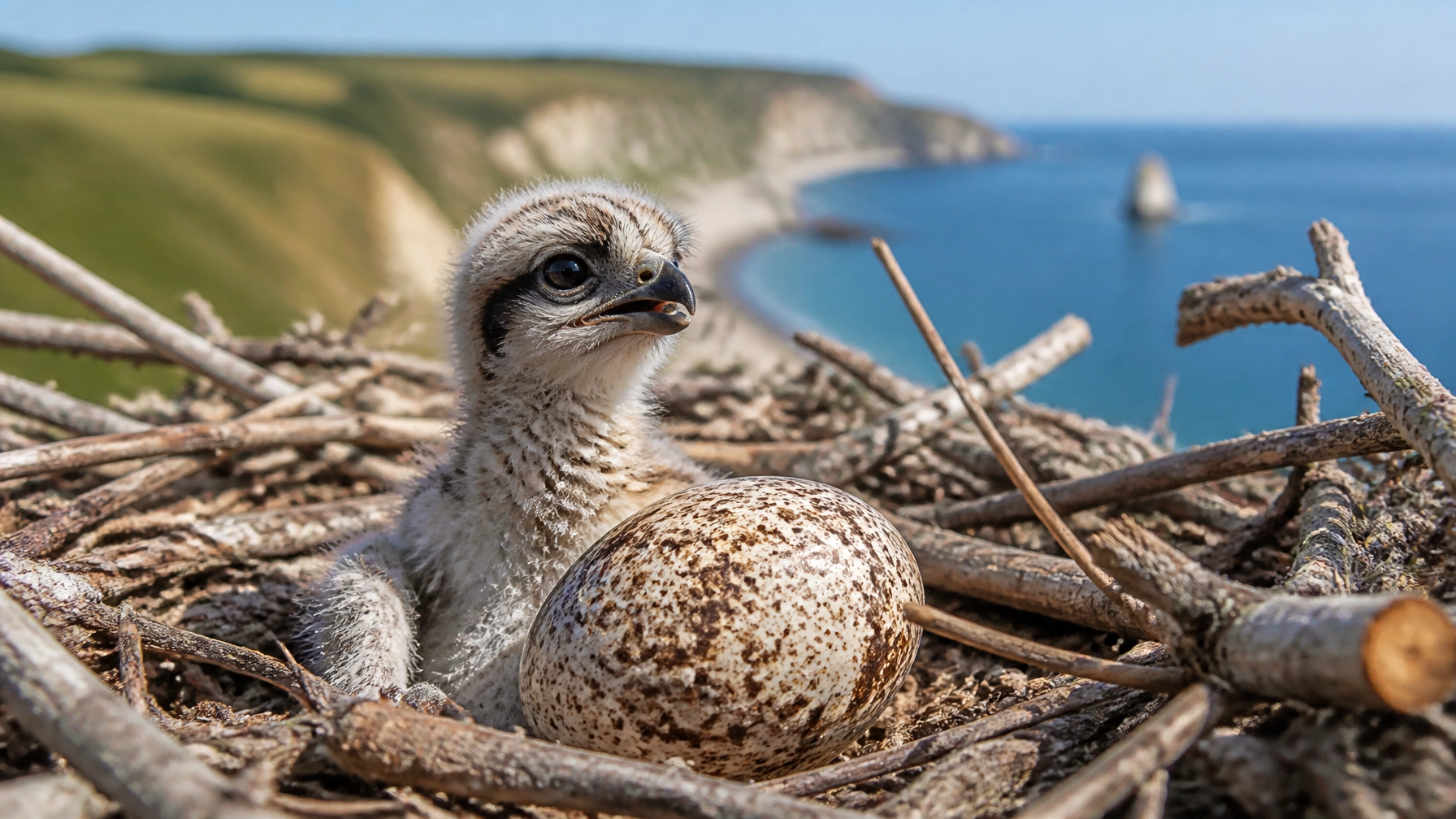
The first osprey chick of the 2026 breeding season has successfully hatched in Poole Harbour, marking another significant milestone for the reintroduction of these majestic birds of prey to southern England. At approximately 05:30 on Thursday morning, the tiny, downy chick emerged from its shell under the watchful eye of its parents, the well-known pair designated CJ7 and Blue 022. The event was captured by high-definition cameras monitoring the Carey nest, providing conservationists and bird enthusiasts with a clear view of the first moments of this new life.
This hatching represents more than just a single birth; it is the culmination of years of dedicated conservation work aimed at restoring a species that had been absent from the south coast for nearly two centuries. The parent birds, who have become somewhat of a local sensation, have a proven track record of successful breeding. CJ7, the female, was the first to return to the harbour as part of the translocation project, and after years of waiting for a mate, she finally paired with Blue 022. Since then, the duo has successfully raised multiple broods, helping to anchor a growing population in the Dorset region.
The early morning light revealed the small, wet chick as it struggled to free itself from the remnants of its speckled eggshell. Within hours, the chick was being offered its first meal: small pieces of fish brought to the nest by the male. Blue 022 has proven to be an exceptional provider, frequently seen diving into the waters of the harbour to catch grey mullet and other local fish species to sustain his growing family. The female, CJ7, remains predominantly on the nest, providing the warmth and protection necessary for the chick's survival during its first delicate days.
A Legacy of Reintroduction and Restoration
The success of the Poole Harbour osprey project is a testament to the long-term vision of wildlife restoration in the United Kingdom. Ospreys were once widespread across the British Isles, but historical persecution and the loss of suitable habitat led to their extinction as a breeding species in England and Wales by the mid-19th century. While a small population managed to persist in the remote highlands of Scotland, it took decades of protection and dedicated translocation efforts to bring them back to the southern counties.
The project in Dorset began with the translocation of chicks from healthy populations in Scotland. These young birds were carefully raised in "hacking" pens in the harbour, where they were fed and monitored until they were ready to migrate to West Africa for the winter. The hope was always that these birds would return to the place where they first took flight to establish their own nests. CJ7’s arrival and subsequent pairing with Blue 022 confirmed that Poole Harbour offered the ideal environment for the species to thrive once again. The presence of large, shallow bodies of water filled with fish, combined with the availability of secure nesting sites on private estates and nature reserves, has made the area a stronghold for the species.
Beyond the immediate success of this single nest, the wider impact on local biodiversity is profound. Ospreys are considered an apex predator in their aquatic ecosystems, and their presence indicates a healthy, productive environment. The efforts to protect the harbour for the birds have also benefited a wide range of other species, from wading birds and waterfowl to the fish populations that sustain them. The project has also fostered a deep sense of community engagement, with thousands of people following the lives of the birds via live webcams, turning a local conservation effort into a shared national experience.
The Biology of Survival and Growth
The first few weeks of an osprey chick's life are a period of rapid development and high stakes. Hatched with a coat of pale down and eyes that open almost immediately, the chick is entirely dependent on its parents for temperature regulation and food. Unlike many other birds, ospreys do not feed their young by regurgitation; instead, the female uses her sharp, hooked beak to tear tiny, manageable strips of raw fish, which she delicately offers to the chick. This process requires incredible precision and patience, ensuring the young bird receives the high-protein diet necessary for its bones and feathers to grow.
Growth is remarkably fast. Within just a few weeks, the chick will trade its initial down for a second, darker coat, and soon after, the first signs of true feathers will begin to emerge. By mid-summer, the chick will be nearly as large as its parents, exercising its wings in the nest in preparation for its first flight. This period of "branching" and wing-flapping is a critical phase, as the bird must develop the muscle strength and coordination required to lift off from the nest and navigate the winds above the harbour.
The environmental conditions in Dorset this spring have been largely favourable, with a mix of mild temperatures and sufficient dry spells. However, the parents must remain vigilant against potential threats. Natural predators, such as large gulls or even other birds of prey, can pose a risk to an unattended nest. Furthermore, the weather can be a fickle ally; heavy, prolonged rain or unseasonable cold can be life-threatening for a young chick that cannot yet regulate its own body temperature. The constant presence of CJ7 on the nest is the chick's primary defence against these elements, as she uses her large wingspan to create a waterproof and insulated canopy over her offspring.
Looking Toward a Sustainable Future for the Species
The hatching of this chick is just the beginning of the 2026 story. There are typically three eggs in a clutch, laid a few days apart, meaning that more siblings are expected to emerge in the coming days. This staggered hatching, known as asynchronous hatching, is a common biological strategy among birds of prey. It ensures that if food becomes scarce, the oldest and strongest chick has the best chance of survival, though in the plentiful environment of Poole Harbour, it is common for all chicks in a brood to fledge successfully.
As the population in Dorset grows, the goal of the conservation project shifts from establishment to sustainability. Evidence suggests that the Poole Harbour colony is beginning to act as a hub, with birds from this area potentially moving on to colonise other suitable habitats along the south coast of England. There have already been reports of "prospecting" birds: young adults looking for territories: seen in neighbouring counties, suggesting that the success in Dorset could be the catalyst for a much wider recovery of the species across the region.
The long-term survival of the osprey in England also depends on international cooperation. These birds are incredible migrators, flying thousands of miles each autumn to spend the winter in the coastal mangroves and river systems of West Africa. Protecting these wintering grounds is just as important as protecting their nesting sites in the UK. By tracking the birds with satellite tags, researchers have gained invaluable insights into their migratory routes and the challenges they face, from extreme weather events to habitat loss in their wintering range. Every chick that hatches in Poole is a potential traveller that will carry the story of British conservation across continents, returning year after year to continue the cycle of life that has been so successfully restored to the shores of Dorset.