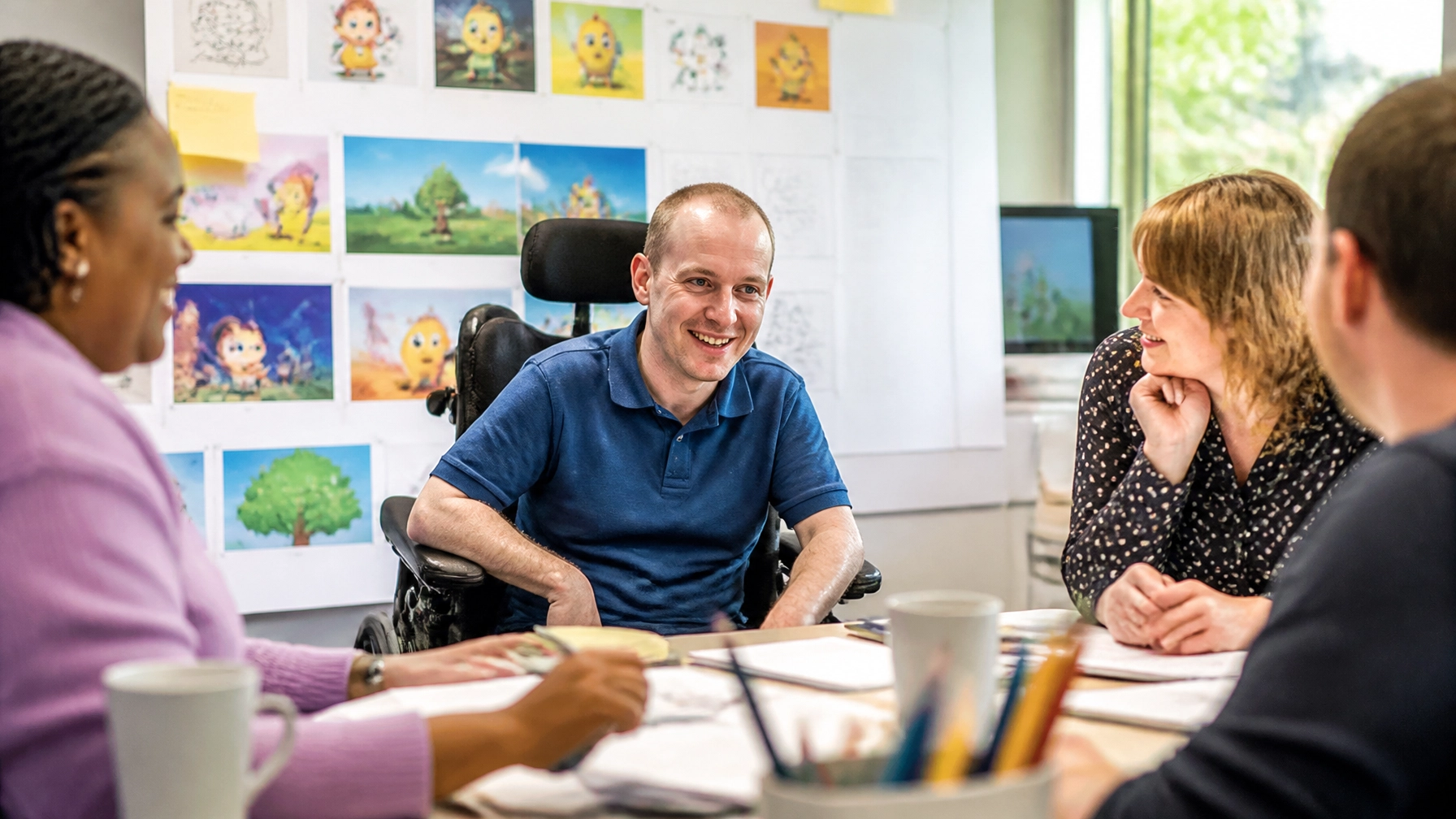
Lee Ridley, the comedian widely known as Lost Voice Guy, has taken a significant step into the world of children's television by joining the writing team for the popular CBeebies series Zog.
This move marks a noteworthy expansion of Ridley's career, moving from the high-energy environment of stand-up comedy into the collaborative and intricate world of animation scriptwriting. Ridley, who won Britain's Got Talent in 2018, has long been a trailblazer for disability representation in the entertainment industry. By contributing to a series as beloved as Zog, based on the books by Julia Donaldson and Axel Scheffler, he is bringing a unique and essential perspective to a new generation of viewers.
The comedian, who lives with cerebral palsy and uses a text-to-speech communication aid, has authored two episodes for the series. His involvement is not merely a technical contribution but a creative one that seeks to weave genuine experiences of disability into the fabric of the show. One of the most anticipated elements of his work includes the introduction of a unicorn character that utilises a walking frame. This inclusion is a deliberate effort to provide visible representation for children who use mobility aids, ensuring they see themselves reflected in the magical and adventurous worlds they watch on screen. The decision to integrate such a character into the world of Zog, a series known for its themes of perseverance and learning, aligns perfectly with the show's existing ethos.
Ridley's journey into scriptwriting for children’s media highlights a growing trend in the industry to move beyond tokenism and towards meaningful inclusion in the writers' room. For Ridley, the transition involves adapting his sharp comedic timing and storytelling skills to fit the educational and entertainment requirements of pre-school programming. While his stand-up often touches on the nuances and frustrations of living with a disability in a world not always designed for it, his work on Zog allows him to channel those insights into positive, affirming narratives for younger audiences.
Advancing disability representation on screen
The inclusion of a unicorn with a walking frame is a powerful symbol in the landscape of children's television. For many years, disability in animation was either absent or portrayed through a lens of pity or "inspiration." By placing a mobility aid on a mythical creature like a unicorn, the narrative shifts the focus from the disability being a "problem" to solve, to it being a natural part of a character's identity in a magical world. This approach helps to normalise the presence of such aids, fostering a sense of belonging for children who use them and building empathy and understanding among those who do not.
Representation in early childhood media is critical because it is during these formative years that children begin to develop their perceptions of the world and the people in it. When a child sees a character like the unicorn in Zog, it sends a clear message that their experiences are valid and that they are the heroes of their own stories. Ridley’s influence on the script ensures that these portrayals are handled with authenticity and humour, avoiding the pitfalls of stereotypical depictions. The presence of a disabled writer behind the scenes is what makes this representation successful; it ensures the nuances of daily life with a disability are captured accurately, even in a world filled with dragons and knights.
Furthermore, the impact of such representation extends to the parents and educators who watch these programmes alongside children. It provides a starting point for conversations about diversity and the different ways people move through the world. By integrating these themes into a mainstream, high-profile show like Zog, CBeebies is demonstrating a commitment to reflecting the true diversity of its audience. This isn't just about meeting a quota; it is about enriching the storytelling by including voices that have historically been sidelined.
A new creative chapter for the comedian
For Lee Ridley, joining the writing team of a major animation project represents a significant milestone in a career that has already defied expectations. Since his breakthrough on national television, Ridley has used his platform to challenge perceptions of what a person with a speech impairment can achieve. His success as a stand-up comedian proved that his voice, though delivered via technology, was powerful, witty, and deeply resonant with the public. Moving into scriptwriting is a logical progression, allowing him to explore long-form storytelling and character development in a way that the short sets of stand-up do not always permit.
Writing for animation presents a unique set of challenges. It requires a deep understanding of visual storytelling, where the dialogue must complement the action on screen. For Ridley, who has often spoken about the rhythm and timing required to make his communication aid work in a live comedy setting, the transition to the structured world of television scripts has been a rewarding experience. He has spoken about the joy of seeing his ideas come to life through the work of animators and voice actors, noting that the collaborative nature of the writing room has provided a fresh perspective on his own creative process.
This role also signifies the industry's recognition of Ridley as a multifaceted creator. While his disability is a part of his story, his hire on the Zog team is a testament to his talent as a writer and his ability to craft engaging, funny, and moving content. It sets a precedent for other production companies to look towards disabled creators not just for "disability-themed" projects, but for mainstream roles where their unique perspectives can enhance any narrative. Ridley's work on these episodes serves as a professional benchmark, showing that with the right environment and creative freedom, the barriers to entry in high-level television production can be dismantled.
Setting a standard for inclusive children's media
The collaboration between Ridley and the producers of Zog sets a high standard for the rest of the media industry. It moves the conversation from simply having "diverse characters" to ensuring that the creative leadership behind those characters is also diverse. This "nothing about us without us" philosophy is becoming increasingly important in modern media production. By bringing Ridley into the writers' room, the show guarantees that the experiences of the characters are grounded in reality, even within a fantasy setting.
The broader implications for the UK’s creative sectors are substantial. As more broadcasters and production houses witness the success of inclusive writing teams, the hope is that it becomes the norm rather than the exception. The success of Zog as a franchise means that Ridley’s episodes will be seen by millions of children across the country and potentially around the world through international distribution. This level of exposure is vital for changing long-term societal attitudes towards disability and communication differences.
Ultimately, the addition of Lee Ridley to the CBeebies writing staff is a celebration of talent and a win for inclusive storytelling. It reminds us that stories are at their best when they reflect the full spectrum of human experience. As children sit down to watch the adventures of Zog and his friends, they will be treated to a world that is a little more inclusive, a little more representative, and significantly more magical because of the voice: and the scripts: of one of the UK's most talented creators. The unicorn with the walking frame is more than just a character; it is a sign of progress in an industry that is finally learning to listen to every voice.