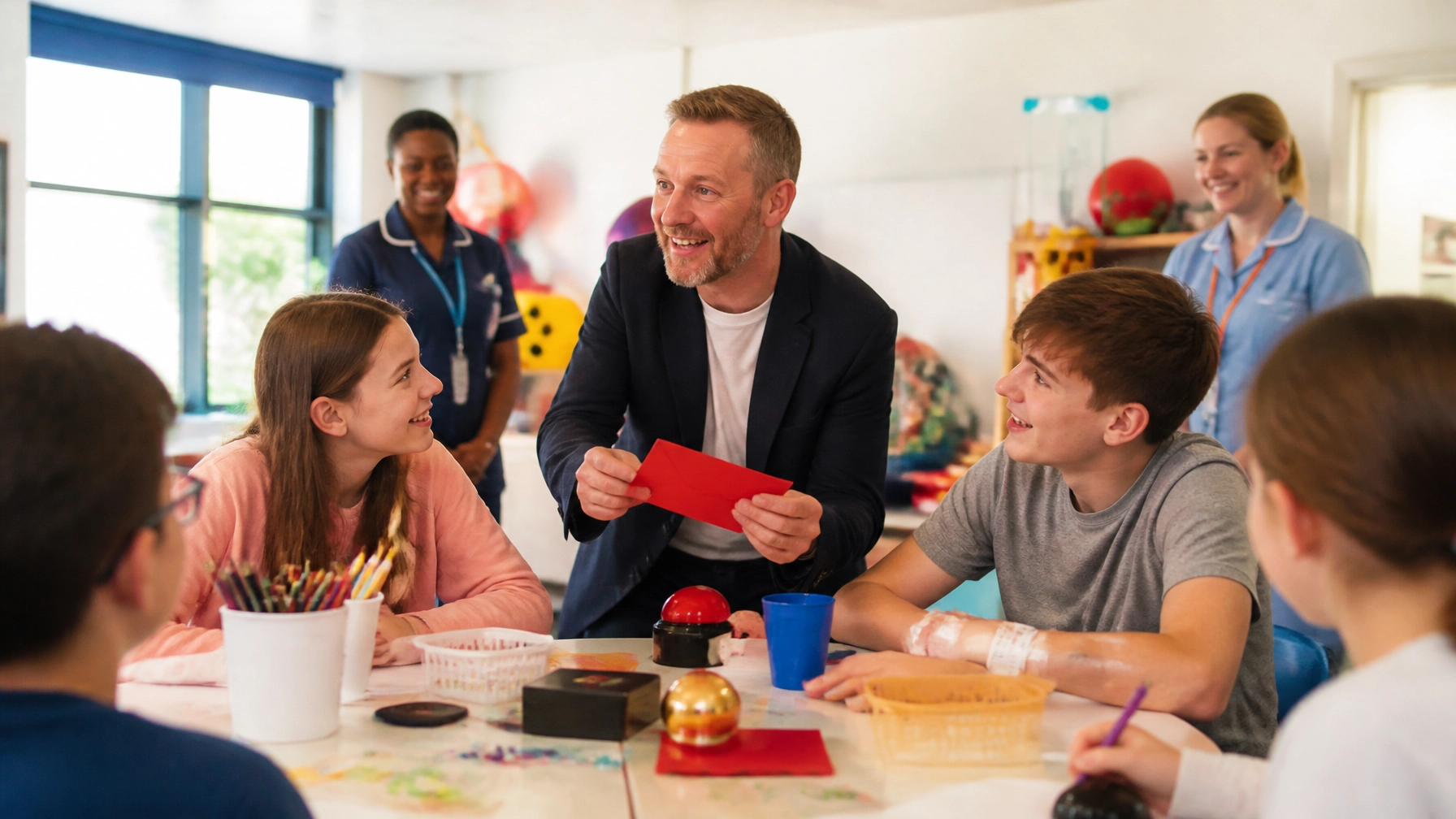
The sterile, often daunting environment of a hospital ward is being transformed into a theatre of the absurd as the Taskmaster Hospital Club officially makes its debut.
Alex Horne, the creator and star of the hit television series, recently visited Frimley Park Hospital to celebrate the launch of a project designed to bring laughter, creativity, and a much-needed sense of normality to young patients. For children and teenagers aged between 9 and 16, a hospital stay can be an isolating and anxiety-inducing experience, but this new initiative seeks to turn that narrative on its head by inviting them to complete a series of whimsical and logic-defying tasks.
At Frimley Park, the atmosphere was electric as the first cohorts of "contestants" began their journey into the world of Taskmaster. The project is a collaboration between Taskmaster Education and health play specialists within the NHS, aimed at providing a structured yet silly distraction from the rigours of medical treatment. By focusing on the playful and the peculiar, the club offers more than just a pastime; it provides a vital psychological outlet for children who are often navigating the most difficult periods of their young lives.
Bringing the Spirit of the Show to the Ward
The transition from a high-production television studio to a hospital ward might seem like a leap, but the core essence of the programme remains entirely intact. In the Taskmaster Hospital Club, the traditional roles are adapted to suit the clinical environment. While Alex Horne cannot be present in person for every session, he remains a central figure through bespoke video content. On screen, he delivers instructions with his signature deadpan wit, setting challenges that encourage the children to think outside the box. On the ground, the crucial role of the "Taskmaster" is taken on by health play specialists and nursing staff. These professionals facilitate the tasks, ensuring they are accessible to all children regardless of their physical mobility or medical requirements.
The tasks themselves are carefully curated to be inclusive. In a typical session, a child might be asked to create the most impressive sculpture out of medical tape and cotton wool, or to compose a poem about a piece of hospital fruit. The beauty of the format lies in its flexibility. A child confined to their bed can participate just as fully as one who is able to visit the ward’s playroom. This inclusivity is a cornerstone of the project, ensuring that no child feels left out of the fun. The tasks are designed to be low-stakes but high-reward, focusing on the process of creation and problem-solving rather than the final outcome. This shift in focus is particularly beneficial in a hospital setting, where so much of a patient's day is dictated by schedules and clinical outcomes.
Staff at Frimley Park have already noted the shift in energy since the club's introduction. The arrival of the Taskmaster "seal" – the iconic wax-sealed envelope – brings a sense of ceremony and excitement to the afternoon. For a few hours, the focus shifts from heart rates and medication dosages to the pressing matter of how many ping-pong balls can be balanced on a spoon while humming a nursery rhyme. It is this injection of the ridiculous that allows children to reclaim a sense of agency and personality that can sometimes be overshadowed by their identity as a patient.
The Therapeutic Power of Play and Distraction
Beyond the immediate laughter, the Taskmaster Hospital Club is rooted in the proven benefits of play therapy. For teenagers, in particular, the hospital can feel like a place where they lose their independence. The challenges provided by the club require them to use their initiative, exercise their creativity, and engage in social interaction with staff and fellow patients. It is a powerful tool for building resilience. When a young person is laughing at a silly task, their stress levels decrease, which can have a tangible impact on their overall wellbeing and recovery process.
The "distraction" provided by these activities is not merely a way to pass the time; it is a clinical intervention in its own right. Medical procedures can be frightening, and the long hours of waiting between consultations can lead to rumination and low mood. By engaging the brain in a completely different type of problem-solving, the Taskmaster Club helps to break the cycle of clinical anxiety. The feedback from parents at Frimley Park has been overwhelmingly positive, with many noting that their children seem more like their usual selves after a session. It provides a bridge back to the world outside the hospital walls, reminding them that they are still creative, funny, and capable individuals.
The project also fosters a unique bond between the young patients and the hospital staff. Seeing a nurse or a doctor participate in a silly challenge or act as the arbiter of a task humanises the medical team in the eyes of the child. It breaks down the traditional hierarchies and builds a foundation of trust and mutual respect. This improved rapport can make future treatments and conversations much easier, as the child feels seen as a person rather than just a case file. The joy is infectious, spreading from the children to the staff, creating a more positive working environment in what is often a high-pressure setting.
A Nationwide Rollout for Junior Tasks
The success at Frimley Park is only the beginning. Plans are already in motion for a national rollout, with the aim of bringing the Taskmaster Hospital Club to NHS trusts across the United Kingdom. The scalability of the project is one of its greatest strengths. Because the tasks rely on imagination and simple, everyday items rather than expensive equipment, it is an accessible model for hospitals with varying levels of resources. The partnership with Taskmaster Education ensures that the quality and "voice" of the club remain consistent, providing a high-quality experience for every child involved.
As the initiative expands, it is set to become a staple of paediatric care. The vision is to create a network of Taskmaster clubs where children in different hospitals can potentially share their results or even compete in inter-hospital challenges. This sense of belonging to a wider community is incredibly valuable for long-term patients who may feel disconnected from their peers at school. By being part of the "Taskmaster Club," they join a prestigious and hilarious lineage of contestants, giving them a unique story to tell when they eventually return home.
The endorsement from Alex Horne and the wider production team has provided the project with a significant profile, helping to secure the interest of hospital trusts nationwide. It represents a modern approach to paediatric health, one that recognises the importance of mental and emotional health alongside physical recovery. As more hospitals sign up to host their own clubs, the legacy of this initiative will be measured not in points awarded or tasks won, but in the thousands of smiles brought to the faces of children during their most challenging moments. The Taskmaster Hospital Club is a testament to the idea that even in the most serious of places, there is always room for a little bit of nonsense.