








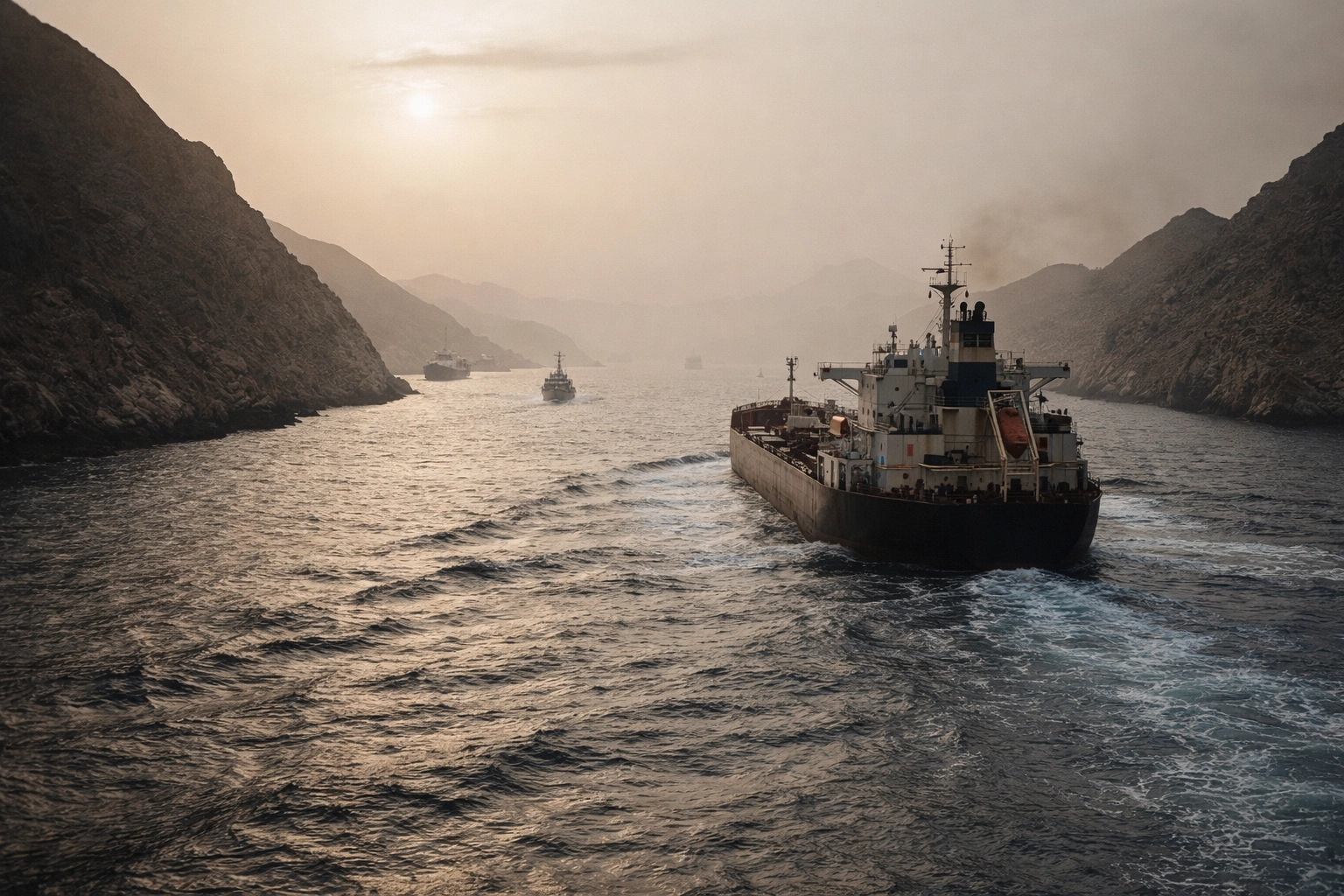
The world’s energy markets are currently holding their collective breath. If you have been keeping an eye on the global news lately, you will have noticed that the Strait of Hormuz is once again at the centre of a major geopolitical struggle. For anyone needing a quick refresher, this narrow, 21-mile-wide stretch of water sits between Iran and Oman, and it remains one of the most important maritime chokepoints anywhere in the world. It is the main route for tankers carrying oil from the Persian Gulf to the open ocean, and right now, the pressure around it is hard to ignore.
Recent reports suggest the situation has moved well beyond routine diplomatic sparring. We are seeing a live escalation involving drone interceptions, slower shipping traffic, and growing concern for anyone who depends on stable fuel prices. As an independent news UK source, it matters to us to look at the untold stories behind the headlines, not just the official statements. This is not only about military manoeuvres. It is also about how rising tension in one narrow shipping lane can quickly affect households, businesses and markets far beyond the Gulf.
The stakes are enormous. Roughly one-fifth of the world’s liquid petroleum moves through this strait every day, which works out at around 20 million barrels of oil. With countries including China, India and Japan heavily reliant on this route, even a limited disruption can become a global news issue within hours. The sense of uncertainty is growing, and as drone technology plays a bigger part in maritime security, the rules of confrontation are shifting in real time.
The Strategic Chokepoint and Drone Pressure
To understand why the concern is so intense, it helps to look at the geography. The Strait of Hormuz is narrow, and at its tightest point the shipping lanes are only two miles wide in each direction. That leaves massive tankers exposed and limits room for error. In recent months, the focus has shifted away from traditional naval standoffs and towards a more unpredictable threat: drones.
Reports of drone interceptions and aerial harassment have become a regular feature of coverage from the region. These unmanned aircraft can be used for surveillance, intimidation and, in some cases, direct attack. For the crews guiding huge commercial vessels through a confined route, that creates a constant layer of risk. It is one of the untold stories of modern shipping: the people moving the world’s energy supplies are doing so under increasingly tense and technologically complex conditions.
The wider concern is that this lowers the barrier for disruption. It no longer takes a large naval force to unsettle a major trade route. A smaller, cheaper and more agile toolkit can still cause serious delays and market panic. In response, naval forces and private operators are investing more heavily in electronic countermeasures and anti-drone systems, turning the strait into a testing ground for a new kind of maritime security contest.
Market Shocks and the Wider Energy Fallout
Whenever tensions rise in the strait, markets tend to react quickly. This time, the response has been sharper than usual. Recent escalations have pushed crude oil prices higher, reviving worries about fuel costs, inflation and supply disruption. For people in the UK, that is not a distant financial story. It can feed through into higher petrol prices, transport costs and household bills.
The ripple effect stretches well beyond energy traders. Much of the oil travelling through Hormuz supports manufacturing demand across Asia, so any sustained slowdown can affect production across a wide range of sectors. From electronics to vehicle parts, supply chains remain vulnerable after several years of disruption. That is why the strait matters not just to governments and shipping firms, but to ordinary consumers following independent news UK coverage and trying to make sense of rising everyday costs.
There are alternatives on paper, including pipelines that bypass the strait, but their capacity is limited. They cannot fully absorb the volume that normally passes through these waters. That leaves the global economy heavily dependent on a route that is both strategically vital and increasingly tense. It is one more reminder that global news events at sea can have very real consequences on land.
Diplomatic Risks and What Comes Next
So where does this go next? The international response has mixed visible military deterrence with quieter diplomacy. There has been discussion of tanker escorts and stronger naval coordination, echoing past efforts to protect commercial shipping in periods of regional instability. While that may offer reassurance in the short term, it also raises the risk of miscalculation if any encounter escalates too quickly.
Behind the scenes, there are also untold stories of negotiation, pressure and contingency planning. Governments are looking at how to secure safe passage, protect energy supply and avoid a wider conflict without appearing weak. That balancing act is difficult, especially when every move is scrutinised by markets as well as rivals. The conversation is no longer only about military strength; it is also about resilience, diplomacy and how interconnected the global economy has become.
The human impact should not be overlooked. Merchant crews, port workers and households dealing with rising living costs all feel the consequences of instability in these waters. The Strait of Hormuz remains a pressure point for energy security, trade and international politics. For now, the priority has to be de-escalation and steady diplomacy, because the battle for these oil lanes affects far more than the ships passing through them.