The streets of Camden have long served as the spiritual home for Britain’s most defiant and creative social movements, but until now, those stories were scattered across personal photo albums and fading memories. The doors have finally opened to the world’s first Museum of Youth Culture, a permanent home dedicated to the styles, sounds, and social revolutions that have defined generations of teenagers across the United Kingdom. Located in the heart of North London, this landmark institution seeks to do more than just display old clothes; it aims to legitimise the often-overlooked history of being young and rebellious in Britain.
For decades, youth culture was viewed by the mainstream as a fleeting phase or a public nuisance. From the suited-and-booted Mods of the 1960s to the neon-drenched ravers of the 1990s, these movements were born out of a desire for identity and a refusal to conform to the expectations of the previous generation. The museum’s arrival in Camden marks a significant shift in how these histories are preserved. It treats the evolution of the British teenager with the same academic and cultural rigour usually reserved for fine art or ancient history. By providing a dedicated space for these archives, the museum ensures that the social impact of music, fashion, and street life is never forgotten.
The choice of location is no coincidence. Camden has been a melting pot of alternative culture for over half a century, surviving through the eras of punk, britpop, and the rise of grime. It is a place where the mainstream and the underground have always collided, making it the natural environment for an institution that celebrates the grit and glamour of growing up. The museum occupies a modern, expansive space that manages to feel both professional and accessible, mirroring the very subcultures it documents.
Preserving the legacy of British subcultures
Inside the galleries, the narrative begins with the post-war era, a time when the concept of the 'teenager' first truly emerged. Before this, children were often expected to transition directly into the adult world of work and responsibility. The museum tracks the explosion of independence that followed, starting with the Teddy Boys and their Edwardian-inspired tailoring. These were the first signs of a distinct youth identity that used clothing as a form of social protest and self-expression.
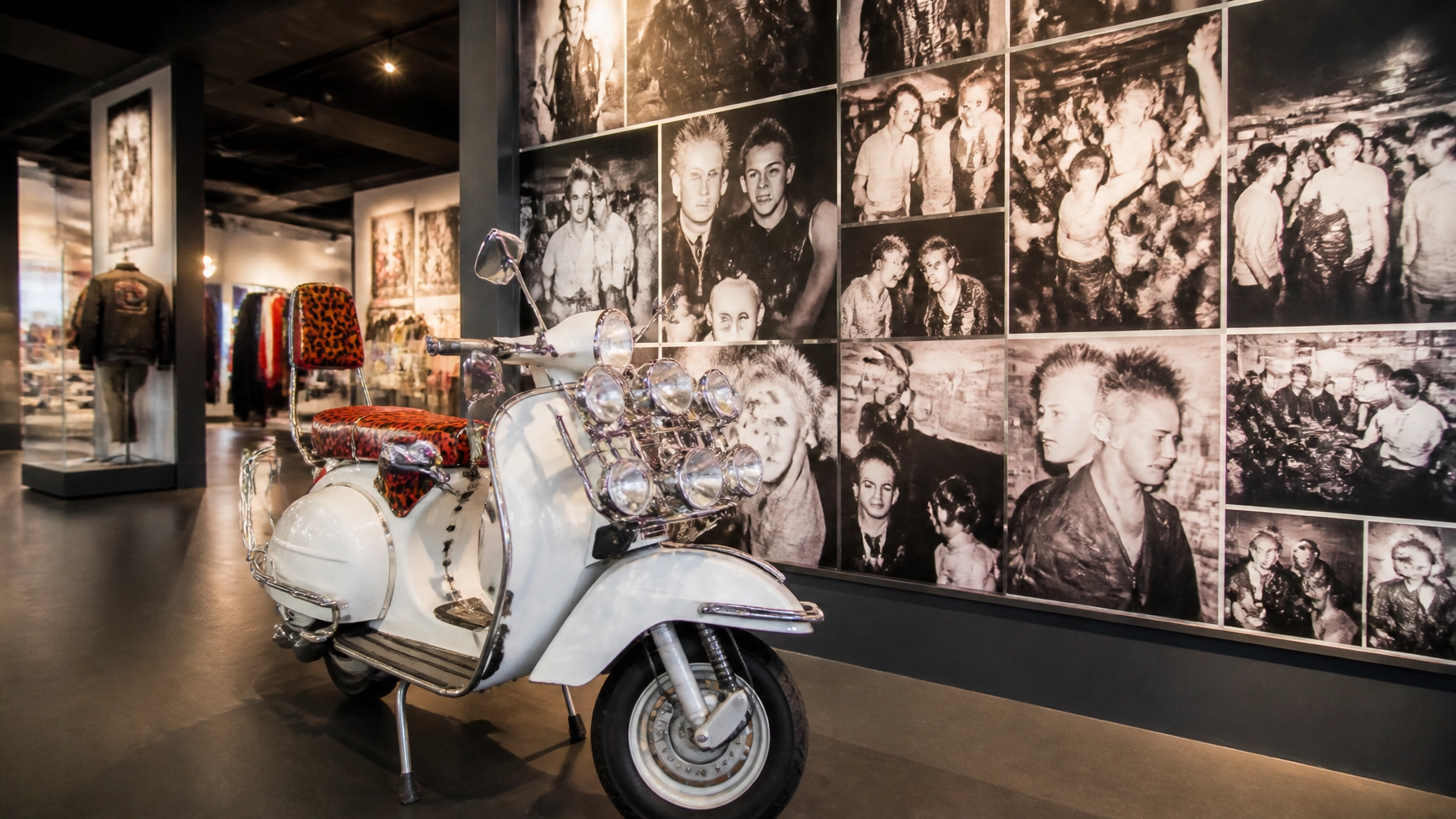
As visitors move through the exhibits, they are met with the sharp aesthetics of the Mod movement. Polished scooters and slim-cut suits represent a generation that found freedom in the late-night jazz clubs and coastal rallies. The collection does an excellent job of showing how these styles were not just about vanity but were deeply tied to the economic and social changes of the time. The transition into the more aggressive, DIY ethos of punk is presented through hand-stitched leather jackets and safety-pinned fanzines. Here, the museum highlights the importance of the 'do-it-yourself' spirit, showing how young people created their own media, music, and fashion when they felt the establishment had failed them.
The journey continues into the late 20th century, exploring the seismic shift brought about by acid house and rave culture. This section of the museum captures the sheer scale of the movement, where thousands of young people gathered in fields and warehouses, unified by a new sound and a shared sense of euphoria. The display includes everything from illegal rave flyers to the oversized, colourful clothing that defined the era. It also touches on the political backlash of the time, such as the Criminal Justice Act, which attempted to curb these gatherings, reminding visitors that youth culture has always been a site of political struggle.
A collection built by the people
What sets this museum apart from traditional institutions is its reliance on the public to tell the story. Rather than relying solely on professional photography or curated donations from high-end designers, the Museum of Youth Culture has built its foundation on crowd-sourced material. For years, the organisation behind the museum has encouraged ordinary people to submit their own photographs, flyers, and memories. The result is a collection that feels incredibly personal and authentic, capturing the moments that usually happen away from the professional lens.
This 'people’s archive' approach means that the images on display are often raw and candid. They show teenagers hanging out on street corners, getting ready in cramped bedrooms, and dancing in dimly lit clubs. These are the real records of British life, far removed from the polished versions often seen in history books. By including these personal snapshots, the museum validates the experiences of everyone who has ever felt part of a scene. It turns the visitor into a participant, acknowledging that the history of youth culture is something that belongs to the many, not just the famous few.
The archival process is ongoing, with the museum continuing to call for contributions from more recent movements. The rise of grime in London’s estates, the influence of early internet culture, and the changing face of teenage life in the digital age are all being integrated into the collection. This ensures that the museum remains a living entity, constantly evolving as new generations find their own ways to rebel and create. The use of digital archives alongside physical artefacts allows for a more comprehensive look at how technology has changed the way young people communicate and form communities.
The historic heart of Camden’s creative soul
Returning to the significance of the Camden setting, the museum serves as a vital anchor in a neighbourhood that is constantly facing the pressures of gentrification. As luxury flats and high-end chains move into the area, there are fears that the gritty, creative spirit of Camden could be lost. The presence of the Museum of Youth Culture provides a permanent reminder of why this part of London became world-famous in the first place. It celebrates the markets, the pubs, and the music venues that served as the breeding ground for talent and innovation.
The museum also functions as a community hub, offering workshops and educational programmes that aim to inspire the next generation of creatives. By showing young people today the impact their predecessors had on the world, the institution encourages them to find their own voices. It provides a bridge between the past and the present, proving that the energy of youth is a constant force, regardless of the decade. The basement archives and study rooms are open to researchers and students, making the museum a serious centre for sociological and historical study.
As the first of its kind in the world, the Museum of Youth Culture sets a precedent for how modern social history should be handled. It moves away from the 'hands-off' approach of traditional museums, instead embracing the messy, loud, and vibrant nature of its subject matter. Whether you were a skinhead in the 70s, a goth in the 80s, or a grime fan in the 2000s, the museum offers a space where your history is respected and preserved. It is a celebration of the universal experience of being young: that brief, intense period of life where everything feels possible and the world is waiting to be changed. The opening in Camden is not just a win for the borough, but for everyone who believes that the stories of the street are just as important as the stories of the palace.