The long-awaited transformation of Stockton-on-Tees has reached a historic milestone as the Stockton Waterfront urban park officially opens its gates to the public. Representing a bold £41.5 million investment into the future of the North East, the project has successfully dismantled the concrete barriers of the past to create a panoramic gateway to the River Tees. This ambitious regeneration project marks a definitive shift in how town centres are imagined, moving away from the traditional retail-heavy model toward a focus on community, leisure, and environmental connectivity. For decades, the town's primary relationship with its river was obscured by the imposing structure of the Castlegate Shopping Centre, but today, that vista has been restored in a grand architectural gesture that promises to revitalise the local economy.
The atmosphere on the ground today was one of profound optimism. Residents who had watched the slow demolition of the former shopping mall and the Swallow Hotel were finally able to walk the new pathways that lead directly from the historic High Street down to the water’s edge. The sheer scale of the space is a testament to the vision of local planners who sought to create a "living room" for the town. By removing over three football pitches' worth of redundant retail space, the council has created a versatile platform for events, markets, and daily recreation. The opening marks the culmination of years of strategic planning and heavy engineering, effectively "flipping" the town’s orientation to face the river that once drove its industrial heritage.
The £41.5 million budget has been meticulously applied to ensure that the quality of the finish matches the scale of the ambition. Every paving stone, every seating area, and every blade of grass has been positioned to encourage social interaction and provide a sense of place. The project has not only been about aesthetics; it has involved significant infrastructure work to manage the transition from the elevated High Street level down to the riverside. This has been achieved through a series of sweeping terraces and accessible ramps that ensure the park is inclusive for all members of the community, regardless of mobility.
A Landmark Reconnection with the River Tees
The primary achievement of the Stockton Waterfront project is the physical and psychological reconnection of the town centre with the River Tees. For a generation, the river was something that happened "behind" the shops, accessible only via narrow alleyways or circuitous road routes. Now, the High Street flows naturally into a sprawling green landscape, providing a continuous line of sight that draws the eye toward the water. This architectural "opening up" is expected to have a significant impact on footfall, as the park becomes a destination in its own right, rather than just a thoroughfare for shoppers.
The design of the park is intentionally diverse, offering different "zones" that cater to various needs. At the upper level, the transition from the High Street remains urban and sophisticated, providing a stage for the town's famous markets and outdoor performances. As visitors descend toward the water, the environment becomes softer and more naturalistic. Large areas of manicured lawn are punctuated by hardy, native planting schemes designed to withstand the riverside microclimate. These green spaces are not just for show; they have been engineered to act as sustainable drainage systems, helping to manage surface water runoff and improve the local ecology.
The river itself is now more accessible than ever for leisure activities. The new waterfront includes improved mooring facilities and vantage points that allow residents to observe the rowing and water sports that are a frequent feature of the Tees. By creating this high-quality public realm, the project aims to stimulate private investment in the surrounding areas. Already, there is a sense that the waterfront is becoming a catalyst for new hospitality ventures, with the potential for cafes and restaurants to take advantage of the newfound views. The reconnection is a symbolic reclaiming of Stockton’s identity as a riverside town, honouring its past while firmly looking toward a modern, service-oriented future.
Playful Infrastructure for a Growing Community
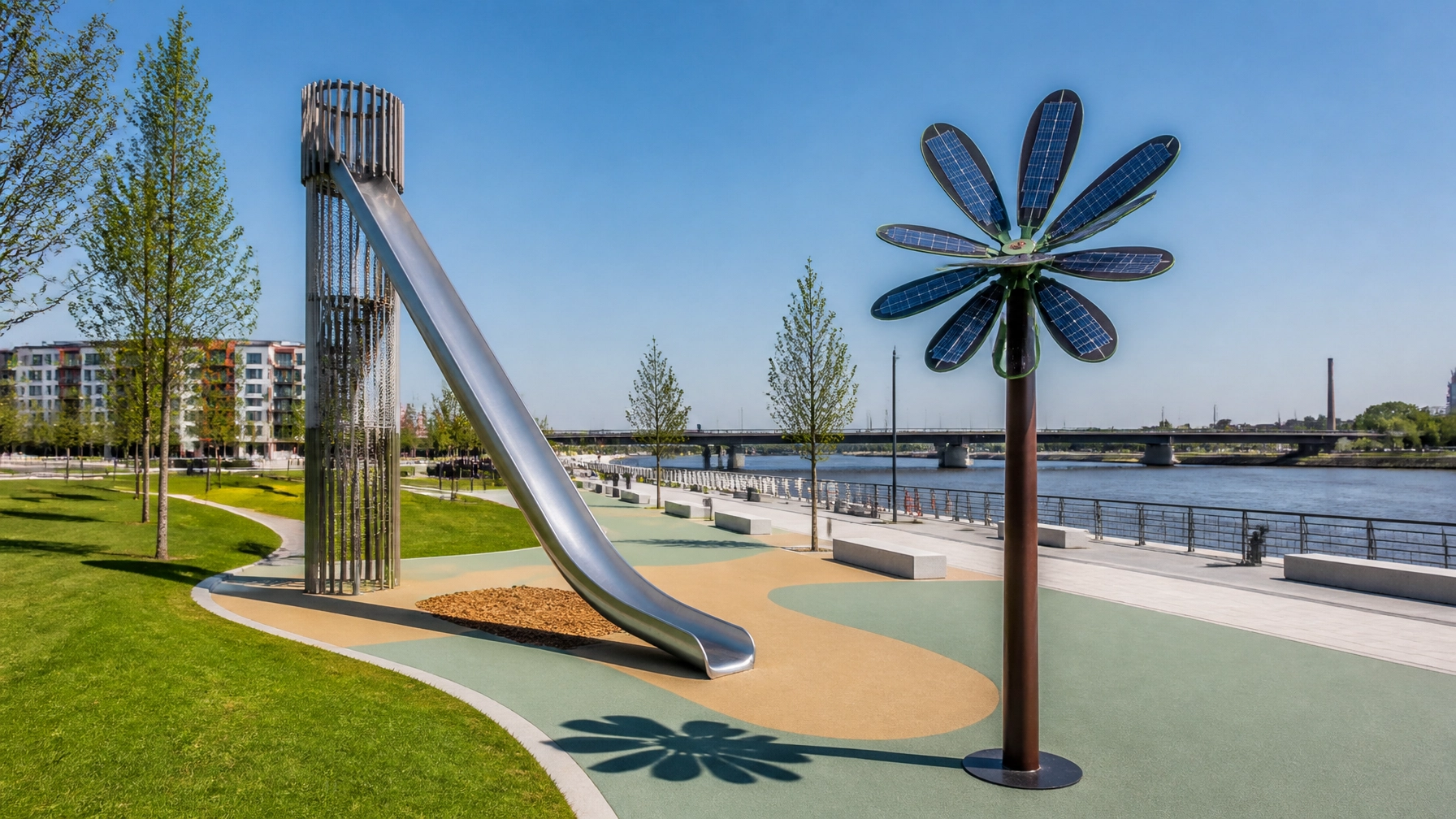
Central to the success of the new urban park is its commitment to being a family-friendly destination. This is most visibly demonstrated by the installation of the headline-grabbing 6-metre tall slide, which has already become the park's most popular feature. The slide is not just a piece of playground equipment; it is a significant engineering feat that utilises the natural height difference between the High Street and the riverside. By integrating play into the very fabric of the landscape, the designers have ensured that the park appeals to younger generations, encouraging families to spend more time in the town centre.
The play area surrounding the slide is a masterclass in modern landscape design, moving away from the "fenced-off" playgrounds of old. Instead, the entire park is treated as a space for exploration. There are climbing elements, interactive water features, and discovery trails that wind through the planting. This "playful infrastructure" is designed to be robust and low-maintenance, ensuring that it remains a safe and attractive asset for years to come. The inclusion of such high-quality equipment reflects a broader strategy to combat the decline of the traditional High Street by offering experiences that cannot be replicated online.
Beyond the physical play elements, the park provides a versatile venue for the town's extensive events programme. Stockton has long been known for its world-class international festivals, and the new waterfront has been designed specifically to host these large-scale gatherings. With built-in power points, high-capacity drainage, and designated performance areas, the park can seamlessly transition from a quiet afternoon retreat to a bustling festival hub. This flexibility is key to the project's long-term sustainability, ensuring that the space remains relevant and used throughout the changing seasons. The focus on leisure and experience is a direct response to the changing habits of consumers, positioning Stockton as a leader in town centre reinvention.
Sustainable Innovation and the Future of the High Street
The final piece of the Stockton Waterfront puzzle is its focus on sustainability and artistic innovation, epitomised by the new solar-powered sculpture that stands as a beacon on the riverside. This landmark installation serves a dual purpose: it is a striking piece of contemporary art that adds to the town's cultural landscape, and it is a functional example of renewable energy technology. The sculpture harvests solar energy during the day, which is then used to power its own internal lighting system at night, creating a glowing landmark that ensures the park feels safe and welcoming even after the sun goes down.
This commitment to green technology extends throughout the park’s construction. The materials used in the landscaping were sourced with sustainability in mind, and the extensive new planting has significantly increased the biodiversity of the town centre. By replacing acres of heat-absorbing concrete and retail buildings with carbon-capturing trees and lawns, the project is making a tangible contribution to the town's environmental goals. The park acts as a "green lung" for Stockton, improving air quality and providing a cooling effect during the summer months.
The successful delivery of the £41.5 million Stockton Waterfront project is a clear signal that the town is ready for the challenges of the mid-21st century. By choosing to invest in public space rather than attempting to prop up failing retail units, the local authorities have demonstrated a forward-thinking approach that is likely to be emulated across the country. The park is more than just a collection of grass and trees; it is an economic engine designed to bring people back to the heart of the community. As the first visitors enjoy the sun on the new terraces and children test out the 6-metre slide, there is a tangible sense that a new chapter has begun for Stockton-on-Tees. The town has not just gained a park; it has regained its soul.