A landmark conservation project in the heart of West Norfolk has reached a significant milestone, marking the successful transformation of more than 1,200 acres of intensive farmland into a thriving sanctuary for wildlife. Massingham Heath, once dominated by industrial-scale agriculture reliant on heavy pesticides and fertilisers, has undergone a ten-year metamorphosis that has seen the return of rare species not recorded in the area for generations. This vast restoration effort, equivalent in scale to roughly 680 football pitches, now stands as a testament to the power of nature recovery when supported by long-term commitment and expert land management.
The project represents a shift in how British landscapes can be managed to balance the needs of the environment with sustainable land use. For decades, the site was part of the intensive arable belt, where the soil was regularly turned and treated to maximise crop yields. However, the vision for Massingham Heath was to look backward to move forward, recreating the species-rich grasslands and heathland mosaics that once defined this corner of the county. Today, the landscape is unrecognisable from its previous state, replaced by a carpet of wildflowers, hardy scrub, and ancient grasses that provide a complex vertical structure for a wide array of insects, birds, and mammals.
The Return of Rare Species to Massingham
The most striking evidence of the project’s success lies in the rapid return of specialist species that require very specific habitat conditions. Perhaps the most celebrated arrival is the Dingy Skipper butterfly. This small, brown-and-grey mottled butterfly had been absent from the local area for at least fifteen years, struggling to find the patchiness of habitat it requires. Its reappearance at Massingham Heath suggests that the restoration has successfully created the precise balance of bare ground for basking and diverse nectar sources for feeding that this sensitive insect needs to survive.
Beyond the butterflies, the heath has become a hub for an extraordinary variety of invertebrates. Wasp spiders, with their distinctive yellow and black stripes, have been spotted weaving their intricate webs among the grasses, while oil beetles: a group of insects that depend on healthy bee populations: have also established a presence. The flora has kept pace with the fauna; the sight of pyramidal orchids and a host of other wildflowers now creates a seasonal spectacle that draws in pollinators from across the region. This explosion of insect life has, in turn, provided a massive food source for a growing population of birds.
The avian response to the restoration has been nothing short of remarkable. Ground-nesting birds such as the skylark and woodlark are now heard singing across the site throughout the spring and summer. These species have suffered dramatic declines nationally due to the loss of suitable nesting sites, but the open, managed grasslands of Massingham provide the perfect refuge. Other notable residents and visitors include the stonechat, hobby, and the elusive goshawk. During migration seasons, the heath acts as a vital pitstop for species such as the whinchat, wheatear, and ring ouzel, proving that large-scale habitat restoration can have impacts that resonate far beyond the local boundaries of the site itself.
Conservation Grazing and Habitat Management
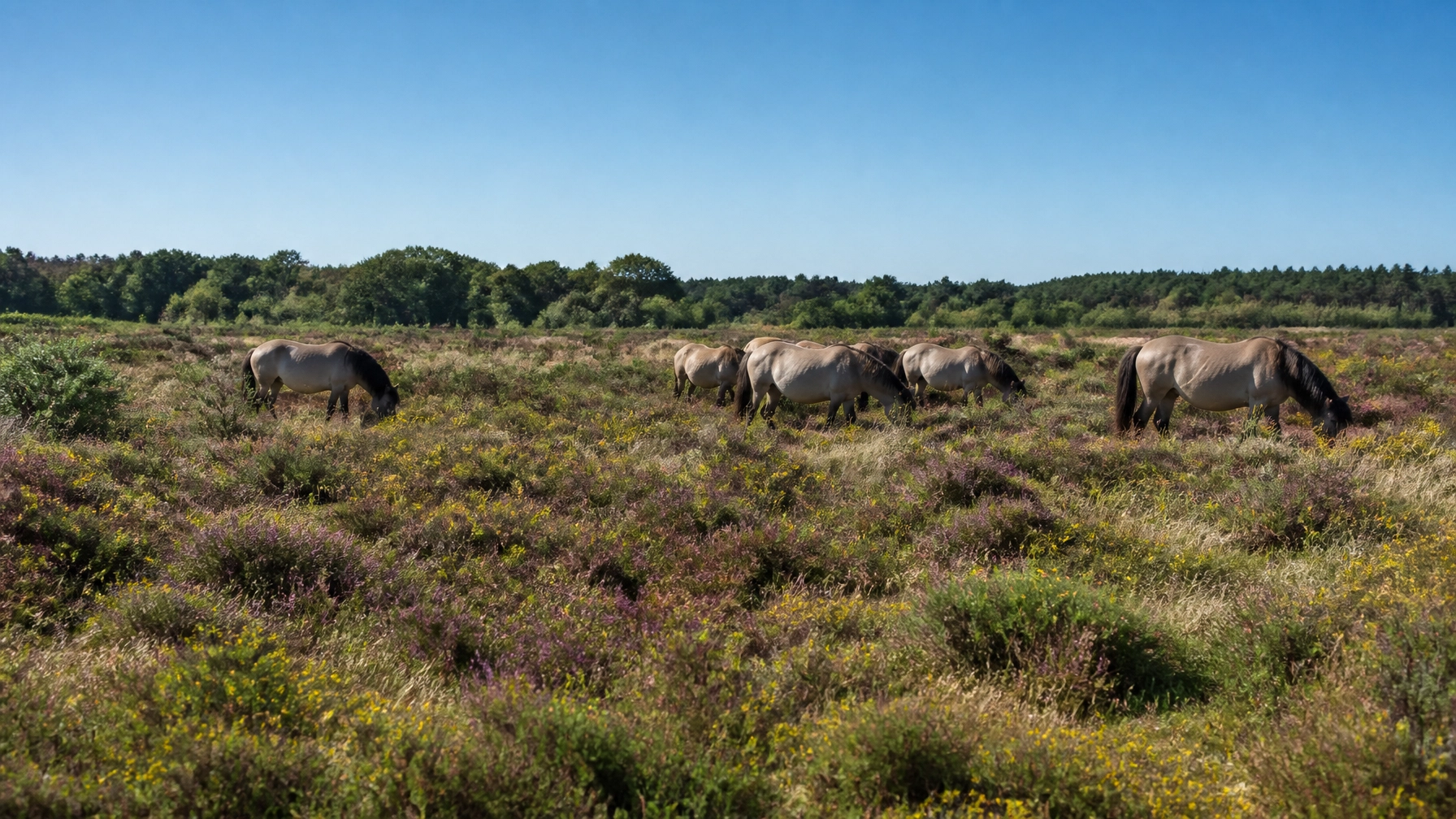
The secret to maintaining such a diverse and healthy ecosystem lies in an ancient method of land management: conservation grazing. Rather than using mechanical mowers or heavy machinery, the estate employs a team of "four-legged wardens." A herd of Konik ponies, a breed known for its hardiness and ability to thrive on coarse vegetation, plays a central role in shaping the landscape. These ponies graze selectively, creating a varied sward of different heights, which is essential for different life stages of various insects and birds.
The ponies are joined by other specialist grazers, including Bagot goats and Tamworth pigs. Each species brings a unique management style to the heath. The goats are particularly effective at controlling invasive scrub and woody plants that might otherwise overwhelm the grassland, while the pigs engage in "rooting," where they turn over small patches of soil in search of food. This natural disturbance creates pockets of bare earth, providing the perfect nursery for wildflower seeds to germinate and for heat-seeking insects to bask. This dynamic process ensures that the heathland remains a "mosaic": a shifting pattern of different habitats that prevents any one species from dominating the landscape.
The foundation of this habitat was laid through a meticulous seed-collection process. Rather than buying generic seed mixes, botanists and farmers worked together to hand-collect seeds from ancient, surviving fragments of Norfolk grassland. By matching these local seeds to the specific soil types and conditions found at Massingham, the team ensured that the new grassland was perfectly adapted to the local environment. This bespoke approach has allowed the site to develop a resilience that modern agricultural land often lacks, creating a stable platform for the decades of growth and recovery yet to come.
A Long-Term Vision for Local Biodiversity
This decade-long journey has been made possible through a close partnership between Natural England’s agri-environment schemes and the local farming community. The project has been led on the ground by tenant farmers who have embraced the challenge of moving away from intensive production toward nature-based solutions. It highlights a growing trend in British land management where farmers are increasingly viewed as the primary stewards of the countryside’s biodiversity. By providing the space and the time for nature to heal, the project has demonstrated that even land that has been heavily farmed for decades can be returned to a state of high ecological value.
The success of Massingham Heath is particularly significant given its location within the wider Norfolk landscape. By creating such a large, continuous area of high-quality habitat, the project provides a core "anchor" site that can help connect other smaller pockets of nature throughout the county. In an era of climate change and shifting environmental pressures, these large-scale "reservoirs" of biodiversity are essential for allowing species to move through the landscape and adapt to changing conditions. The scale of the work: covering 1,200 acres: ensures that the populations of birds and butterflies found here are robust enough to survive local fluctuations.
Looking ahead, the focus for the site remains one of careful observation and minimal intervention. The goal is to allow the natural processes of grazing, growth, and decay to continue without the need for constant human interference. As the heath matures, it is expected that even more species will find their way to this Norfolk sanctuary. The restoration of Massingham Heath is more than just a local success story; it is a blueprint for how large-scale nature recovery can be achieved across the United Kingdom, proving that with patience, the right tools, and a respect for the land, the lost wild places of the British countryside can be brought back to life.