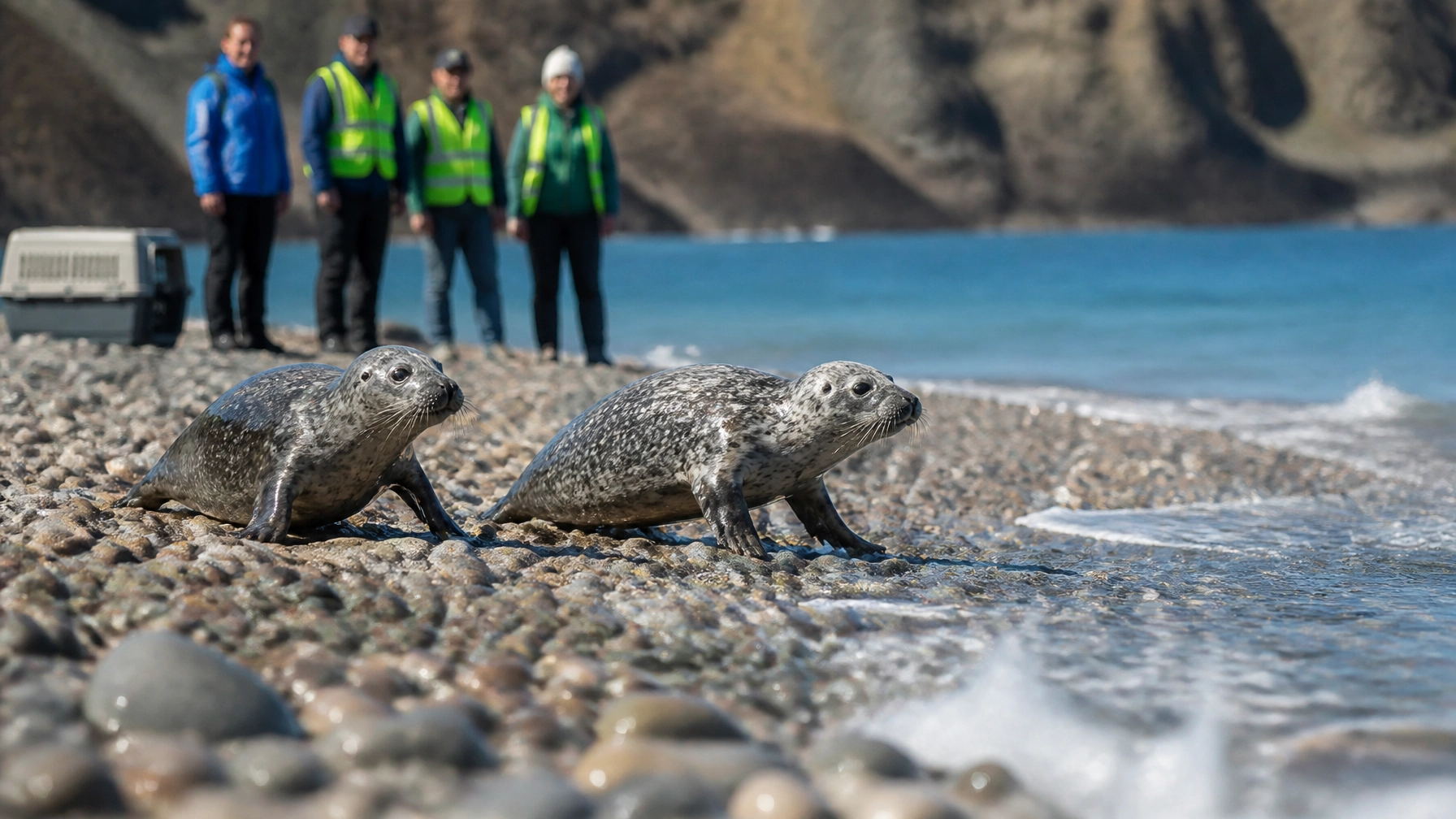
The shores of Guernsey witnessed a monumental event for local wildlife conservation as the GSPCA celebrated a significant milestone in its marine rescue history. Two grey seal pups, affectionately named Icicle and Ice Ice Baby, were successfully returned to the wild at Portelet. This specific release was not just another day at the office for the animal welfare team; it marked the 50th seal pup to be rehabilitated and released by the charity over the last fifteen years. The morning air was crisp and the sun was shining as the two healthy seals made their way across the pebbles and back into the familiar turquoise waters of the English Channel.
Staff and volunteers gathered at the beach to watch the culmination of months of intensive care. Both Icicle and Ice Ice Baby arrived at the GSPCA’s specialist wildlife facility in a dire state, struggling with various health issues common to pups separated from their mothers too early. Their successful return to the sea represents the tireless dedication of the marine mammal team who work around the clock to ensure these animals have a second chance at life. The sight of the pair swimming out towards the horizon served as a powerful reminder of the impact local conservation efforts have on the region's biodiversity.
A Milestone Moment at Portelet
The release of Icicle and Ice Ice Baby was a carefully choreographed operation that took place just after 10:30 am. After being transported to Portelet, the pups were monitored as they adjusted to the sights and smells of the coastline. For the GSPCA, reaching the fifty-seal mark is a testament to the growth and expertise developed within their marine rescue department since the first pup was admitted over a decade ago. Each seal requires a bespoke rehabilitation plan, often starting with intensive care and moving through various stages of recovery before they are deemed fit for the wild.
Reaching a weight of 50kg is the gold standard for release, ensuring the animals have enough fat reserves to survive and hunt effectively on their own. When Icicle and Ice Ice Baby first arrived at the animal shelter, they were roughly a quarter of that size. Their journey involved a strict regime of feeding and medical treatment, transitioning from liquid fish soup to whole fish as they regained their strength. The transformation from lethargic, underweight pups to the robust, energetic animals seen on the beach at Portelet is a clear indicator of the high standard of care provided by the Guernsey-based charity.
The event also welcomed members of the public who have supported the charity’s work through donations and competitions. One local resident, Marie Gill, was able to attend the release after winning a public competition, highlighting the strong community connection the GSPCA maintains. This transparency in their work helps to raise awareness about the challenges faced by grey seals in the Channel Islands, from plastic pollution to the increasing frequency of winter storms that can separate pups from their mothers before they are fully weaned.
The Journey from Rescue to Release
The rehabilitation process for a grey seal is neither quick nor easy. It often begins on a cold, windswept beach where a pup is found malnourished, injured, or abandoned. In the case of Icicle and Ice Ice Baby, the road to recovery was paved with challenges. Upon admission, pups are placed in intensive care units where they are kept warm and quiet to reduce stress. Initial treatments often include rehydration through stomach tubes, as many pups arrive severely dehydrated and unable to eat solid food.
As the pups begin to stabilise, the focus shifts to weight gain. This is where the GSPCA’s fish budget becomes a significant factor in their operations. A growing seal pup can consume several kilogrammes of herring every day. The staff meticulously track every gramme of weight gained, ensuring the animals are meeting their developmental milestones. Moving from indoor pens to outdoor pools is a major step, allowing the seals to practice swimming and competing for food in a more natural environment. This stage is crucial for building the muscle tone and stamina required for life in the open sea.
Socialisation also plays a part in their recovery. While grey seals are often solitary in the wild, being rehabilitated alongside other pups can encourage natural behaviours. Watching Icicle and Ice Ice Baby interact in the pools provided the team with valuable insights into their readiness for release. The goal is always to minimise human contact to prevent the animals from becoming habituated, ensuring they retain their natural instincts and wariness of people once they return to their habitat.
A Legacy of Conservation Success
Reflecting on fifty releases over fifteen years highlights the evolution of wildlife rescue in Guernsey. When the GSPCA first began taking in seal pups, the facilities were modest. Today, the charity boasts specialised equipment and a wealth of knowledge shared by marine experts across the UK and Europe. This network of information ensures that every seal brought into the shelter benefits from the latest veterinary techniques and nutritional science. The 50th release is a celebration of this accumulated expertise and the donors who make the work possible.
The impact of these releases extends beyond the individual animals. By rescuing and returning grey seals to the wild, the GSPCA contributes to the overall health of the marine ecosystem in the Channel Islands. Seals are apex predators and their presence is a key indicator of the sea's vitality. Monitoring programmes often follow released seals through flipper tags, providing data on their movements and survival rates. This information is vital for researchers tracking the population trends of grey seals, which are a protected species in British waters.
The GSPCA’s work does not stop with Icicle and Ice Ice Baby. Other pups, including Blizzard and Iceberg Lettuce, remain in care, continuing their own journeys toward the 50kg target. Each successful release strengthens the charity’s resolve to continue covering the stories of these animals, ensuring that the problems they face are brought to the forefront of public conversation. The milestone achieved at Portelet stands as a beacon of hope for wildlife conservation, proving that dedicated local action can lead to global benefits for marine life.
The GSPCA continues to monitor the coastline for any signs of seals in distress, especially during the winter pupping season. Members of the public are advised to keep their distance and keep dogs on leads if they spot a seal on the beach, as interference can lead to abandonment or injury. The charity remains ready to respond to calls for help, ensuring the next fifty releases are as successful as the first. The two pups released today have now joined the wild population, contributing to the future of their species in the waters surrounding the Channel Islands.