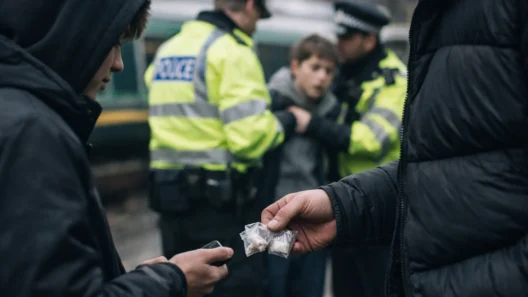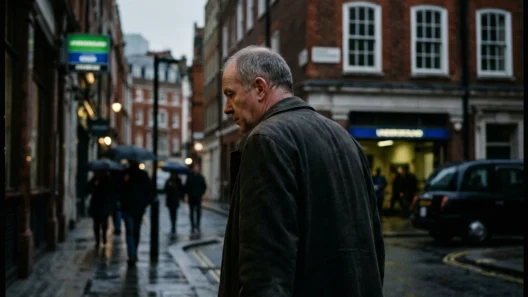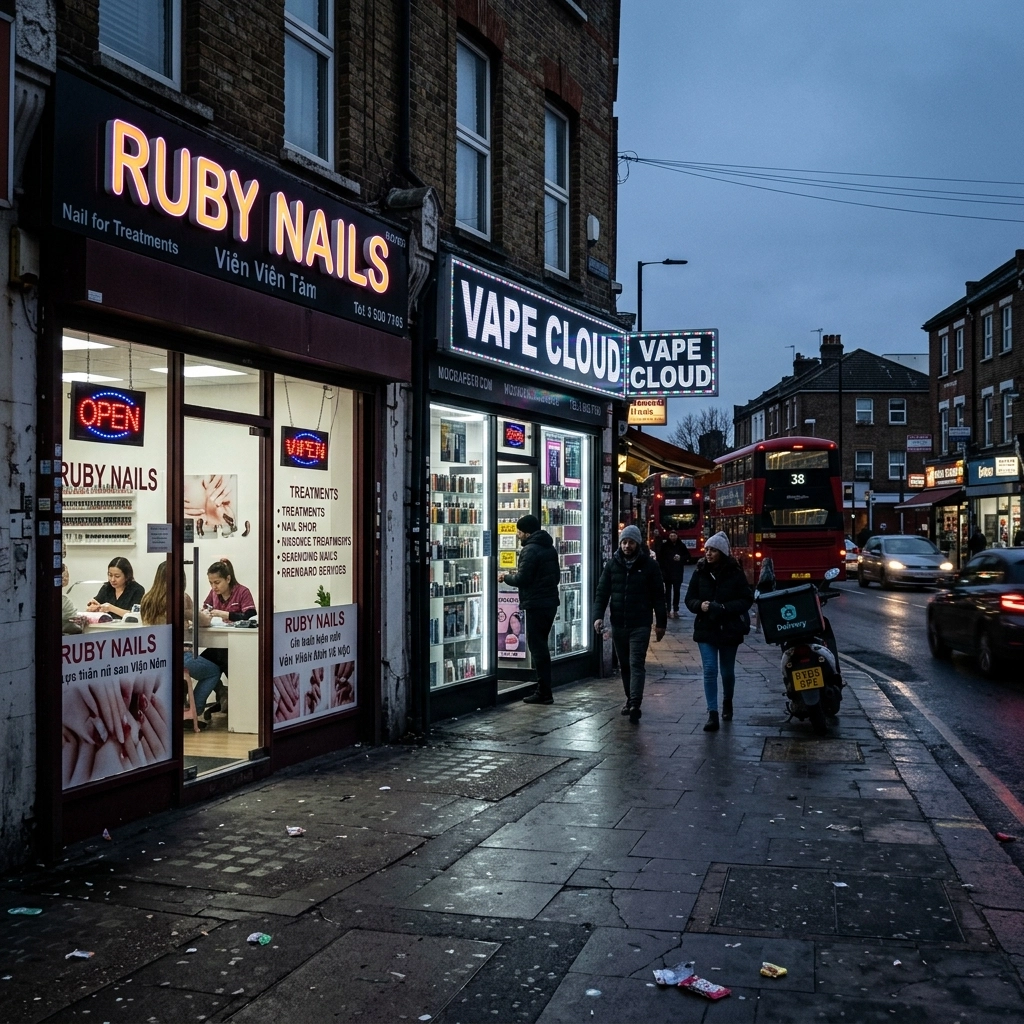
Walking down any local high street in the UK today feels a bit different than it did ten years ago. The familiar big-brand department stores and cozy bookshops are increasingly being replaced by a sea of neon. If you take a stroll through your town centre, you are almost guaranteed to pass at least three vape shops, two nail bars, and perhaps a couple of barbershops, all within a few hundred yards of each other. At first glance, this looks like a simple shift in consumer habits. After all, everyone needs a trim, and the vaping industry has exploded as people move away from traditional cigarettes. But when you see five near-identical shops on a single street, all of them empty of customers, you have to wonder how they keep the lights on.
The reality behind some of these shopfronts is far more complex than selling a bottle of e-liquid or a quick manicure. While the vast majority of these businesses are run by hard-working entrepreneurs providing a legitimate service, a growing number of them have become the preferred tools for organised crime. These "cash-intensive" businesses are the new front line in a massive, multi-billion pound money laundering industry. As part of our commitment to independent news uk, we are looking into the untold stories of how our high streets are being used to hide the proceeds of serious crime.
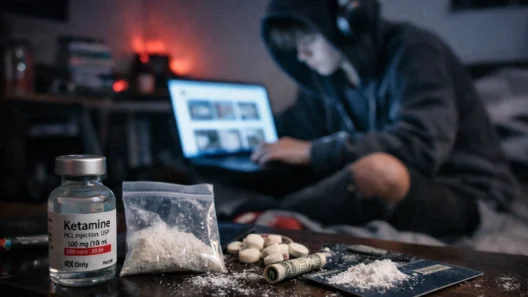
The scale of the problem is staggering. Experts estimate that approximately £12 billion is laundered through the UK every single year. A huge portion of this is processed in cash, and much of that cash comes directly from the drug trade. To make this "dirty" money usable, criminals need a way to feed it into the legitimate financial system. This is where your local vape shop or nail bar might come into play.
The hidden mechanics of the cash-based front
To understand why these specific types of businesses are chosen, you have to look at how they operate. Money laundering usually involves three stages: placement, layering, and integration. Cash-intensive businesses are perfect for the "placement" phase. Because nail bars and vape shops deal with a high volume of small, cash transactions, it is incredibly easy for a business owner to inflate their daily takings.
Imagine a nail bar that sees ten genuine customers in a day, each paying £30 in cash. That is £300 in legitimate revenue. However, the owner could record that they actually saw forty customers, adding £900 of "dirty" money from other criminal activities into the till. To an outside observer or even a basic tax audit, it looks like a busy day at the salon. The money is then deposited into a business bank account as "legitimate" profit, effectively cleaning it. Because there are no physical goods that need to be tracked with extreme precision, unlike, say, a car dealership: it is very difficult for authorities to prove that those extra thirty customers didn't exist.
Vape shops offer a similar advantage. While they do sell physical products, the inventory is often small, high-value, and easy to manipulate. Furthermore, the rise of illegal, non-compliant vapes has created a secondary market. Criminal gangs often use these shops to sell smuggled or counterfeit tobacco and vaping products alongside legitimate stock. This allows them to hide criminal proceeds while simultaneously generating even more profit through illegal sales. It is a double win for the gangs and a massive headache for law enforcement.
The darker side of the high street boom
The proliferation of these businesses isn't just about hiding money; it is often linked to even more sinister activities. In many cases, the high street front is just the tip of the iceberg. Investigations have shown that these businesses are frequently used to facilitate human trafficking and modern slavery. Nail bars, in particular, have been highlighted by the National Crime Agency (NCA) as high-risk areas for labour exploitation. Vulnerable individuals are often brought into the country under false pretences and forced to work in these salons for little to no pay, living in cramped, unsafe conditions.
The rapid growth of these shops is a clear red flag. In some areas, such as parts of Essex and Doncaster, the number of barbershops alone has surged by as much as 200 percent in just five years. While we all love a good fade, that level of growth in a saturated market rarely makes economic sense. When supply far outstrips demand, and shops continue to open and stay in business despite having no visible customers, it points to an alternative revenue stream.
This isn't just a victimless crime or a bit of tax dodging. When criminal gangs take over high street units, they drive up commercial rents, making it harder for genuine local businesses to survive. They also bring the associated problems of the drug trade and violence into residential areas. These untold stories are rarely discussed in the mainstream, but they represent a fundamental shift in the social fabric of our towns. By using these businesses as fronts, crime groups are able to embed themselves into the heart of our communities, making their activities harder to detect and even harder to uproot.
Law enforcement and the fight for the high street
Authorities are not sitting idly by while the high street is carved up by organised crime. Recent years have seen a significant increase in targeted raids and financial investigations. One of the most prominent examples was Operation Machinize, a nationwide initiative led by the National Crime Agency. This operation specifically targeted cash-intensive businesses that were suspected of being fronts for money laundering and other criminal activities.
The results of these operations speak for themselves. In one phase of the crackdown, over 2,700 high street businesses were raided across the UK. This led to nearly 1,000 arrests and the seizure of over £10.7 million in cash. Beyond the money, police also recovered millions of pounds worth of illegal goods, including smuggled tobacco and dangerous, non-compliant vaping products. Perhaps most importantly, these raids led to the protection of nearly 100 suspected victims of modern slavery who were being exploited behind those neon-lit storefronts.
However, the challenge is immense. For every shop that is closed down, another often opens just a few doors away under a different name. The sheer volume of cash moving through the UK economy makes it a constant game of cat and mouse. Law enforcement agencies are now moving towards more sophisticated financial tracking, looking for patterns in banking data that suggest a business's turnover doesn't match its physical footprint. They are also working more closely with local councils to scrutinise licensing applications for businesses in sectors known to be high-risk.
The changing face of the high street is a reflection of a much larger battle happening behind the scenes. While we should continue to support our local independent shops, it is important to stay informed about the reality of the modern economy. The presence of so many nail bars and vape shops is not just a trend in retail; it is a symptom of a complex financial struggle. As we continue to provide independent news uk, our goal is to shine a light on these shifts and ensure that the stories of our changing communities are told with clarity and balance.
The high street has always been the heart of British civic life. Seeing it used as a chessboard for international crime syndicates is disheartening, but awareness is the first step toward change. By understanding the mechanics of how these businesses operate and the impact they have on our society, we can better support the legitimate businesses that truly make our towns worth living in. The battle for the high street is about more than just retail: it’s about the integrity of our communities.
The rise of cash-intensive business fronts presents a significant challenge to both the economy and the social well-being of the UK. While the convenience of a quick vape purchase or a last-minute manicure remains a staple of modern life, the underlying issues of money laundering and exploitation cannot be ignored. Continued cooperation between law enforcement, local government, and the public is essential to ensure that the high street remains a place for honest trade rather than a sanctuary for illicit finance. Understanding these hidden dynamics is crucial for maintaining the transparency and safety of our local environments.