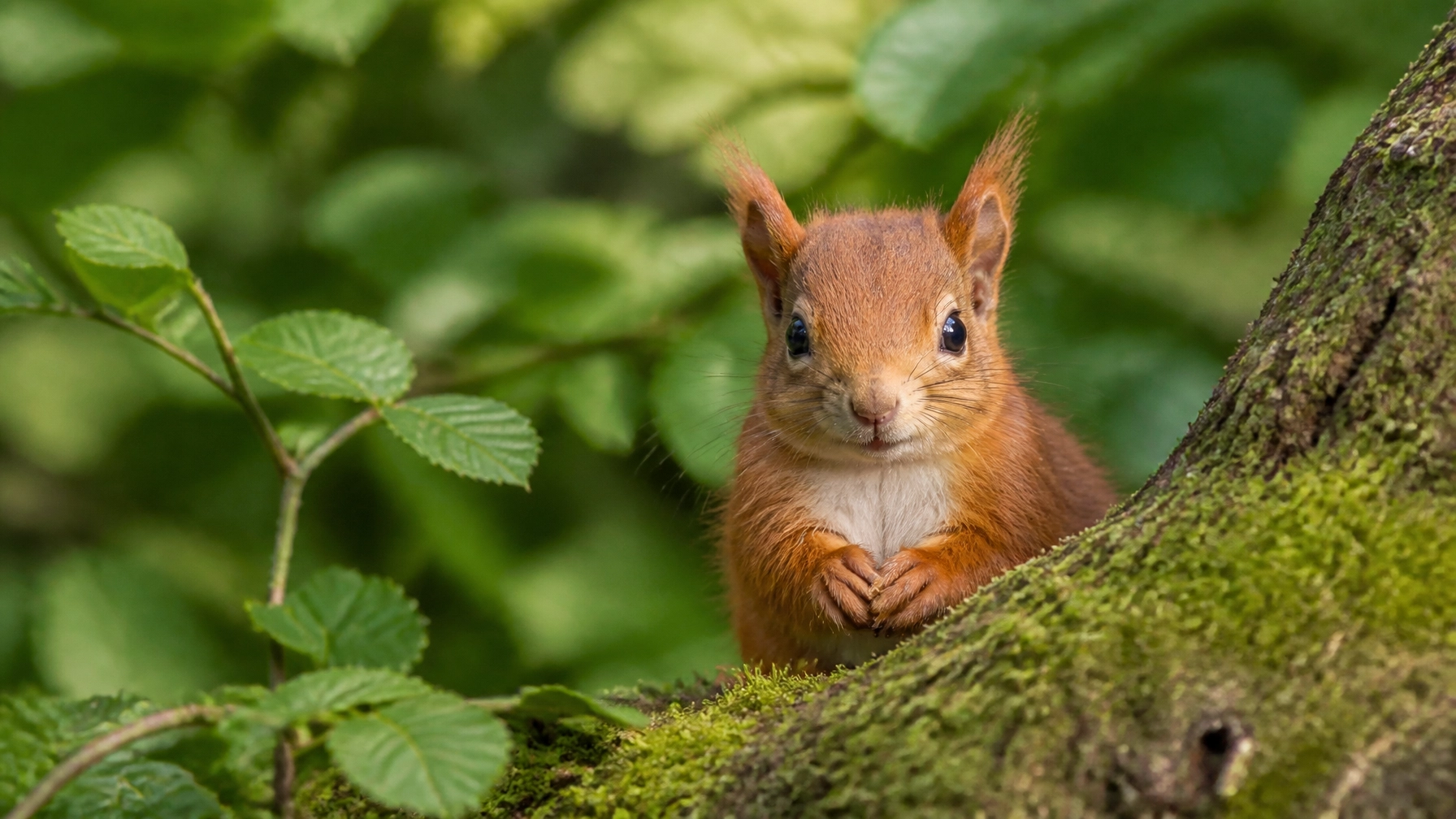
The arrival of two female red squirrel kits at the Suffolk Owl Sanctuary and Nature Centre in Stonham Aspal has marked a significant achievement for local wildlife conservation. Born in May, these kits represent the first successful litter for the sanctuary’s dedicated breeding programme, providing a glimmer of hope for a species that has faced a precarious future in England for over a century. The newborns emerged after a carefully managed pairing process that began in January, when a breeding pair was introduced with the specific aim of bolstering the dwindling native population.
For the staff at the sanctuary, the birth of the kits is the culmination of years of preparation and habitat management. The mother and father were selected as part of a national effort to ensure genetic diversity and health among captive-bred red squirrels, which are destined to play a vital role in rewilding projects across the country. Since their birth last month, the kits have remained largely tucked away in their nesting box, under the watchful and protective eye of their mother. However, as they grow stronger and more adventurous, they are expected to begin exploring their enclosure, offering a rare glimpse of a species that was once a common sight across the British Isles.
The sanctuary has been a sanctuary for various species, but the introduction of the European red squirrel breeding group in 2024 was a specific strategic move. By creating a controlled environment that mimics the natural woodland conditions of the Suffolk countryside, the centre has been able to provide the necessary peace and security for the squirrels to thrive. The success of this first litter is seen as a proof of concept for the sanctuary’s methods, highlighting the importance of specialised care and the creation of quiet zones to facilitate natural breeding behaviours.
A milestone for local conservation
The birth of the two female kits is not merely a local success story; it is a vital contribution to a much larger conservation puzzle. Red squirrels are currently classified as endangered in England, Wales, and Northern Ireland, with their numbers having plummeted since the introduction of the North American grey squirrel in the late 19th century. The arrival of these kits in Stonham Aspal serves as a testament to the hard work of the zoological team, led by experts who have dedicated their careers to understanding the complex needs of this sensitive species.
Emily Quantrill, the zoological director at the sanctuary, has noted that the litter represents a proud moment for the entire team. The process of pairing squirrels is often fraught with challenges, as the animals can be territorial and particular about their mates. By successfully pairing the adults in January and seeing the arrival of healthy kits just a few months later, the sanctuary has demonstrated that it has the expertise and the environment required to support the next generation of British wildlife. The kits are currently being monitored via non-invasive means to ensure they are meeting their developmental milestones without being disturbed by human interaction.
This milestone also highlights the importance of regional nature centres in the broader context of national conservation. While large-scale national parks and reserves are essential, smaller, specialised facilities like the one in Suffolk provide the intensive, hands-on management needed for successful breeding. These centres act as a safety net, ensuring that even if wild populations face sudden setbacks due to disease or habitat loss, there is a healthy, genetically diverse population in reserve that can be used to replenish the countryside.
Preparing for a life in the wild
While the kits are currently enjoying the safety of their Suffolk enclosure, their ultimate destiny lies far beyond the sanctuary walls. The breeding programme is specifically designed to produce squirrels that can be released into protected wild reserves. These reserves are carefully selected and managed to ensure they are free from the threats that led to the red squirrel's initial decline. The goal is to establish self-sustaining colonies that can eventually expand and reconnect with other isolated populations, creating a robust network of red squirrel habitats across the UK.
Preparation for release is a meticulous process. The kits must be raised in a way that preserves their natural instincts and minimises their habituation to humans. This means providing a diet that reflects what they would find in the wild, including a variety of nuts, seeds, and berries, and ensuring their enclosure offers plenty of opportunities for climbing and foraging. As they mature, the two females will be assessed for their fitness and readiness to join a release group. The timing of their transition to the wild will be crucial, ensuring they are old enough to fend for themselves but young enough to adapt to a new environment.
The reintroduction of red squirrels into the wild is a complex logistical challenge that involves collaboration between various conservation bodies, landowners, and local communities. It requires the long-term management of woodlands to provide the right mix of coniferous and broadleaf trees, as well as the ongoing control of grey squirrel populations, which compete for resources and carry the squirrel pox virus: a disease that is fatal to reds but harmless to greys. By producing healthy, resilient kits, the Suffolk Owl Sanctuary is providing the essential "raw material" for these ambitious rewilding projects.
Reversing the decline of a native icon
The plight of the red squirrel is one of the most well-known conservation stories in the United Kingdom. Once the only squirrel species in the country, their population has been reduced to around 160,000 individuals, the vast majority of which are found in Scotland. In England, they are restricted to a few isolated strongholds, making every new birth a significant event. The decline of the red squirrel is not just a loss for biodiversity; it is the loss of a cultural icon that has featured in British folklore and literature for centuries.
Restoring the red squirrel to its former range is a task that requires patience, funding, and public support. The efforts in Suffolk are part of a growing movement to reclaim the British countryside for its native inhabitants. By focusing on the creation of "red squirrel only" zones and supporting breeding programmes, conservationists hope to reverse the trends of the last century. The birth of the two kits in Stonham Aspal provides a tangible example of what can be achieved when expertise and passion are directed towards a clear goal. It offers a vision of a future where the flash of ginger fur in the treetops is once again a common sight for walkers in the English woods.
The sanctuary has requested that visitors remain mindful of the new arrivals, keeping noise to a minimum near the squirrel enclosures. This sensitivity is a reminder of how fragile these early stages of life can be for such a vulnerable species. As the kits continue to grow throughout the summer, they will become more visible to the public, serving as ambassadors for their kind and inspiring the next generation of conservationists. For now, they remain a quiet but powerful symbol of hope for the future of Suffolk’s natural heritage and the wider recovery of one of Britain’s most beloved mammals.