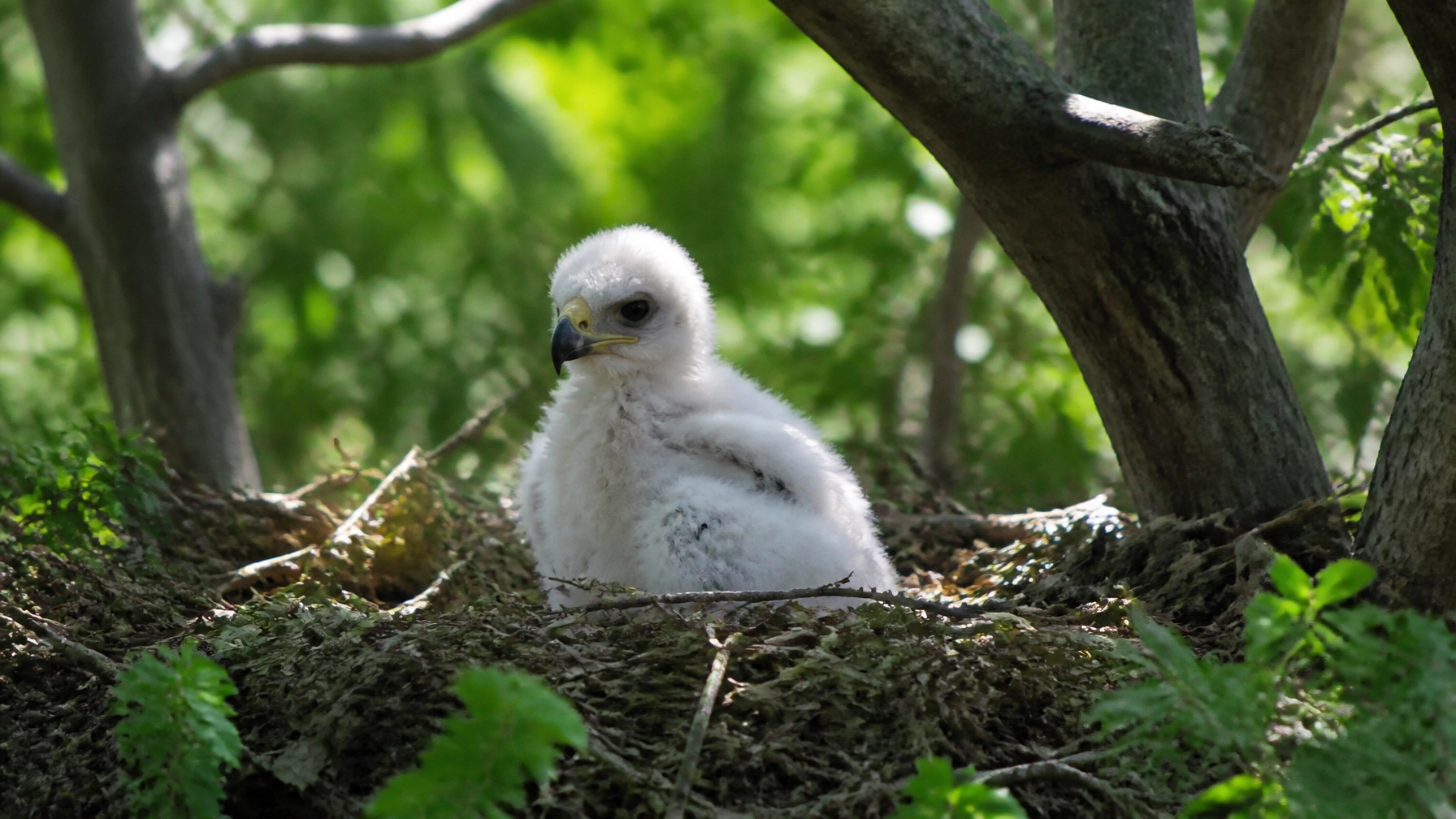
A momentous event in British ornithology has taken place in the heart of East Sussex, as a rare honey buzzard chick successfully emerged from its egg in Ashdown Forest. The hatching, which occurred at approximately 8:40 am, represents a significant milestone for conservationists and bird enthusiasts across the country. It marks the first time that the birth of this elusive and secretive species has been captured on a live-stream broadcast in the United Kingdom, providing an unprecedented look into the early life of one of the nation’s most mysterious birds of prey.
The chick appeared in a nest hidden deep within the dense woodland canopy, where its parents have been meticulously tending to two eggs for several weeks. The arrival of the first chick was greeted with immense excitement by those monitoring the digital feed, which was established to observe the breeding habits of the species without causing human disturbance. Experts have noted that the chick appears healthy and active, quickly beginning to demand food from its attentive parents. This successful hatching is seen as a triumph for local biodiversity and a testament to the suitability of the Sussex landscape for supporting such specialized raptors.
The honey buzzard is a summer visitor to Britain, arriving from its wintering grounds in tropical Africa during the late spring. Unlike the more common buzzard, which is a frequent sight soaring over motorways and farmland, the honey buzzard is remarkably difficult to spot. It prefers large, quiet tracts of woodland where it can nest in peace. Their arrival in the UK is often later than other migratory birds, usually timed to coincide with the peak of their primary food source: the larvae of wasps and bees.
A milestone for wildlife broadcasting and research
The live-stream project, which made this observation possible, is the result of a coordinated effort between forest management and ornithological specialists. By using high-definition cameras placed strategically near the nest site, researchers have been able to document behaviours that were previously only understood through intermittent ground-level observation. The footage has already provided valuable data on the division of labour between the male and female birds, as well as the frequency of feedings and the specific types of prey brought to the nest.
Since the chick’s arrival, the adult birds have been seen delivering wasp larvae and small amphibians to the nest. The male typically handles the bulk of the foraging during the early stages, while the female remains on the nest to provide warmth and protection to the vulnerable newcomer. The live feed has allowed the public to witness these intimate moments of parental care, fostering a deeper connection between the local community and the wildlife that inhabits the forest. This level of transparency in wildlife monitoring is becoming an increasingly important tool for education and conservation, as it allows people to see the challenges and triumphs of nature in real-time.
Observers are now turning their attention to the second egg remaining in the nest. While there is always a degree of uncertainty in the natural world, the successful hatching of the first chick provides hope that a second sibling may soon follow. The window for hatching is narrow, and the coming days will be critical for the survival of the brood. The forest remains under close observation, with teams ensuring that the area around the nesting tree is kept quiet to prevent any unnecessary stress to the birds during this sensitive period.
The unique biology of the honey buzzard
The honey buzzard is a biological marvel, specifically adapted for a diet that most other predators avoid. Its name is somewhat of a misnomer, as the bird does not actually eat honey. Instead, it targets the nests of social insects. To protect itself from stings, the honey buzzard has developed specialized, scale-like feathers around its eyes and bill that act as a form of natural armour. Its feet are also uniquely shaped, with long, straight claws that are better suited for digging out underground wasp nests than for grasping large mammal prey.
These adaptations make the honey buzzard a vital part of the woodland ecosystem, acting as a natural control on insect populations. However, their specialized needs also make them particularly vulnerable to changes in the environment. The availability of nesting sites and the abundance of insect prey are heavily influenced by forest management practices and broader climatic trends. The presence of a breeding pair in Ashdown Forest suggests that the local habitat is being managed in a way that supports a complex food web, capable of sustaining top-tier predators.
British honey buzzards are at the northern edge of their European breeding range, which adds further significance to any successful hatching in the southern counties. Historically, the species has faced threats from habitat loss and persecution, but recent decades have seen a slow and steady recovery in parts of the UK. The Sussex population is particularly important for the regional expansion of the species, serving as a potential source for birds to colonise new areas of suitable woodland in neighbouring counties.
Conservation implications and the future of the forest
The success of this nesting attempt highlights the importance of large, contiguous areas of woodland like Ashdown Forest. Originally a royal hunting forest, the area now serves as a vital sanctuary for a wide array of species, many of which are of national conservation concern. The management of the forest involves balancing the needs of the public with the requirements of sensitive wildlife. By identifying and protecting core nesting areas for species like the honey buzzard, foresters can ensure that these birds have the security they need to raise their young.
Looking ahead, the chick will face several weeks of rapid growth before it is ready to fledge. During this time, it will be entirely dependent on its parents for food and protection. The transition from a downy chick to a feathered juvenile is a demanding process, requiring a constant supply of high-protein food. Once the young bird eventually leaves the nest, it will begin the long and arduous journey south to Africa, a migration that is fraught with peril for inexperienced birds.
The data gathered from this year's live-stream will be analysed by ornithologists to better understand the timing and success rates of honey buzzard breeding in the UK. This information is crucial for developing long-term conservation strategies, ensuring that the needs of the species are considered in future land-use planning. For now, the focus remains on the nest in Sussex, where a small white chick represents a significant victory for the natural world and a rare glimpse into a life usually hidden from view.