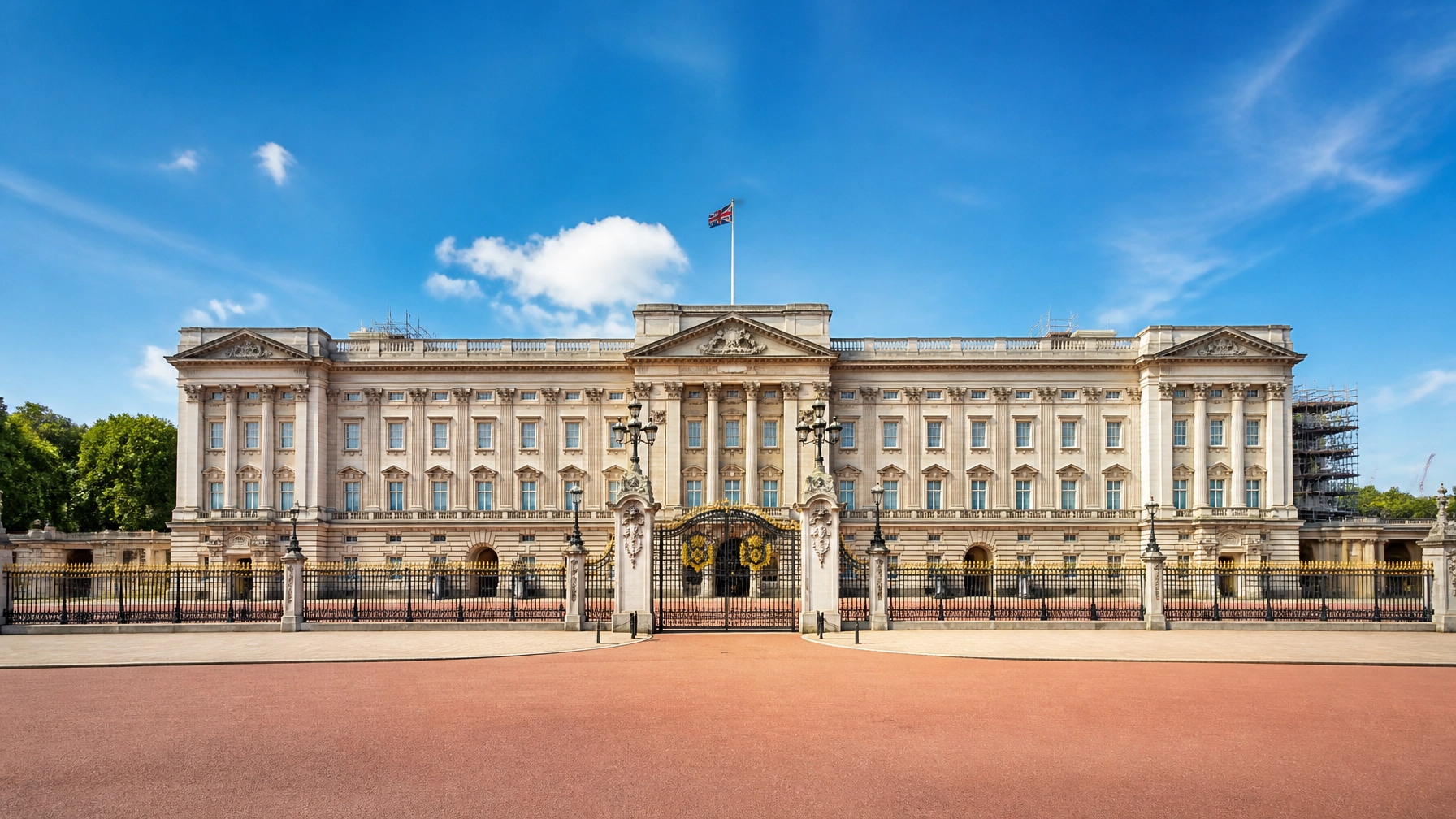
The latest financial disclosures regarding the Royal Household have revealed the significant scale of the ongoing Buckingham Palace reservicing project, with total costs estimated at £370 million. These newly released documents provide a rare window into the fiscal management of the monarchy, highlighting a period of substantial expenditure aimed at preserving one of Britain’s most iconic heritage sites. The figures, published as part of the annual report on the Sovereign Grant, show that the ten-year programme to overhaul the palace’s infrastructure is now in its penultimate stage, consuming a major portion of the funding provided for the upkeep of the institution.
According to the report, the Sovereign Grant for the 2025-26 financial year rose to £132.1 million, an increase of nearly £46 million compared to the previous year. This sharp rise is almost entirely attributed to the final, high-cost phases of the Buckingham Palace Reservicing Programme. Since the project began nearly a decade ago, its primary objective has been to replace ageing essential services that had not been updated since the Second World War. This includes miles of outdated lead piping, thousands of metres of electrical cabling, and massive boilers that were described as being decades past their expected lifespan. The objective is to ensure the building remains functional and safe for at least another fifty years, preventing a potentially catastrophic failure of infrastructure or a major fire.
The disclosure comes at a time of heightened public interest in the transparency of royal finances. The Sovereign Grant is the mechanism through which the government supports the official duties of the monarch and the maintenance of the occupied royal palaces. It is calculated as a percentage of the profits generated by the Crown Estate, a vast portfolio of land and property across the United Kingdom. While the usual rate is set at 15 per cent, it was temporarily increased to 25 per cent specifically to cover the costs of the Buckingham Palace project. Officials have confirmed that once the works are completed, the grant is expected to decrease significantly, as the temporary uplift will be removed from April 2027.
Infrastructure and the preservation of heritage
The sheer scale of the internal work at the palace is reflected in the complexity of the reservicing programme. Unlike a standard residential renovation, the work inside the palace must account for its status as a Grade I listed building and a primary seat of state power. Much of the £370 million total has been dedicated to "behind the scenes" improvements that the public rarely sees. Engineers have had to meticulously remove floorboards and navigate through centuries-old masonry to install modern fire safety systems, high-efficiency heating, and data cabling. This modernization is not merely for comfort but for operational necessity, as the palace serves as the headquarters for the Royal Household and a venue for hundreds of events each year, ranging from investitures to state banquets.
The report highlights that the palace has remained operational throughout the construction, which has added to the logistical challenge and the ultimate cost. Moving staff and historical artefacts between wings of the palace as work progresses has required a coordinated effort involving hundreds of specialists. Despite the disruption, the project has remained broadly on schedule, with the current phase focusing on the East Wing and the iconic balcony area. These areas require intricate restoration to preserve the masonry and decorative elements that define the building’s exterior appearance. The financial commitment reflects a strategy of long-term preservation, opting for a comprehensive overhaul rather than piecemeal repairs that could prove more expensive in the long run.
Beyond the brick and mortar, the project has provided a significant boost to the heritage craft sector in the United Kingdom. A substantial portion of the budget has supported apprenticeships and skilled trades, from master stonemasons to traditional lead-workers. This investment in the domestic workforce is presented as a secondary benefit of the palace’s restoration, ensuring that traditional skills are passed down to a new generation. By the time the project concludes in 2027, it will have involved thousands of workers and hundreds of British companies, reinforcing the palace’s role as a major contributor to the national economy through both its maintenance and its appeal as a global tourist destination.
Funding the future of the monarchy
The increase in the Sovereign Grant to £132.1 million has sparked debate regarding the relationship between the Crown Estate and the public purse. The Crown Estate’s profits have surged recently, particularly due to the expansion of offshore wind farms on the seabed, which the estate manages. This increase in profit naturally leads to a larger Sovereign Grant, even as the percentage remains fixed. However, the Royal Household has emphasised that a significant surplus from the grant is returned to the Treasury if it is not spent on official duties or maintenance. The financial documents show that the monarchy is mindful of the economic climate, with the institution attempting to balance the need for heritage preservation with fiscal responsibility.
For the average taxpayer, the cost of the monarchy is often measured against the services provided. The report breaks down other expenditures, such as £27.9 million for staff payroll and £4.2 million for official travel. While the palace refurbishment is a one-off capital project, the day-to-day running costs remain substantial. The official travel figures include costs for overseas tours and state visits, which are undertaken at the request of the government to promote British interests abroad. Critics often point to these figures as areas for potential saving, but proponents argue that the soft power generated by the Royal Family provides a return on investment that far outweighs the costs listed in the annual report.
There is also a clear indication that the institution is moving towards a more sustainable financial model. The introduction of solar panels, ground-source heat pumps, and other green technologies as part of the palace’s new infrastructure is designed to reduce long-term running costs and the carbon footprint of the estate. These modernisations are a central part of the King’s vision for a more environmentally conscious monarchy. By investing heavily now in efficient systems, the household aims to mitigate future energy costs, which have become increasingly volatile. This shift suggests that the £370 million price tag is being viewed as an investment in a modern, sustainable hub for the British state rather than just a cosmetic upgrade.
A working palace rather than a private home
Perhaps the most notable revelation in the recent documents is the confirmation of the King’s living arrangements. Despite the hundreds of millions being spent on Buckingham Palace, it is understood that he does not intend to make the building his primary residence. Instead, the palace will continue to function primarily as an administrative headquarters and a venue for official duties. The King and Queen are expected to remain at Clarence House, their long-time home, for the foreseeable future. This decision marks a significant shift in how the palace is used, moving it further away from its historical role as a family home and more towards a ceremonial and state centre.
This shift has led to suggestions that the palace could be opened to the public more frequently and for longer periods. With the King not in permanent residence, there is greater flexibility for exhibitions, tours, and public events. The financial report hints at a desire to increase the income generated by the palace through tourism, which currently helps to offset some of the costs of the Royal Collection and other charitable endeavours. By maximising the building’s utility as a public asset, the Royal Household may be able to justify the high maintenance costs to a broader audience. The "working palace" model reflects a modern approach to the monarchy, where tradition is maintained alongside a practical assessment of how space is utilised.
As the 2027 deadline for the completion of the reservicing programme approaches, the focus will turn to the legacy of this decade-long project. The success of the renovation will be judged not just on whether the boilers work or the wiring is safe, but on how the palace adapts to the needs of a 21st-century monarchy. The £370 million expenditure is a monumental sum, but the Royal Household maintains that it is the minimum required to keep the building from falling into a state of irreparable decay. With the Grant expected to drop once the scaffolding finally comes down, the hope within the institution is that Buckingham Palace will stand as a symbol of successful heritage management and a central pillar of national life for decades to come.