Oxfordshire is a county largely defined by its academic heritage, rolling Cotswold hills, and quiet, picturesque villages. However, a darker narrative has been unfolding just beneath the surface of this idyllic landscape. In a quiet corner near Kidlington, a site that was once a vibrant green field has been transformed into a monumental eyesore that authorities are calling a critical incident. This isn't just a case of local fly-tipping; it is a full-scale environmental scandal that highlights the terrifying efficiency of modern waste crime.
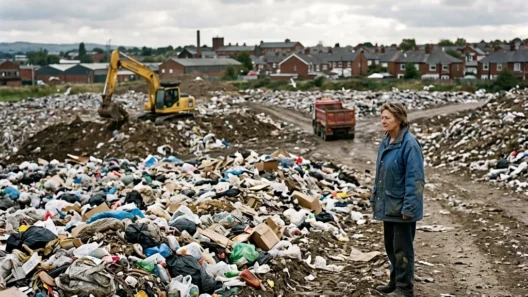
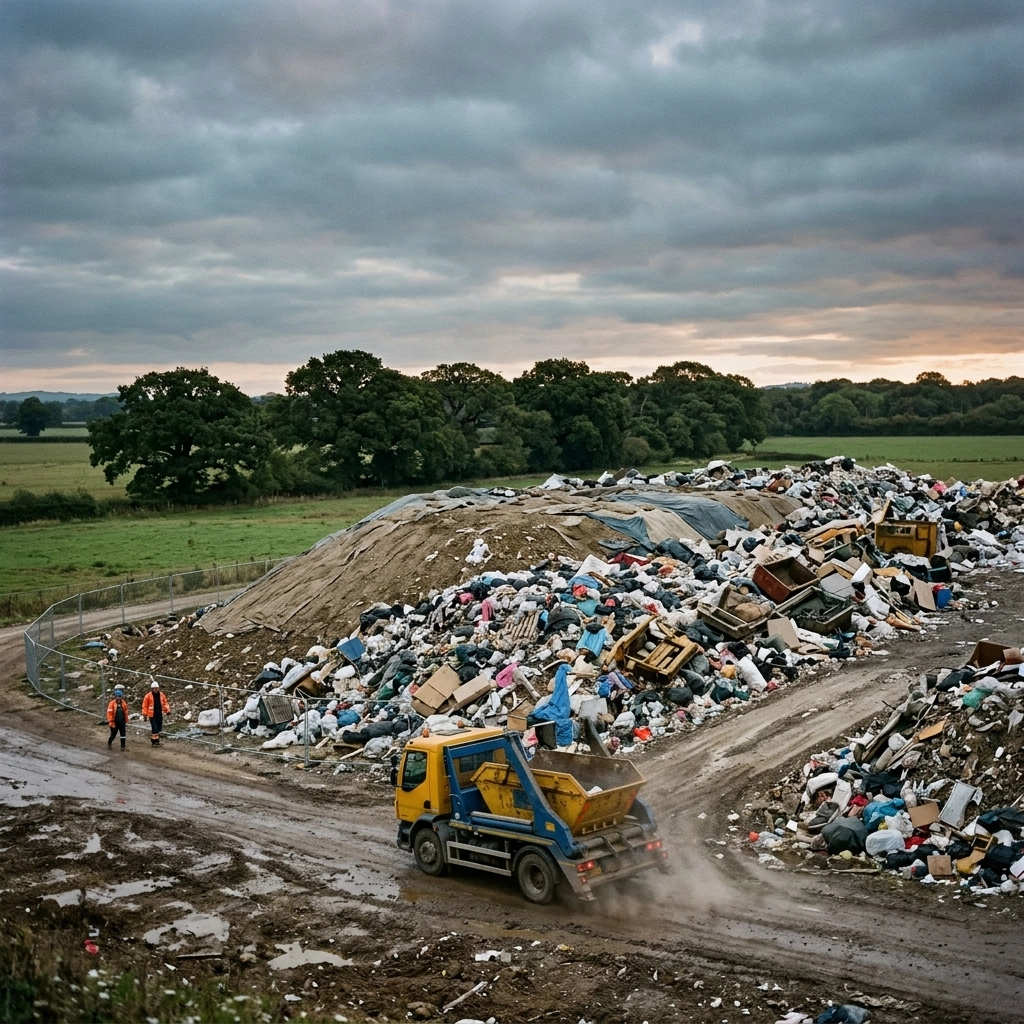
The sheer scale of the site is difficult to comprehend without seeing it firsthand. Stretching sixty metres in length and rising ten metres into the sky, the mountain consists of hundreds of tonnes of compressed rubbish. It is a mixture of household waste, industrial debris, and materials that the Environment Agency is still working to identify. For those who value independent news UK outlets to bring these untold stories to light, this situation serves as a stark reminder of how quickly the natural landscape can be compromised when criminal elements find a gap in the system.
What makes this particular case so alarming is not just the volume of the rubbish, but the speed at which it appeared. It serves as a wake-up call for communities across the country. Waste crime is no longer about a few bags left in a layby; it has become a highly organised, lucrative industry that operates with the precision of a legitimate logistics firm, albeit with devastating consequences for the planet and the public purse.
The Twelve-Week Tactical Takeover
One of the most shocking aspects of the Oxfordshire waste mountain is the timeline of its creation. In April 2025, the land was a typical rural field, covered in grass and indistinguishable from the surrounding countryside. By late September of the same year, it had been transformed into a towering heap of refuse. This means that in roughly twelve weeks, thousands of tonnes of waste were transported, unloaded, and piled high, all while remaining relatively undetected by the wider public.
This rapid accumulation points to a sophisticated level of organisation. Criminal gangs involved in waste crime often pose as legitimate disposal companies. They approach businesses and local authorities, offering competitive rates to take away their rubbish. On paper, everything looks above board. They provide the necessary paperwork and charge the full market price, which includes the significant Landfill Tax that legitimate operators must pay to the government. However, instead of taking the waste to a licenced processing plant or a regulated landfill site, they divert the lorries to a secluded field.
The site’s location near Kidlington was likely chosen with tactical precision. Positioned between the River Cherwell and the A34, it offered easy access for heavy goods vehicles while being shielded from the direct view of passing motorists by a thick screen of trees. This allowed a constant stream of lorries to deposit their loads under the cover of the landscape. The speed of the operation ensures that by the time the authorities are alerted and the legal machinery begins to turn, the criminals have already pocketed the profits and moved on to the next location. This "smash and grab" approach to environmental degradation is a hallmark of modern organised crime, leaving the landowner and the taxpayer to deal with the fallout.
Environmental Risks and the Critical Incident
The Environment Agency has officially declared the Oxfordshire site a "critical incident," a designation usually reserved for the most serious environmental threats. The primary concern stems from the site’s geography. The waste mountain sits directly on a flood plain, a precarious position for a heap of potentially hazardous materials. If the River Cherwell were to burst its banks: a common occurrence in the wetter months: the floodwaters could sweep through the base of the rubbish pile.
When waste is left untreated and exposed to the elements, it produces a toxic liquid known as leachate. In a regulated landfill, this liquid is carefully managed and treated to prevent it from entering the groundwater. In an illegal dump like the one near Kidlington, there are no liners, no drainage systems, and no oversight. The risk of chemicals, heavy metals, and microplastics leaching directly into the River Cherwell is a major concern for local biodiversity. The river is a vital artery for local wildlife and connects to a broader network of waterways that could carry contamination far beyond the initial site.
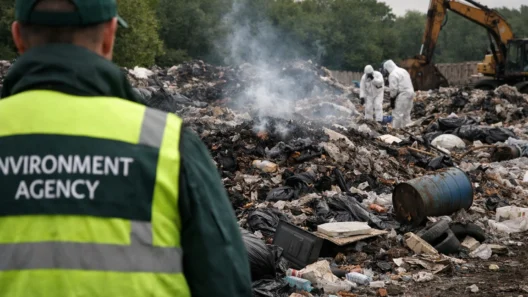
Furthermore, the physical stability of a ten-metre-high pile of loose waste is a safety hazard. There is the constant risk of internal combustion, as the decomposition of organic matter generates heat and methane gas. Without proper venting, these "hotspots" can lead to deep-seated fires that are notoriously difficult for fire services to extinguish and can release toxic smoke into the atmosphere. The Environment Agency officer who first visited the site in July noted the rapid growth, but the legal process to halt the activity took months to finalise. During that delay, the mountain continued to grow, exacerbating an already dire environmental scandal.
Unmasking the Reality of Modern Waste Crime
To understand how a field in Oxfordshire becomes a dumping ground, one must look at the economics of the situation. Waste crime is estimated to cost the UK economy over £1 billion every year. It is a low-risk, high-reward enterprise for organised gangs. By avoiding the costs associated with legal disposal: such as tipping fees at licenced sites and the mandatory Landfill Tax: criminals can generate massive profit margins. In many cases, these gangs are the same groups involved in drug trafficking, human smuggling, and money laundering, using waste as a convenient way to diversify their illegal portfolios.
The financial burden of these untold stories often falls on the local community. The cost of clearing a site of this magnitude is astronomical. Early estimates suggest that the cleanup bill for the Kidlington site could exceed the entire annual budget of the local council. If the landowner was unaware of the criminal activity or was coerced, they may find themselves legally responsible for the clearance, a situation that can lead to financial ruin. If the council has to step in, it means that money intended for schools, roads, and social care is instead diverted to fixing the mess left behind by criminals.
Addressing this issue requires more than just clearing up the rubbish; it requires a fundamental shift in how waste is tracked and how the industry is regulated. While an arrest has been made in connection with the Oxfordshire site, the systemic problem remains. There is a pressing need for better enforcement and more robust digital tracking of waste from the point of production to its final destination. As more people turn to independent news UK sources to stay informed about these hidden crises, the pressure grows on policymakers to treat waste crime with the same severity as other forms of organised crime.
The situation in Oxfordshire is a sobering reminder that our environment is vulnerable to those who seek to exploit it for quick profit. The peaceful fields near the A34 have been scarred by a mountain of neglect and criminality. While the legal process continues and the Environment Agency monitors the site, the mountain remains a silent witness to a growing national problem. Protecting the landscape from such scandals requires constant vigilance from both the authorities and the public to ensure that these hidden crimes are exposed and the perpetrators held to account.
The discovery of the illegal waste site near Kidlington underscores the significant challenges faced by environmental regulators in the UK. The speed and scale of the operation highlight the sophisticated nature of modern waste crime and the substantial environmental and financial risks it poses to local communities. As investigations continue and the focus shifts toward remediation, the incident serves as a clear example of the ongoing battle to protect the British countryside from organised exploitation.