A sixteen-year-old girl from Surrey has demonstrated extraordinary resilience and compassion by raising more than £11,000 to support other young people facing serious illness. Neve, who was diagnosed with a rare and aggressive brain tumour earlier this year, has dedicated her energy to ensuring that children undergoing similar treatments feel less alone. Her fundraising efforts have captured the attention of her local community and beyond, highlighting the urgent need for better support and research into childhood brain cancers.
The diagnosis came as a profound shock to Neve and her family. She was told she had a Diffuse Intrinsic Pontine Glioma, more commonly known as DIPG. This specific type of tumour is located in the brainstem, making it exceptionally difficult to treat and currently life-limiting. Despite the weight of this news, Neve’s immediate reaction was to look for ways to help others. She identified a significant gap in the emotional support available for children who must endure the frightening environment of radiotherapy.
Fundraising began with a clear goal to split the proceeds three ways. The first portion of the money is designated for Abbie’s Army, a charity that specifically funds research into DIPG. The second portion supports Sophie’s Legacy, an organisation that provides practical help to families staying in hospitals. The final third of the funds is dedicated to a project very close to Neve’s heart: the creation of bespoke care packages for children about to start their own radiotherapy journeys.
The financial milestone of £11,000 was reached through a combination of online donations and community events. Supporters have praised Neve for her selflessness, noting that while she is navigating her own intensive treatment schedule, she is consistently thinking about the welfare of younger patients. The success of the campaign has allowed the first batch of care packages to be assembled and prepared for distribution to hospitals across the region.
Understanding the Impact of DIPG
DIPG is a particularly cruel form of cancer because of its location in the pons area of the brainstem. This region controls vital bodily functions such as breathing, heart rate, and blood pressure. Because the tumour is integrated with healthy brain tissue, surgical removal is not an option. This leaves radiotherapy as the primary form of treatment, aimed at shrinking the tumour and managing symptoms rather than providing a cure. In the UK, brain tumours are the leading cause of cancer-related deaths in children and adults under the age of forty, yet they receive a disproportionately small amount of national research funding.
Neve’s decision to support Abbie’s Army stems from this lack of dedicated resources. By funneling money into specialised research, she hopes to contribute to a future where more effective treatments are available. The current standard of care for DIPG has remained largely unchanged for decades, a fact that Neve and her family are keen to highlight. Awareness is a key component of her mission, as she believes that more public knowledge will eventually lead to the funding breakthroughs required to save lives.
The physical and emotional toll of the diagnosis is immense, but the lack of options for patients can be equally devastating. Neve’s advocacy brings a human face to these statistics. By sharing her journey, she is shining a light on the realities of living with a rare brain tumour. Her courage in discussing the limitations of current medical science has encouraged others to join the fight for better outcomes for all paediatric oncology patients.
The Heart of the Care Package Initiative
The care package initiative was born out of Neve’s personal experience with radiotherapy. To receive the treatment, patients must lie perfectly still on a hard table while a custom-moulded plastic mask is bolted down over their face to ensure the radiation hits the exact right spot. For a child, this experience can be terrifying. Neve described the feeling of being alone in a dark, silent room, unable to move or see properly, as one of the most difficult aspects of her illness.
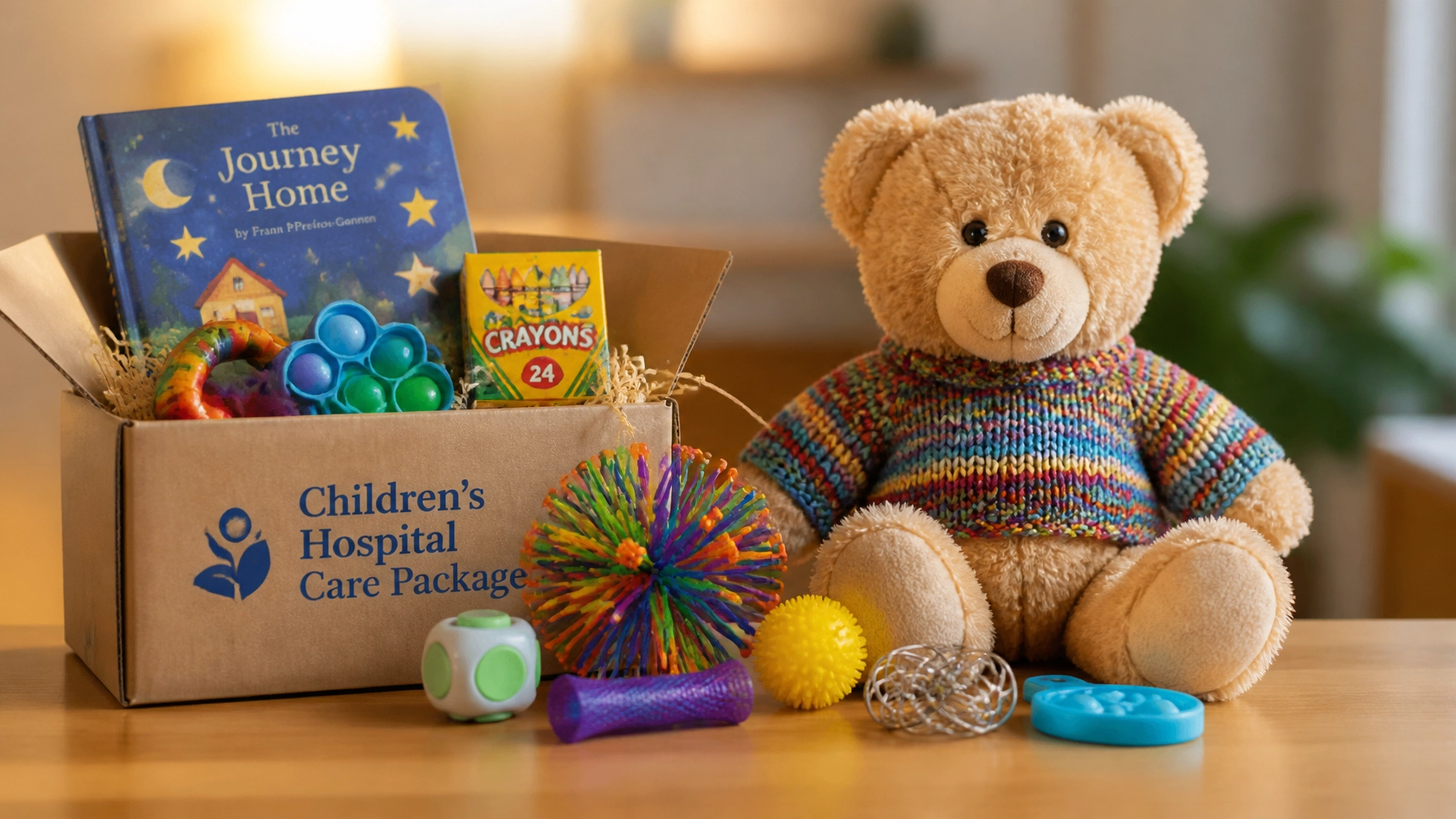
To combat this fear, Neve designed care packages specifically to provide comfort and distraction. Each package contains a soft teddy bear, but these are not ordinary toys. Neve has spent her time hand-knitting small, colourful jumpers for each bear, adding a personal touch that lets the recipient know someone is thinking of them. The idea is for the child to hold the bear or have it nearby during their sessions, providing a sense of security in an otherwise clinical and intimidating environment.
Beyond the teddy bears, the packages include an assortment of items chosen to soothe and entertain. Fidget toys are included to help manage anxiety, along with stickers, books, and small games that can be used during long waits in hospital corridors. The goal is to transform the radiotherapy experience from something purely medical into something that acknowledges the emotional needs of the child. Neve’s first-hand knowledge of what brings comfort in those moments has made these packages uniquely effective and deeply appreciated by hospital staff and families alike.
The logistics of creating these packages involve sourcing high-quality materials and coordinating with local hospitals to ensure they reach those in need. Neve’s family and friends have rallied around her to help with the assembly, but the vision remains entirely hers. Every item is selected with the intention of making a difficult day just a little bit easier for a child who is facing one of life’s toughest challenges.
A Legacy of Awareness and Support
While the immediate impact of the care packages is felt in hospital wards, the broader goal of Neve’s campaign is to create a lasting legacy of awareness. By partnering with Sophie’s Legacy, she is also addressing the practical hardships that families face when a child is hospitalised. Sophie’s Legacy was established in memory of Sophie Fairall, who also advocated for better hospital food, play specialists, and support for parents. Neve’s contribution helps ensure that these essential services continue to be available for others.
The community in Surrey has been instrumental in the success of the fundraising. Local schools, businesses, and individuals have all contributed, moved by Neve’s determination to turn her own struggle into a source of hope. This collective effort has not only raised significant funds but has also fostered a stronger sense of community support for families dealing with childhood cancer. The £11,000 raised so far is just the beginning, as Neve intends to keep the momentum going for as long as possible.
Neve’s story serves as a poignant reminder of the power of individual action. Even when facing the most daunting personal circumstances, she has found a way to contribute to the greater good. Her work ensures that the conversation around DIPG and childhood brain tumours remains at the forefront, pushing for the change that is so desperately needed. The care packages she creates will continue to provide comfort to children during their most vulnerable moments, serving as a testament to Neve’s kindness and bravery.
As the project grows, there are plans to expand the distribution of the packages to more radiotherapy centres across the country. The feedback from the first recipients has been overwhelmingly positive, with parents noting that the simple gesture of a handmade jumper on a teddy bear made a significant difference in their child's willingness to attend treatment. Neve remains focused on her goal, proving that even in the face of a rare and difficult diagnosis, it is possible to make a meaningful difference in the lives of others.