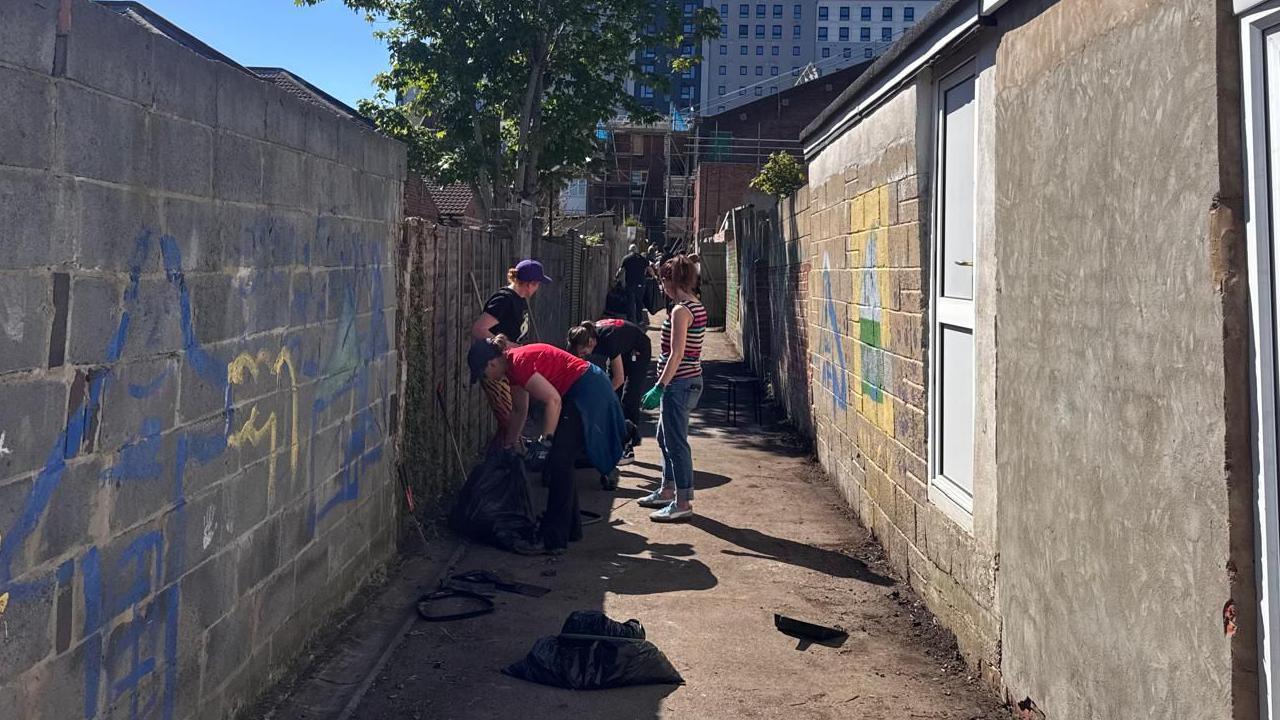
A neglected alleyway in the heart of Southampton has undergone a remarkable transformation from a fly-tipping hotspot into a vibrant community hub. The project, led by a local teenager, has turned a space once avoided by residents into a safe, welcoming area for the entire neighbourhood. For years, the narrow passage between rows of terraced housing had been a magnet for discarded furniture, household waste, and antisocial behaviour. Residents had long expressed concerns about the safety and cleanliness of the area, but the scale of the problem often felt overwhelming for individual households to tackle alone.
The initiative began when the teenager, a resident of the area, decided that the state of the alleyway was no longer acceptable. What started as a solo effort to clear a few bags of rubbish quickly grew into a coordinated community campaign. By reaching out to neighbours and local businesses, the young organiser managed to secure tools, plants, and volunteers to help reclaim the space. The transformation process involved several weekends of intensive manual labour, including the removal of large items such as mattresses and broken appliances that had been abandoned in the passage for months.
As the physical rubbish was cleared, the potential of the space began to emerge. The project did not stop at simply cleaning the ground; it sought to redefine the purpose of the alleyway entirely. By introducing greenery, seating, and improved lighting, the volunteers have created an environment that encourages social interaction rather than neglect. This shift in purpose has had a tangible impact on the local atmosphere, with many residents reporting a renewed sense of pride in their surroundings.
Reclaiming the Space from Years of Neglect
The initial phase of the project focused heavily on the logistical challenge of waste removal. Fly-tipping had become a chronic issue in the Southampton neighbourhood, with the alleyway acting as a convenient dumping ground for those looking to avoid proper disposal fees. The sheer volume of waste meant that the team had to work closely with local authorities to ensure that the collected rubbish was disposed of correctly and safely. This early stage was crucial in demonstrating to the wider community that change was possible, encouraging more people to step forward and offer their time.
Beyond the physical cleanup, the project required a significant amount of coordination to ensure the space remained clear. The teenager leading the effort established a regular maintenance schedule, involving different households in the upkeep of their specific sections of the alleyway. This decentralised approach to management has ensured that the burden of care does not fall on a single person, fostering a collective responsibility for the shared environment. It has also served as a deterrent to further fly-tipping, as the increased activity in the alleyway makes it much harder for individuals to dump waste unnoticed.
The transformation also addressed long-standing safety concerns. Dark, rubbish-strewn alleyways are often perceived as unsafe, particularly during the winter months. By clearing the clutter and improving visibility, the project has made the passage a viable route for residents once again. The addition of solar-powered lighting has further enhanced this sense of security, ensuring that the path is well-lit without incurring significant energy costs for the community. These practical improvements have been central to the project's success in reclaiming the space for everyday use.
Building a Stronger Sense of Community Spirit
One of the most significant outcomes of the alleyway transformation has been the strengthening of local social ties. In many urban environments, neighbours can live side-by-side for years without ever truly interacting. The shared goal of improving the alleyway provided a natural reason for people to meet, talk, and work together. This has resulted in a more cohesive neighbourhood where residents are more likely to look out for one another. The teenager’s leadership was instrumental in this regard, as they acted as a bridge between different generations living on the street.
The new community hub now features communal planters where residents grow herbs, flowers, and even some vegetables. These small gardens have become points of interest and conversation, drawing people out of their homes and into the shared space. During the warmer months, the alleyway has hosted small gatherings and tea mornings, providing a quiet retreat from the busy city streets nearby. This social infrastructure is particularly important for older residents or those living alone, for whom the transformed alleyway offers a vital connection to their local community.
The success of the project has also inspired other nearby streets to consider similar initiatives. By demonstrating that a single person can spark a large-scale change, the Southampton teenager has provided a blueprint for community-led urban renewal. The project highlights the importance of grassroots action in tackling local issues that might otherwise be overlooked by larger organisations. It serves as a reminder that the environment immediately outside one’s front door is a shared resource that, when cared for, can significantly enhance the quality of life for everyone involved.
Long-Term Benefits and Future Sustainability
Ensuring the long-term sustainability of the community hub is now the primary focus for the residents. The project has moved from a phase of intense transformation into one of steady maintenance and gradual improvement. Future plans include the installation of more permanent seating and the creation of a mural to further brighten the space. These additions are designed to reinforce the alleyway’s new identity as a place for people, rather than a place for waste. The ongoing involvement of local youth is seen as essential to this future, providing them with a sense of agency and a stake in their local area.
The environmental benefits of the project are also noteworthy. By replacing concrete and rubbish with plants and soil, the community has created a small but meaningful haven for local biodiversity. Insects and birds are now more common in the area, and the vegetation helps to manage rainwater runoff more effectively than the previously clogged drainage systems. These small-scale ecological improvements contribute to the overall health of the urban environment, making the neighbourhood a more pleasant place to live while also addressing broader environmental goals at a local level.
As the alleyway continues to thrive, it stands as a testament to the power of community action. The transformation has not only removed a physical eyesore but has also addressed the social and safety issues that often accompany urban neglect. The leadership shown by the Southampton teenager has proven that age is no barrier to making a positive impact on one's surroundings. By turning a forgotten passage into a hub of activity and pride, the residents have reclaimed their neighbourhood and set a positive example for others to follow. The project remains a focal point for the community, representing a shared victory over neglect and a commitment to a better local environment.