Alfie, a 13-year-old explorer from Cornwall, has made history by becoming one of the first visually impaired participants to complete the gruelling 35-mile route of the Ten Tors Challenge. Navigating the rugged and often unforgiving terrain of Dartmoor, Alfie was part of a determined team from the Carrick Deg Karn Explorer Scouts. The event, which took place over a weekend of fluctuating weather, is widely regarded as one of the toughest outdoor challenges for young people in the United Kingdom. For Alfie, the achievement was not just a test of physical endurance but a significant milestone in overcoming the daily hurdles presented by Nystagmus, a condition that causes involuntary eye movement and affects depth perception.
The Ten Tors Challenge is organised by the British Army and involves around 2,800 teenagers aged between 14 and 19. While the standard age for the 35-mile route usually begins at 14, the inclusion of younger scouts like Alfie under specific training programmes highlights the rigorous preparation undertaken by the Carrick Deg Karn group. Participants are required to navigate across the moor unaided, visiting ten specific tors or rock formations, and must carry all their own kit, including tents, food, and water for an overnight stay. The task is difficult for any teenager, but for someone whose vision can make a one-mile trek look like a three-mile journey, the mental fatigue is just as taxing as the physical climb.
Alfie’s condition, Nystagmus, means his eyes move in constant circles, a movement that can speed up or slow down depending on his energy levels and the environment. This makes judging distances incredibly difficult, particularly on the undulating ground of Dartmoor where hidden bogs and uneven granite are constant hazards. Alfie described the experience as mentally draining, noting that seeing a distant tor can be demoralising when your brain interprets the distance as much further than it actually is. Despite moments where the temptation to drop out was strong, he pushed forward, motivated by his teammates and the looming goal of the finish line at Okehampton Camp.
Breaking Boundaries on Dartmoor
The 64th year of the Ten Tors Challenge saw thousands of young people descend on Dartmoor, but Alfie’s journey stood out as a testament to inclusivity in outdoor sports. His mother, Melanie, noted that there had never been a record of a young person with a visual impairment completing a full distance in the main Ten Tors event before this weekend. The success of the team was built on months of intensive training in the lead-up to the event, where the scouts learned to work as a single unit. For Alfie, this meant relying on his friends to help describe the ground ahead or provide a steadying influence when the visual strain became overwhelming.
The Carrick Deg Karn Explorer Scouts, based in east Cornwall, focused heavily on building strong bonds between the team members. This camaraderie was the deciding factor during the most difficult stretches of the moor. Alfie’s father, James, emphasized that the team’s support was so natural that they often did not even realise how much they were assisting him. By simply being there and maintaining a consistent pace, they provided a framework that allowed Alfie to navigate the 35-mile route effectively. The physical challenge of Ten Tors is designed to push teenagers to their limits, but it also fosters a level of self-reliance and teamwork that is rarely found in other youth activities.
The weather on Dartmoor is notoriously unpredictable, often shifting from bright sunshine to torrential rain and thick mist within minutes. Navigating in “clag”: the local term for low-hanging cloud: is a major part of the Ten Tors experience. For a visually impaired hiker, these conditions add another layer of complexity. However, the team from Carrick Deg Karn remained focused on their objective. Their arrival at the finish line on Sunday afternoon was met with cheers from hundreds of supporters, but the most significant recognition came from the event organisers themselves.
Preparation and Perseverance
Preparation for Ten Tors begins months in advance, involving multiple practice walks that gradually increase in distance and difficulty. For Alfie, this training was essential for building the muscle memory and resilience needed for the actual event. His advice to others facing similar challenges is to “dream big” and never give up, regardless of the environmental conditions or the difficulty of the task. He stressed the importance of finding a personal “why”: a motivation that keeps a person moving when their body and mind are telling them to stop. For Alfie, that motivation was the collective effort of his scout group and the pride of proving that his visual impairment was not a barrier to high-level adventure.
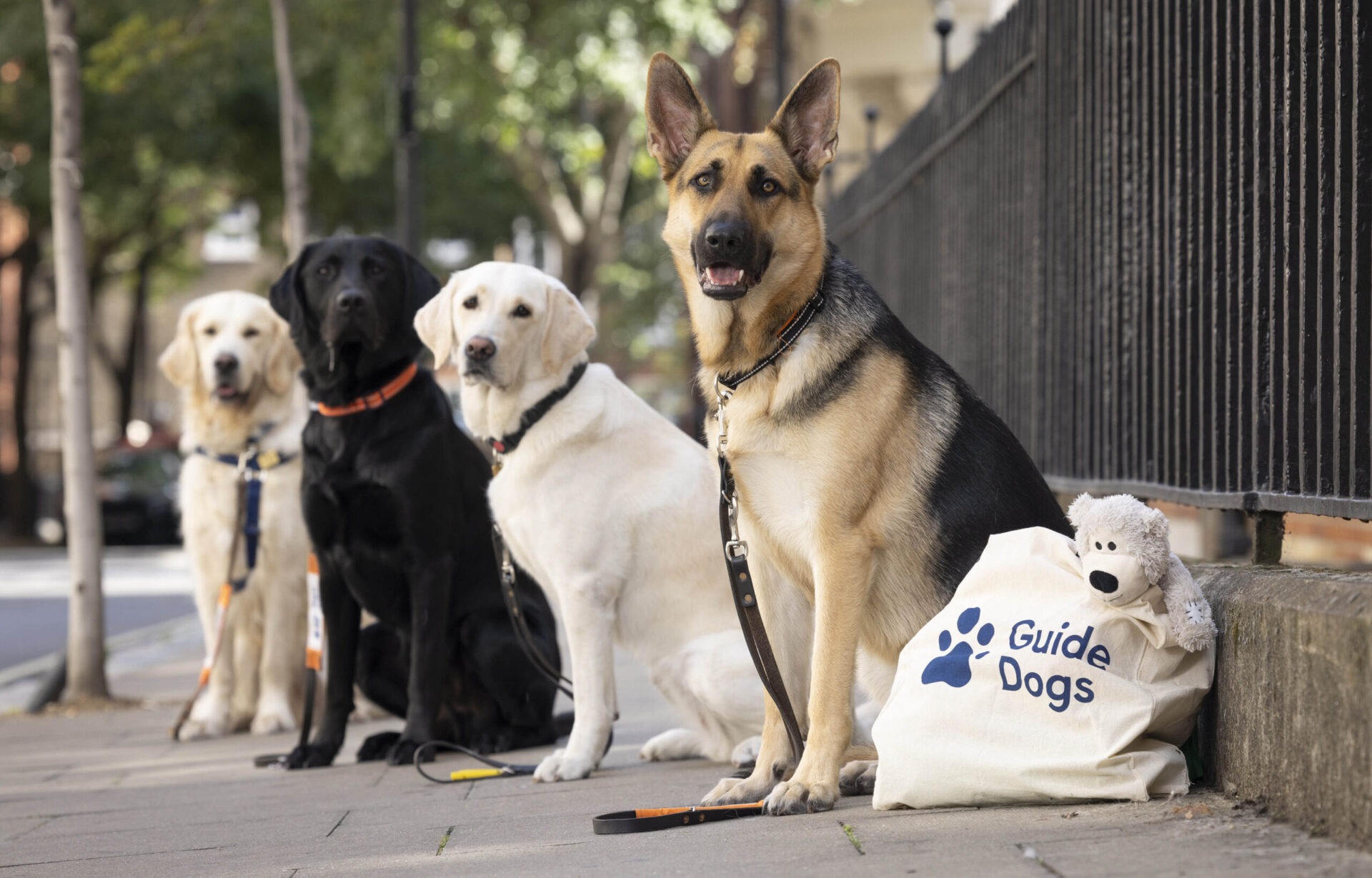
Beyond the scouts, Alfie has been supported by the Guide Dogs Association through their “buddy dog” scheme. Unlike guide dogs that assist with navigation in urban environments, buddy dogs are selected from dogs that may not have met the strict criteria for full guide work but possess the perfect temperament to assist children with sight loss. These dogs help build self-confidence and provide a sense of security and companionship. While his buddy dog could not accompany him on the 35-mile trek, the dog was waiting at the finish line to welcome him home. The scheme has been credited by Alfie’s family as a vital part of his development and his ability to advocate for himself.
The Ten Tors director, Colonel Jim Bird of the Army, took the time to personally recognise Alfie and his team at the finish line. This special acknowledgment highlighted the unique nature of their achievement. The challenge also includes the Jubilee Challenge, which is specifically designed for participants with special educational and physical needs, offering routes of up to 15 miles. However, Alfie’s decision to tackle the full 35-mile Explorer Scout route put him in the mainstream category of the event, further underscoring the scale of his success.
A Future Without Limits
Alfie’s story has resonated with many in the Cornwall and Devon communities, serving as a reminder that with the right adaptations and a supportive environment, physical limitations do not have to define a person’s potential. His father described him as an advocate for himself, even if he doesn’t quite realise the impact he is having on others yet. By completing one of the most famous trekking challenges in the UK, Alfie has set a precedent for other visually impaired young people who may have previously felt that such events were out of reach.
The impact of the Ten Tors Challenge extends far beyond the weekend itself. The teenagers who complete the walk often describe it as a life-changing experience that gives them a new perspective on their own capabilities. For Alfie, the lessons learned on the moor: tenacity, teamwork, and the importance of mental fortitude: will likely stay with him as he continues his journey in the scouts and beyond. His completion of the 35-mile route is now a part of the long history of the event, which has seen tens of thousands of young people cross the finish line since its inception in 1960.
As the event wrapped up, the focus remained on the message of persistence. Alfie’s mother, Melanie, highlighted that anyone can succeed when given the opportunity to adapt. The Carrick Deg Karn Explorer Scouts have shown that inclusivity isn’t just about making exceptions, but about providing the training and team structure that allows everyone to compete on a level playing field. With his medals and the recognition of the Army behind him, Alfie’s achievement on Dartmoor stands as a clear signal to other young explorers that the horizon is much further than it might first appear.
The weekend’s events saw various teams completing different distances, including the 45 and 55-mile routes, but the 35-mile finish line remained the emotional heart of the camp as the younger and first-time participants arrived. Alfie was one of many who had to camp out in the wild on Saturday night, managing his own gear and nutrition under the watchful eye of the military and volunteers stationed across the moor. His successful navigation back to Okehampton Camp marks a successful chapter for the Cornwall scouting community and a personal victory for a teenager who refused to let his vision dictate his boundaries.