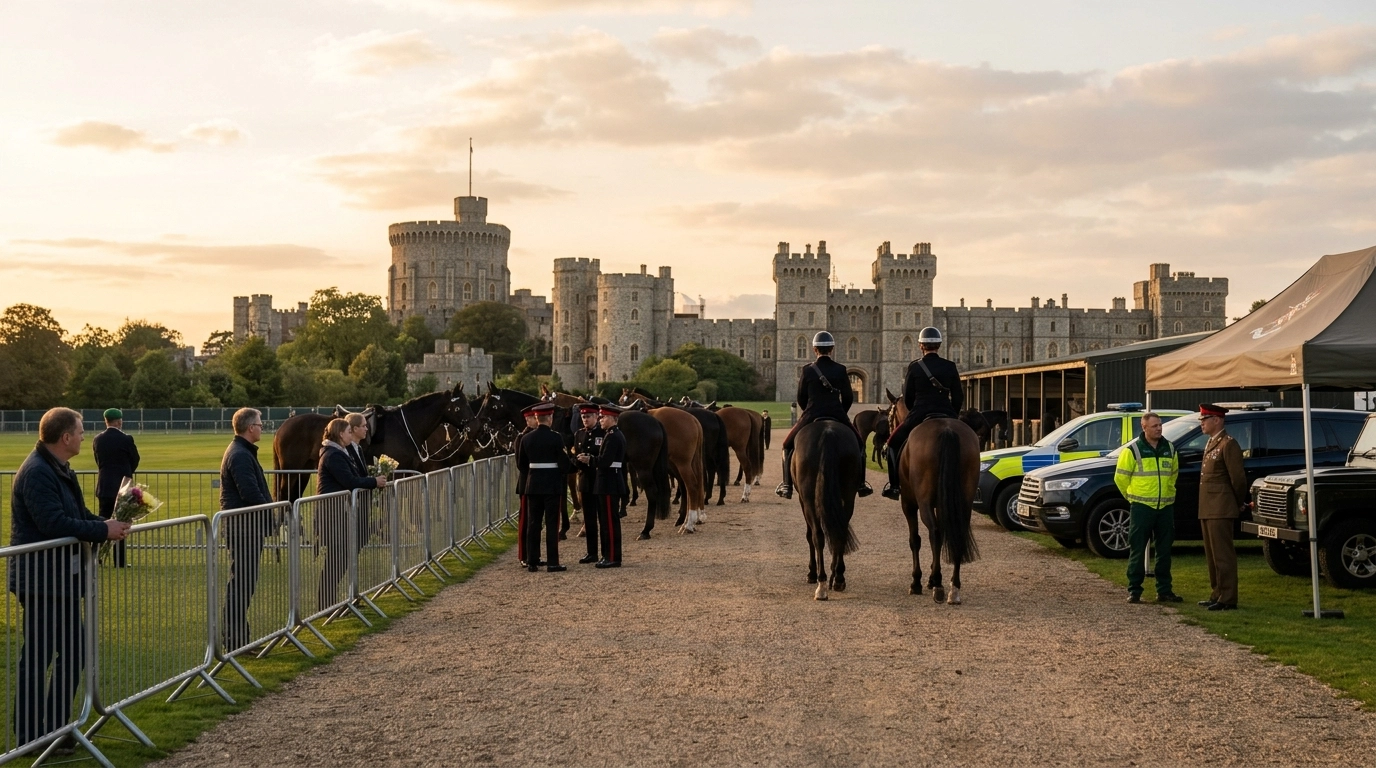
The prestigious grounds of Windsor Castle, usually a place of celebration and pageantry, have been cast into deep shadow following a tragic incident that has left the military and local community in mourning. A soldier from The King’s Troop, Royal Horse Artillery, has lost their life after a fall during one of the nation’s most celebrated equestrian events. The atmosphere at the Royal Windsor Horse Show, typically vibrant with the sounds of galloping hooves and cheering crowds, shifted into a profound and heavy silence as news of the tragedy spread through the arena.
The incident occurred during the early evening hours, just as the day’s competitive events were drawing to a close. The King’s Troop had recently completed a rigorous and highly choreographed display, a hallmark of British ceremonial excellence that requires immense skill, strength, and coordination between horse and rider. As the troop exited the main arena, the unthinkable happened. Witnesses described a sudden and devastating fall that left a serving member of the armed forces with fatal injuries. Despite the immediate and professional response from on-site medical teams, including paramedics and specialist doctors who were stationed at the show, the soldier could not be saved and was pronounced dead at the scene.
This loss has sent shockwaves through the equestrian world and the British Army. The King’s Troop, Royal Horse Artillery, is a unit steeped in history and tradition, known for its precision and its role in major state occasions, such as the firing of Royal Salutes. For many, they represent the very best of British military pageantry. To see such a vibrant life cut short in the line of ceremonial duty is a reminder of the inherent risks that these men and women face every day, even when they are not on the battlefield.
A Distinguished Career and the Weight of Tradition
The soldier involved was a dedicated member of a unit that demands nothing less than perfection. The King’s Troop is unique in its requirements; it is a mounted unit that maintains the traditions of the Horse Artillery, using six teams of six horses to pull First World War-era 13-pounder field guns. The physical demands of such work are extraordinary. Riders must manage heavy equipment, powerful animals, and complex formations, often at high speeds. This is not merely a performance; it is a display of tactical discipline and historical reverence that requires months, if not years, of intensive training.
While the identity of the soldier has been respected in the immediate aftermath to allow for family notifications, the impact of their passing is felt by every person who has ever worn the uniform. Within the military community, the loss of one is the loss of many. The camaraderie found within the Royal Horse Artillery is forged through shared hardship and the unique bond between a soldier and their horse. This relationship is central to everything the King’s Troop does. The horses themselves are trained to remain calm amidst the thunder of cannon fire, but they are still living, breathing animals subject to the unpredictable nature of any equestrian environment.
The investigation into the circumstances of the fall is ongoing. Local authorities have described the death as unexplained but non-suspicious, a standard legal term used while the formal processes of an inquest and military inquiry begin. The Ministry of Defence and the Defence Accident Investigation Branch are working alongside the event organisers to reconstruct the moments leading up to the tragedy. For the family, friends, and colleagues of the deceased, the coming weeks will be filled with questions, but for now, the focus remains on honouring a life lived in service to the Crown.
The Inherent Dangers of Ceremonial Equestrianism
Equestrian sports and ceremonial duties carry a level of risk that is often masked by the elegance of the spectacle. The Royal Windsor Horse Show is one of the premier events on the British sporting calendar, attracting thousands of spectators and some of the finest riders in the world. It is an event where the Royal Family are frequent guests, often competing themselves or supporting the various displays. Yet, beneath the polished boots and gleaming tack lies a reality of high-stakes physical exertion.
Horses are powerful creatures, often weighing over half a tonne, and when they are moving at pace in a ceremonial formation, the margin for error is incredibly slim. Even the most experienced riders can find themselves in a situation that spirals out of control in a matter of seconds. The King’s Troop displays are particularly hazardous because of the weight of the limbers and guns they tow. A trip, a stumble, or a sudden movement from a horse can lead to catastrophic consequences. This tragic event at Windsor highlights the reality that ceremonial duty is not merely “for show”: it is a professional military operation with all the attendant dangers.
In the wake of the incident, the decision was made to withdraw further displays by The King’s Troop from the remainder of the show’s schedule. This was a necessary step, not only out of respect for the fallen soldier but also to allow their colleagues the space to process the trauma of the event. The show organisers have continued with other competitive elements, but the absence of the artillery unit has been a poignant reminder of the void left by this tragedy. The flags at Windsor have been flown at half-mast, a silent tribute to a life lost on the very ground where so much of our national history is celebrated.
A Nation and a Monarch in Mourning
The reaction to the tragedy has extended to the highest levels of the British state. It has been confirmed that the King was informed of the death shortly after it occurred. As the Colonel-in-Chief of many military units and a lifelong lover of horses, the news has reportedly been met with a sense of profound shock and sadness. The connection between the Royal Family and the King’s Troop is deeply personal; the unit was named by King George VI, and they have been a constant presence at the most significant moments of the monarchy’s recent history.
Tributes have also begun to pour in from across the country. Those who were in attendance on that fateful evening have shared their sense of disbelief and their prayers for the soldier’s family. The equestrian community is a tight-knit one, and the loss of a rider at such a high-profile event is felt by everyone from the grooms in the stables to the judges in the stands. There is a collective understanding of the passion that drives people to this life, and a collective grief when that passion leads to such a somber end.
As the sun sets over the Windsor estate, the focus turns to the long road of healing that lies ahead for the soldier’s unit and loved ones. The Royal Windsor Horse Show will eventually conclude, and the crowds will disperse, but the memory of this soldier will remain a permanent part of the show’s long history. It serves as a stark reminder of the cost of service and the fragility of life, even in the most regal of settings. For NowPWR readers, this story is not just about a tragic accident; it is about the individuals who dedicate their lives to maintaining our national traditions, often at a cost that the public rarely sees. We stand in solidarity with the British Army and the family of the fallen during this exceptionally difficult time.