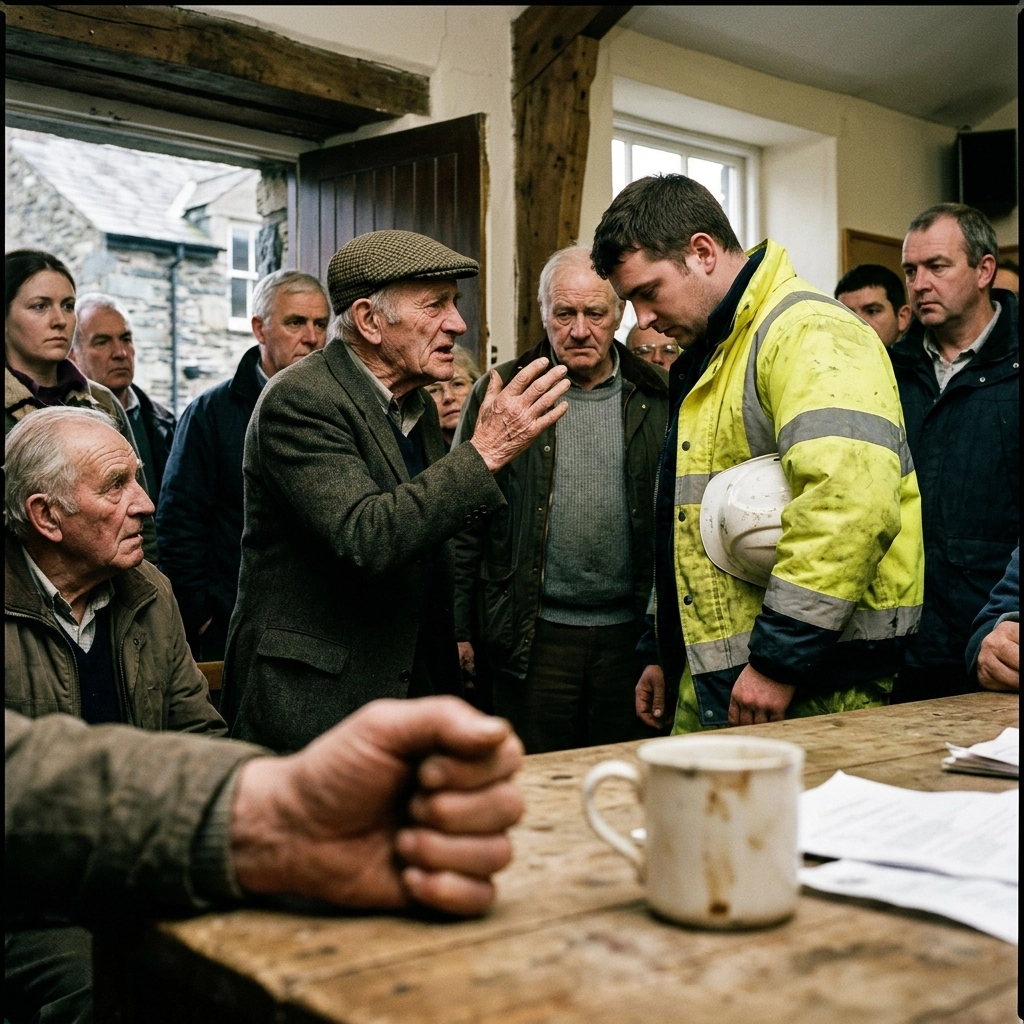
Walking through the winding lanes of Surrey, you would usually expect to see nothing more controversial than a misplaced wheelie bin or a slightly overgrown hedge. The village of Alfold is the epitome of English rural charm: or at least, it was until a few years ago. Now, the conversation at the local pub and across garden fences isn't about the weather; it’s about a plot of land known as the Yellow Stone. This isn't a historical monument or a natural wonder. Instead, it has become a symbol of a deep-seated conflict between a local community and an unauthorised development that seems to defy the very rules the rest of us live by.
For those who haven’t followed this particular saga, the Yellow Stone site on Dunsfold Road has become a focal point for local anger. It started with the sudden appearance of large, bright yellow boulders at the entrance of what was once a quiet patch of woodland. Almost overnight, heavy machinery moved in, trees were cleared, and the landscape was transformed into a hardstanding area for caravans and vehicles. For the residents of Alfold, it felt like a bolt from the blue. While most people have to jump through endless hoops just to put up a garden shed, this massive transformation appeared to happen without a single permit in sight.
As an outlet dedicated to independent news uk, we believe it is vital to shed light on these untold stories that often get lost in the noise of national headlines. These are the issues that affect the daily lives of people in small towns and villages, where the feeling of being ignored by the authorities can lead to a profound sense of injustice.
The quiet village life turned upside down
Alfold has always been the kind of place where peace and quiet are the primary commodities. Nestled on the border of Surrey and West Sussex, it’s a community that prides itself on its heritage and its connection to the surrounding countryside. When the development at the Yellow Stone site began, that peace was shattered. It wasn’t just the noise of the chainsaws and the rumble of the trucks; it was the sheer speed of the change. Residents watched in disbelief as ancient woodland was stripped away to make room for what the council later deemed an unauthorised traveller site.
The frustration in the village is palpable. It’s not necessarily about who is moving in, but how it’s being done. In the UK, the planning system is often seen as a slow, bureaucratic beast that demands strict adherence to rules. When a developer: whether an individual or a group: appears to bypass those rules entirely, it creates a sense of "one rule for them and another for us." The local community in Alfold feels that their voices have been sidelined in favour of an "act first, ask for forgiveness later" approach.
The yellow stones themselves, which give the site its name, are seen by many as a defiant marker. They block the entrance to the site, preventing easy access for enforcement officers while clearly demarcating a territory that feels increasingly separate from the rest of the village. This physical barrier serves as a constant reminder to the locals of the standoff that has been simmering for years. It’s a classic example of the untold stories of rural Britain, where the battle over land use can divide neighbours and leave lasting scars on the community fabric.
Navigating the planning system hurdles
The legal battle over the Yellow Stone site is a tangled web of enforcement notices, appeals, and retrospective planning applications. Waverley Borough Council has been involved in a long-running game of cat and mouse with the site's occupants. For the residents of Alfold, the council’s response has often felt painfully slow. While legal processes are naturally time-consuming, the visible reality on the ground is that the development continues to grow while the paperwork sits on a desk somewhere in a government office.
Local campaigners have pointed out the environmental impact of the site. The clearing of trees and the laying of hardstanding have significant implications for local biodiversity and drainage. In an era where we are increasingly conscious of our ecological footprint, the destruction of woodland without proper oversight is a bitter pill for many to swallow. The council has issued multiple stop notices and enforcement orders, but these are often met with appeals that drag the process out for months, if not years.
This is a scenario playing out in various pockets across the country. It highlights a significant loophole in the planning system where unauthorised developments can become established facts on the ground before the legal system can catch up. By the time a final decision is reached, the original landscape is often irrevocably changed. For the people of Alfold, the Yellow Stone site is a test case for whether the planning laws they respect are actually enforceable. Without the intervention of independent news uk to keep the pressure on, many fear that these issues would simply be swept under the rug.
Why stories like this matter for the community
It’s easy to dismiss a local planning dispute as a "not in my back yard" (NIMBY) issue, but that would be a gross oversimplification of what’s happening in Alfold. This conflict is about the integrity of the community and the principle of fairness. When a village feels that its concerns are being ignored by both the developers and the authorities, the social contract begins to fray. The Yellow Stone saga has brought the residents together in a way few other things could, but it has also left them feeling exhausted and disillusioned.
Covering these untold stories is about more than just reporting on a plot of land in Surrey. It’s about exploring the tensions that exist in modern Britain: between tradition and change, between the rights of the individual and the needs of the community, and between the law and the reality on the ground. The people of Alfold aren't asking for special treatment; they are simply asking for the same rules to apply to everyone. They want to know that their environment is protected and that their voices matter when it comes to the future of their home.
As the legal proceedings continue, the yellow stones remain in place, guarding a site that has become a lightning rod for controversy. Whether the site will eventually be cleared or if it will become a permanent fixture of the Alfold landscape remains to be seen. What is certain, however, is that the conflict has changed the village forever. It serves as a stark reminder that even in the most peaceful corners of the UK, the battle for the soul of a community can be fierce, complex, and deeply personal.
The situation in Alfold reflects a broader national conversation about land use, housing, and the effectiveness of local government. As we continue to follow this story, it is clear that the resolution: whatever it may be: will have implications far beyond the borders of this small Surrey village. For now, the residents wait, watch, and wonder if the system will eventually provide the clarity and justice they have been seeking for so long. The Yellow Stone stands as a silent witness to a community in conflict, waiting for the next chapter in a long and difficult story.