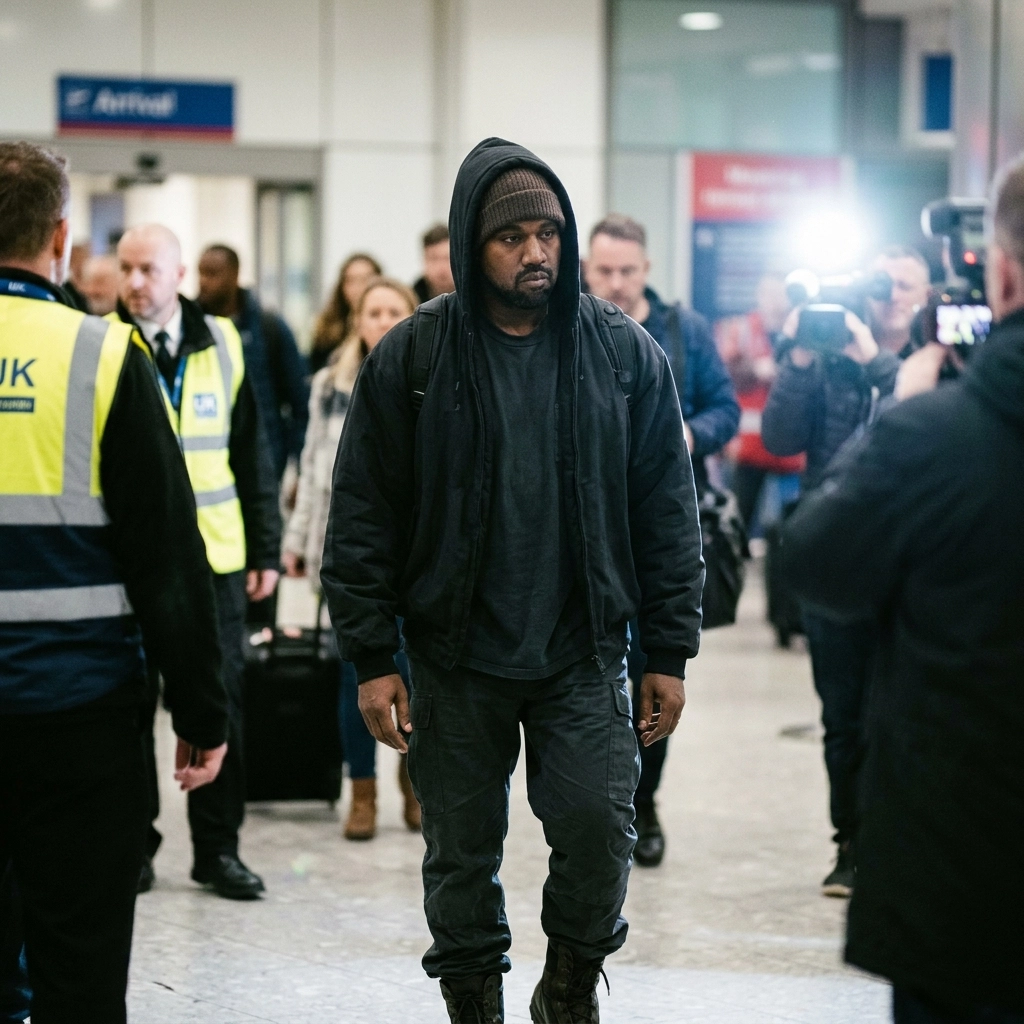
Kanye West, or Ye as he’s now legally known, has never been a stranger to the eye of the storm. From stage-crashing awards shows to his unconventional runs for the US presidency, he’s a figure who seems to thrive on friction. However, his latest clash isn’t with a fellow artist or a fashion house; it’s with the British government. The decision to block the rapper from entering the country for a scheduled performance at the Wireless Festival has ignited a fierce conversation across the country. It’s a debate that sits right at the intersection of free speech, public safety, and the limits of cultural influence. At NowPWR, we’re committed to providing the kind of independent news uk audiences look for, digging into the untold stories that the mainstream headlines sometimes gloss over.
The situation escalated quickly when reports surfaced that the Home Office had revoked Ye’s travel authorisation. The justification cited was a specific clause stating that his presence in the UK would not be "conducive to the public good." While this might sound like standard bureaucratic phrasing, it carries immense weight. It essentially suggests that the artist is more than just a controversial figure; he is seen by the state as a potential threat to social cohesion. This move followed years of increasingly volatile public statements from the artist, which have left fans and critics alike feeling deeply conflicted.
The Home Office and the ‘Public Good’ Clause
To understand why this is such a massive deal, we have to look at the legal mechanics. The UK government has the power to exclude non-nationals if they believe their presence could lead to public disorder or if they promote extremist views. In Kanye’s case, the timeline of controversies is long. Between 2022 and early 2026, he made a series of statements that shocked the global community. These included expressing admiration for historical dictators, using antisemitic tropes, and even incorporating deeply offensive imagery into his fashion lines.
When the Mayor of London and various advocacy groups raised concerns about his headline slot at Wireless, the government felt pressured to act. They argued that allowing him to perform on such a massive platform would give him the opportunity to disseminate hate speech to a live audience of tens of thousands. It wasn’t just about what he said on social media; it was about the physical act of bringing that rhetoric to a British stage. Prime Minister Keir Starmer's administration has taken a firm stance, suggesting that the fight against antisemitism and hate speech is a priority that outweighs the commercial interests of a music festival.
However, this isn’t the first time the UK has used its borders as a filter for ideology. From political figures to religious preachers, the "conducive to the public good" rule has been a gatekeeper for decades. But applying it to one of the biggest music stars on the planet feels different. It raises questions about where we draw the line. If an artist’s lyrics are offensive, do we ban them? If their personal politics are abhorrent, do they lose their right to work in the UK? This is the core of the debate that NowPWR is following closely. It’s not just about one man; it’s about the precedent it sets for every other international artist who might hold views that clash with the current political climate.
The Tension Between Artistic Freedom and Hate Speech
On one side of the argument, you have the supporters of absolute free speech. They argue that by banning Kanye West, the government is engaging in a form of pre-emptive censorship. The worry here is the "slippery slope." If the government decides today that Ye’s views are too dangerous, who do they decide to ban tomorrow? Some fans argue that music should be separated from the man, and that the UK public is perfectly capable of hearing his work without being "radicalised" by his personal outbursts.
This perspective often highlights the fact that Kanye has spoken openly about his struggles with mental health, including bipolar disorder and the long-term effects of a brain injury. His supporters suggest that rather than being met with a ban, he should be met with compassion or, at the very least, a platform to show he has changed. Ye himself issued a public apology, stating his goal was to bring "unity, peace, and love" and even expressed a desire to meet with the Board of Deputies of British Jews.
On the other side, there is the reality of the impact his words have. We’ve seen in the past how high-profile rhetoric can fuel real-world tension. When an artist with millions of followers uses their platform to punch down at marginalised groups, the consequences aren’t just theoretical. The UK has a long and complex history with racism and social inequality, as discussed in our look at how Jesse Jackson calls Britain the mother of racism. In a climate where social cohesion often feels fragile, many believe the government has a responsibility to protect its citizens from influential figures who might stir up old prejudices. The debate isn’t just about whether he can rap; it’s about whether his brand of influence is something the UK can afford to host right now.
A Glimpse into the Future of Cultural Gatekeeping
What does this mean for the future of entertainment in the UK? We’re living in an era where the lines between a person’s private beliefs and their public career are almost entirely gone. This travel ban suggests that the UK government is willing to take a more active role in monitoring that line. It’s a shift that reflects broader concerns about the power of celebrity and the speed at which misinformation and hate can spread.
Interestingly, the Jewish community’s response has been nuanced. While many supported the ban, the Board of Deputies of British Jews offered to meet with him on the condition that he acknowledged the harm caused. This suggests a path toward reconciliation that doesn't involve state intervention, yet the government chose the path of the visa revocation regardless. This move highlights a tension between community-led resolution and state-enforced restriction. It also brings to mind other cultural clashes we've seen recently, such as the discussions around authenticity and representation in UK media.
The Kanye West travel ban debate is far from over. Even if the concert doesn’t happen, the questions it has raised will linger. Is the UK becoming a place where only "approved" ideas are allowed entry? Or are we finally seeing a government that takes the psychological safety of its minority communities seriously enough to say "no" to a global icon? Whatever your stance, it’s clear that the intersection of celebrity culture and national security is becoming more crowded and more complicated.
The Home Office has signalled that it will not be intimidated by the status of the individuals it reviews. For now, Ye remains on the outside looking in, while the British public is left to figure out what kind of society they want to be. It’s a story about power, speech, and the responsibility that comes with a global platform. As we continue to cover these untold stories, it’s clear that the fallout from this decision will affect much more than just a single concert in London.
The legal and social implications of this travel ban will likely be cited in future cases where high-profile figures are denied entry based on their public record. Whether this leads to a safer public square or a more restricted cultural landscape is a question that only time will answer. For the fans who bought tickets, the disappointment is real, but for the government, the potential risk of civil unrest or the promotion of hate speech was a price they were not willing to pay. This balance of interests remains one of the most difficult challenges for modern democracies.