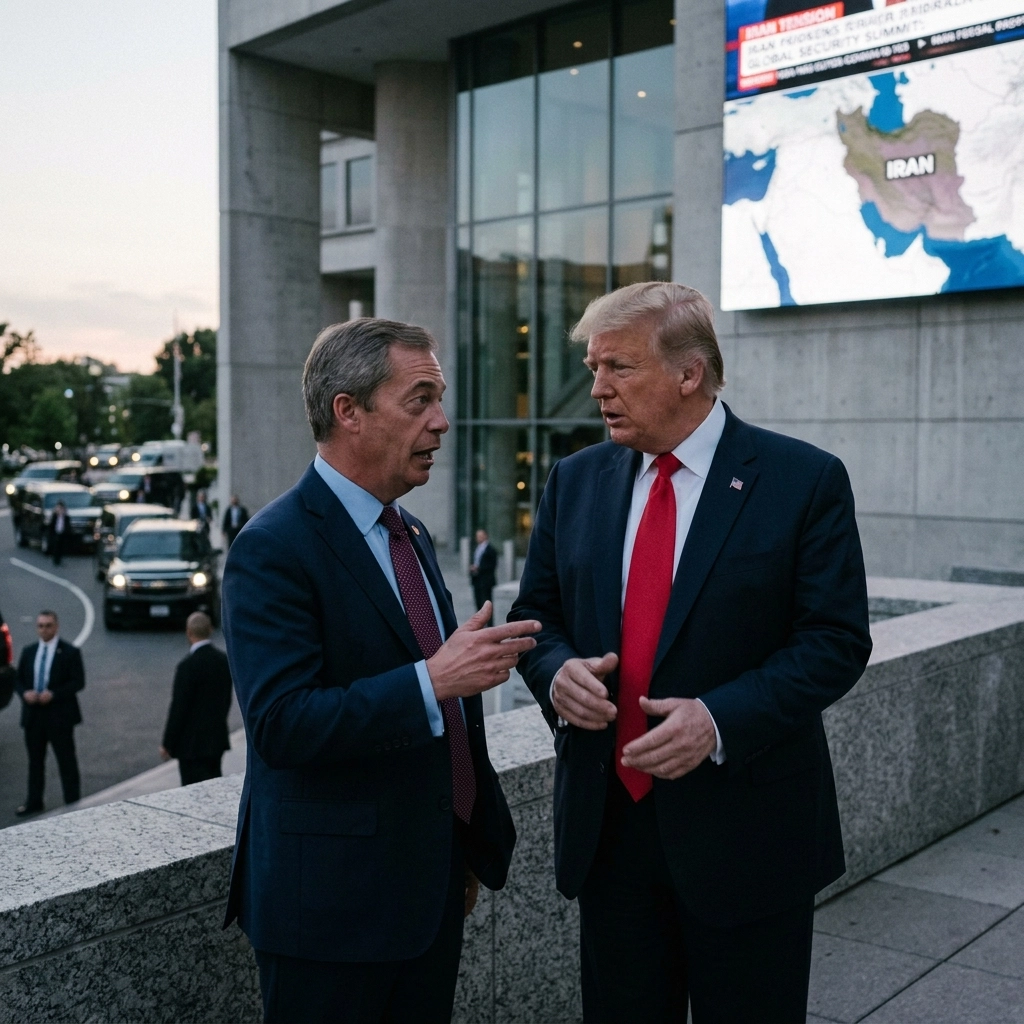
It is no secret that the political landscape has seen some pretty wild shifts over the last few years, but few things have been as consistent as the "bromance" between Nigel Farage and Donald Trump. From the early days of the 2016 campaign to their frequent appearances on the global stage, the two have often seemed like two peas in a very populist pod. However, as the situation in Iran has escalated, we are starting to see some real daylight between these two heavyweights. For anyone following independent news uk, this isn't just a minor disagreement; it is a fascinating look into the limits of political friendship when the stakes involve global conflict and nuclear threats.
When we look for the untold stories behind the headlines, the nuance of this tension becomes clear. It is one thing to support a friend’s policy, but it is another thing entirely to stomach their choice of words when those words involve the potential end of a civilisation. Farage has found himself in a bit of a tight spot, trying to balance his long-standing loyalty to Trump with his own brand of British pragmatism. It is a balancing act that is becoming increasingly difficult as the rhetoric coming out of Mar-a-Lago or the White House reaches a fever pitch.
The core of the issue lies in how these two men view the world. Trump has always leaned into the "big stick" ideology, using inflammatory language as a tool for negotiation. Farage, while no stranger to a controversial headline himself, seems to feel that there is a line that simply shouldn’t be crossed, especially when dealing with a region as volatile as the Middle East. This friction tells us a lot about the current state of right-leaning politics on both sides of the Atlantic.
The Clash of Rhetoric and Reality
The tension really hit the fan when Trump began amping up his language regarding Iran. We are talking about comments that suggested a whole civilisation could die if certain conditions weren't met. For Farage, this was a step too far. He has been quite vocal about the fact that while he thinks the military action taken by the US was the right move, the way Trump talked about it was, in his words, "way too far" and "over the top in every single way." It is a rare moment of public criticism from Farage, who usually acts as Trump’s biggest cheerleader in the UK.
Farage’s perspective is that Trump is essentially acting like an "upset, angry American president" whose words are outrunning his actual strategy. There is a sense that Farage is trying to protect the "brand" of the alliance by distancing himself from the most extreme threats. He has rationalised it by saying it’s a negotiating tactic: upping the ante before trying to strike a deal: but you can tell he’s uncomfortable. It is one of those untold stories where the public support masks a deep-seated worry about where this kind of talk actually leads.
In the world of independent news uk, we see this as more than just a spat over words. It’s about the credibility of the Western response to Iran. If the rhetoric is so extreme that even your closest allies are wincing, it makes it much harder to build a unified front. Farage knows that for the UK to stay on side, the messaging needs to be handled with a bit more finesse, something that has never really been Trump’s strong suit. This clash between Trump’s "deal-maker" persona and Farage’s need for traditional diplomatic stability is creating a rift that is getting harder to ignore.
Staking a Claim on the Special Relationship
One of the biggest sticking points in this whole ordeal isn't just what is being said, but where it is being said from. Farage has been quite critical of how the UK government has handled the use of British bases for American operations. He believes that by denying the US the use of these bases for offensive strikes, the UK has caused a dangerous rift in the "special relationship." This is a classic Farage move: criticising the "establishment" at home while trying to maintain his status as the primary link to the American right.
He argues that this rift is actually very dangerous for the UK. From his point of view, if we aren't there for our closest ally when they decide to take military action, we shouldn't be surprised if that ally isn't there for us later. It’s a high-stakes game of geopolitical loyalty. Farage is essentially saying that while Trump’s words are scary, Britain’s lack of military cooperation is even scarier. It’s a complex position to hold: hating the tone but demanding more involvement in the action.
This highlights a major theme in independent news uk coverage: the tension between national sovereignty and international alliances. Farage has spent his entire career talking about British sovereignty, yet here he is arguing for a closer, almost subservient military tie to the US. This contradiction hasn't gone unnoticed. It shows that for Farage, the alliance with Trump is a cornerstone of his political identity, and he is willing to overlook some truly inflammatory rhetoric if it means keeping the UK and the US in the same trench.
The Economic Fallout and the Silent Treatment
Perhaps the most telling sign of the strain in this relationship is the simple fact that the two men haven't spoken since the conflict in Iran really kicked off. For two people who used to be on the phone constantly, this silence speaks volumes. It suggests that the communication breakdown isn't just about public perception, but is happening behind the scenes too. Farage has admitted that he hasn't been in touch with Trump, which is a significant departure from their usual "best friend" dynamic.
Then there is the issue of the economy. Global conflicts aren't just about missiles and rhetoric; they are about the price of petrol and the stability of the markets. Farage has actually conceded that Trump must "take some blame" for the economic impact of the Iran war. This is a big admission. Usually, Farage would blame the "globalists" or the EU, but here he is pointing the finger directly at the man he helped get into the White House. He acknowledges that when Trump and Israel take action, it has a direct effect on the British public's wallet.
He balances this, of course, by saying he wouldn't want to see a nuclear-armed Iran, but the admission of blame is a turning point. It shows a level of realism that we don't always see in these political circles. People are feeling the pinch at the pumps and seeing their heating bills rise, and Farage knows he can't just hand-wave that away with a "MAGA" hat. This economic reality is forcing a wedge into the relationship, making Farage more of a critic than he ever intended to be.
In the end, the tension between Farage and Trump over Iran is a reminder that even the strongest political alliances have their breaking points. While they may still share a common enemy in the "liberal elite," the practicalities of war, economics, and diplomacy are starting to pull them in different directions. For those of us following these untold stories, it is a clear sign that the 2026 political landscape is more volatile than ever. Whether they can repair the rift remains to be seen, but for now, the "bromance" is definitely on ice.
The situation remains fluid, and as the global community watches the developments in the Middle East, the shifting loyalties of key political figures will continue to shape the narrative. The balance between maintaining a strong military alliance and managing the fallout of aggressive rhetoric is a challenge that neither man has fully resolved. As the economic and social consequences of the conflict continue to manifest, the pressure on these leaders to align their visions: or move further apart( will only increase.)