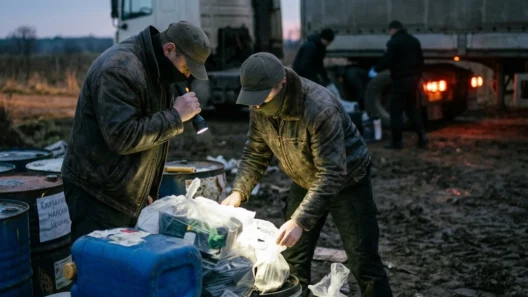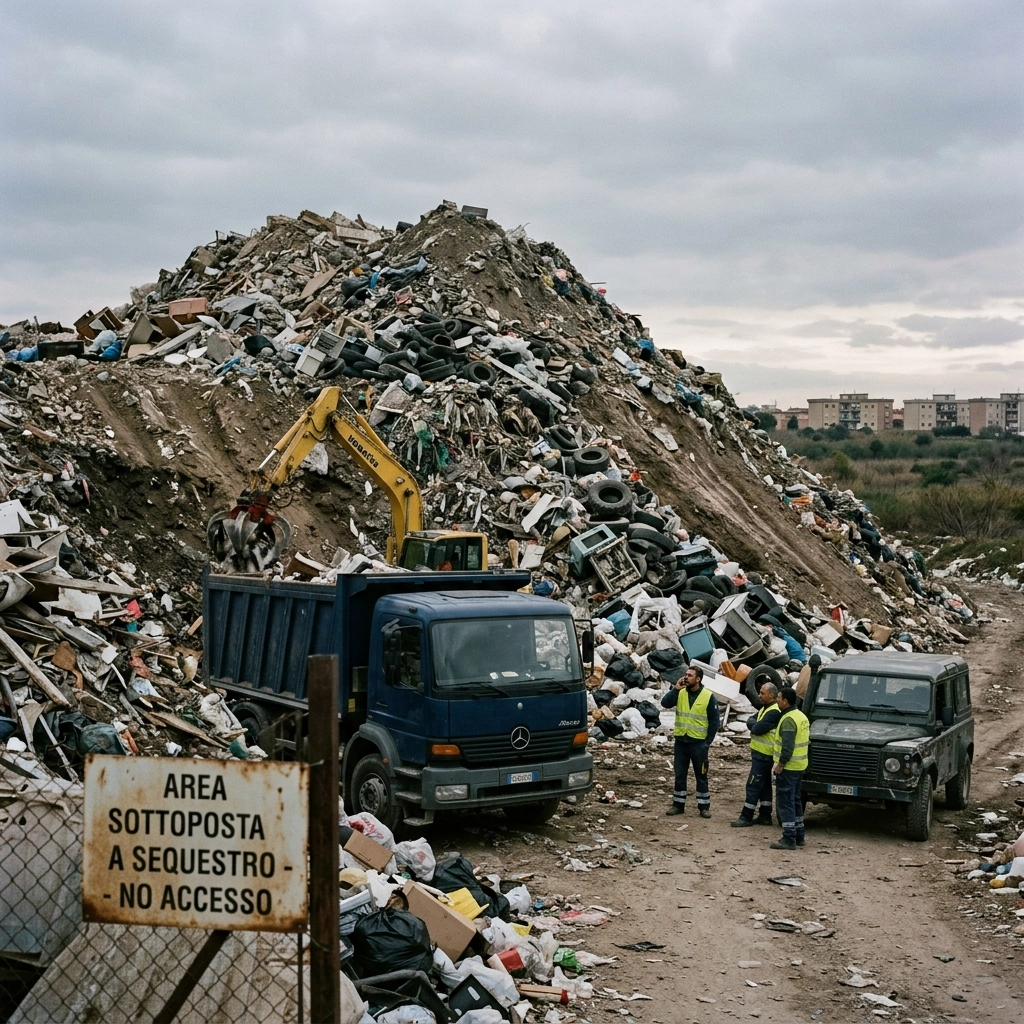
Across parts of the UK, illegal waste dumping has grown from a local nuisance into a major criminal enterprise. What can look like a single grotesque heap of rubbish on the edge of a field is often the visible end point of a much larger operation involving sham brokers, forged paperwork, tax avoidance and organised networks moving waste for profit. The result is a trade now valued in the billions, with communities left to deal with the smell, the pollution and the clean-up costs.
For years, the illicit disposal of rubbish was treated as a low-level offence, something associated with sporadic fly-tipping and stretched local enforcement teams. That picture no longer holds. Illegal waste activity now spans construction spoil, industrial plastics, contaminated materials and household refuse, often shifted in large volumes through apparently legitimate channels before being dumped, buried or burned. What was once seen as opportunistic offending has developed into a high-margin criminal market.
This is not only an environmental story. It is a story about weak oversight, uneven enforcement and the way organised crime adapts to sectors where the financial returns are high and the risks remain comparatively low. The phrase “waste mountain” captures the scale of the damage, but the real issue is the system behind it: a billion-pound trade built on avoiding lawful disposal costs while passing the consequences on to the public.
How the Waste Mountain Trade Really Works
The phrase “waste mountain” is useful because it describes both the physical scale of illegal dumping and the business model behind it. Waste producers, especially in construction and demolition, face significant legal disposal costs once landfill tax, haulage and treatment fees are included. That creates an opening for rogue operators who promise quick collection at a much lower price. On the surface, it looks like a bargain. In practice, it can be the first step in a criminal chain.
These operators may present themselves as brokers, haulage firms or recycling specialists. Some use legitimate-seeming paperwork and short-lived companies to win trust, then divert loads to illegal sites, abandoned yards or farmland. Others mix lawful and unlawful activity, using licensed fronts to conceal where part of the waste stream actually ends up. Once dumped, the waste becomes someone else’s problem: the landowner, the local community and, often, the taxpayer.
That is what makes the trade so lucrative. The profits are made not by processing waste properly, but by avoiding the entire cost of lawful disposal. A large site piled high with rubble, plastics, soil and mixed refuse may represent thousands of tonnes of material and a substantial sum in evaded tax and disposal charges. The mountain itself is the evidence left behind after the money has already been made.
Why Organised Crime Has Moved Into Waste
Criminal groups do not move into a sector by accident. They move where they can generate large returns, hide activity inside ordinary commerce and exploit weaker penalties than they might face elsewhere. Waste offers all three. The industry involves constant movement of material, multiple subcontractors, complex classification rules and expensive legal disposal routes. That makes it easier to disguise misconduct and harder for overstretched regulators to track every load from source to final treatment.
The economics are straightforward. If lawful disposal costs can run into tens of thousands of pounds for a large job, anyone offering a dramatically cheaper alternative stands to make serious money. A broker can undercut compliant operators, collect payment, then dump or misdescribe the waste instead of processing it properly. Scale that across repeated collections, multiple shell companies and several sites, and the sums quickly become enormous.
There is also a broader criminal overlap. Waste crime can sit alongside fraud, money laundering, illegal labour practices and other forms of organised offending. It is not simply a case of untidy land or isolated fly-tipping. It is a trade that exploits legal loopholes, fragmented oversight and the assumption that environmental offences are secondary concerns. That combination has helped turn waste into one of the country’s most profitable criminal markets.
What It Will Take to Disrupt the Trade
The challenge for authorities is not just clearing illegal sites after the fact, but disrupting the financial and logistical model that makes them possible. That means better waste tracking, stronger checks on brokers and carriers, faster action against suspicious sites and more consistent use of asset seizure where criminal profit is evident. If the trade remains cheap to enter and difficult to police, the incentives will continue to favour those willing to break the rules.
There is also a responsibility on businesses that produce waste. Contractors, developers and commercial clients cannot treat disposal as an afterthought or rely solely on the lowest quote. Proper due diligence matters, because organised operators often depend on respectable firms failing to ask where a load is really going. When corners are cut at the start of the chain, communities further down that chain are the ones that absorb the damage.
Waste Mountain: Organized Crime’s New Billion-Pound Trade is not just a striking headline. It reflects a wider reality in which illegal dumping, tax evasion and organised criminal networks intersect in plain sight. Until enforcement, regulation and industry practice catch up with the scale of the problem, these mountains will remain a visible symbol of a trade that is both highly profitable and deeply destructive.