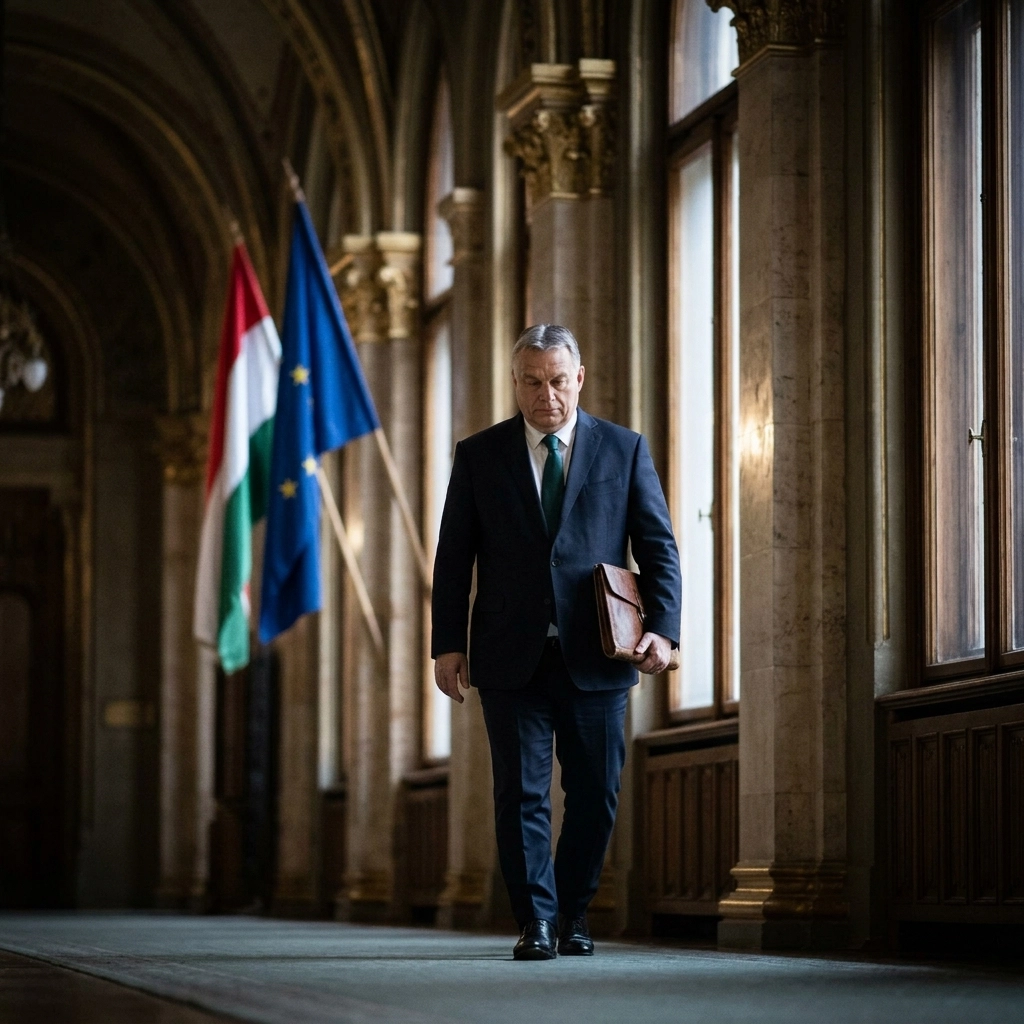
For over a decade and a half, the political weather in Central Europe has been dominated by one man. Viktor Orbán wasn’t just the Prime Minister of Hungary; he was a symbol of a particular brand of "illiberal democracy" that often left Brussels scratching its head and international observers worried about the future of the European project. But as we move through April 2026, the landscape has shifted in a way few thought possible just a couple of years ago. The recent election results in Hungary haven't just changed a government; they’ve potentially rewritten the script for the entire continent.
It is rare that a single national election feels like a continental earthquake, but that is exactly what we are seeing. For those of us following the untold stories of European politics, the rise of Péter Magyar and his Tisza party represents more than just a change in leadership. It marks a fundamental pivot in how Hungary relates to its neighbours, the European Union, and the wider world. At NowPWR, we believe in providing independent news UK readers can rely on to understand these complex shifts without the usual jargon. This isn't just about ballot boxes in Budapest; it’s about the very glue that holds the European Union together.
The departure of Orbán from the centre stage of European power is a moment that deserves a deep dive. For years, he was the primary obstacle to unified EU action on everything from migration to the rule of law, and most critically, support for Ukraine. With his defeat, the "veto-heavy" era of Hungarian diplomacy seems to have hit a brick wall. But what does this actually mean for the average person in the UK or elsewhere in Europe? It means a shift in the balance of power that could accelerate decisions that have been stuck in the mud for years.
The seismic shift in the Hungarian political landscape
To understand why this is a turning point, we have to look at how quickly the old guard fell. Viktor Orbán’s sixteen-year tenure wasn't just a long run; it was a period where he successfully reshaped the Hungarian state to mirror his own ideals. However, the recent landslide victory for Péter Magyar’s Tisza party has shown that even the most established political machines have a shelf life. Magyar, a former insider who knew the system from the inside out, managed to tap into a collective civic awakening that many pollsters missed.
The scale of the defeat is what really caught people off guard. Securing more than two-thirds of the parliamentary seats gives the new administration a massive mandate. It’s the kind of majority that doesn't just allow for policy tweaks; it allows for a complete overhaul of the system. For years, the story out of Hungary was one of consolidation and the tightening of control over media and the judiciary. Now, the narrative has flipped. We are seeing an explosion of democratic pluralism that has left the rest of Europe watching in awe.
For anyone interested in untold stories, the rise of the Tisza party is a masterclass in grassroots campaigning. Magyar didn't just use traditional media; he went directly to the people, bypassing the state-controlled channels that had supported the previous administration for so long. This shift proves that even in a highly controlled environment, the desire for change can find a way to break through. It’s a reminder that political landscapes are never as permanent as they seem, a theme we often explore when bringing you independent news UK perspectives on global affairs.
A new era for the European Union and Ukraine
The most immediate and perhaps most significant impact of this political transition is being felt in Brussels. For years, the European Commission and other member states have been locked in a cycle of frustration with Budapest. Orbán was famously the "holdout," the leader who would use his veto power to extract concessions or simply to block progress on initiatives he disagreed with. The most glaring example was the €90 billion loan package for Ukraine, which had been stalled by Hungarian opposition for far too long.
With a new government in place, that roadblock has effectively vanished. Péter Magyar has already made it clear that Hungary’s days of obstructing critical EU aid are over. This is a massive win for European unity. It means that the EU can finally move forward with a more cohesive strategy regarding the conflict in Ukraine, without the constant threat of a single member state pulling the emergency brake. It’s not just about the money; it’s about the message of solidarity that a unified Europe sends to the rest of the world.
Furthermore, the relationship regarding Russian sanctions is set for a major reset. While Hungary still has complex energy needs and historical ties that won't disappear overnight, the reflexive blocking of sanctions packages is expected to cease. This doesn't mean Hungary will suddenly become the most hawkish member of the bloc, but it does mean they are moving back into the European mainstream. For those seeking independent news UK analysis, this shift is vital because it changes the geopolitical weight of the EU on the world stage. A Europe that speaks with one voice is a far more powerful actor than one constantly bickering over internal vetos.
Why the "Orbán model" is facing a crisis of confidence
Beyond the practicalities of EU policy, the defeat of Viktor Orbán sends a powerful psychological signal across the globe. For a long time, the "Hungarian model" was seen as a successful blueprint for right-wing populist movements in other countries. Leaders in places like Poland, Slovakia, and even further afield looked to Budapest as a guide for how to maintain power while challenging traditional liberal democratic norms. Now that this model has been rejected by the Hungarian voters themselves, that blueprint looks a lot less reliable.
This result has sparked a ripple effect throughout the Visegrád Group and beyond. In countries where similar political movements are active, the "untold stories" are now about the vulnerability of populism when faced with a unified and energetic opposition. It shows that voters eventually grow tired of constant conflict with international partners if it doesn't translate into better living standards or a more hopeful future. The shift in Hungary suggests that the tide of populism that seemed to be sweeping through Europe over the last decade might finally be receding, or at least evolving into something very different.
As we look toward the future, the question is whether the new administration can live up to the massive expectations placed upon it. Moving from a protest movement to a governing party is a notoriously difficult transition. However, the initial signs are positive. There is a sense of renewed energy in Budapest, a feeling that the country is "re-joining" the European family after a long period of self-imposed isolation. For our readers who value independent news UK coverage, this story is far from over. We will be watching closely to see how this new Hungary navigates its role in NATO and how it rebuilds its domestic institutions.
Ultimately, the fall of the Orbán government marks the end of a chapter that many thought would never close. It serves as a potent reminder that in politics, the only constant is change. Europe is currently standing at a crossroads, and for the first time in a long time, the path toward greater cooperation and shared values seems a little clearer. While there will undoubtedly be challenges ahead for the new Hungarian leadership, the "turning point" has been reached. The implications for the EU, for Ukraine, and for the global struggle between democracy and autocracy will be felt for years to come.