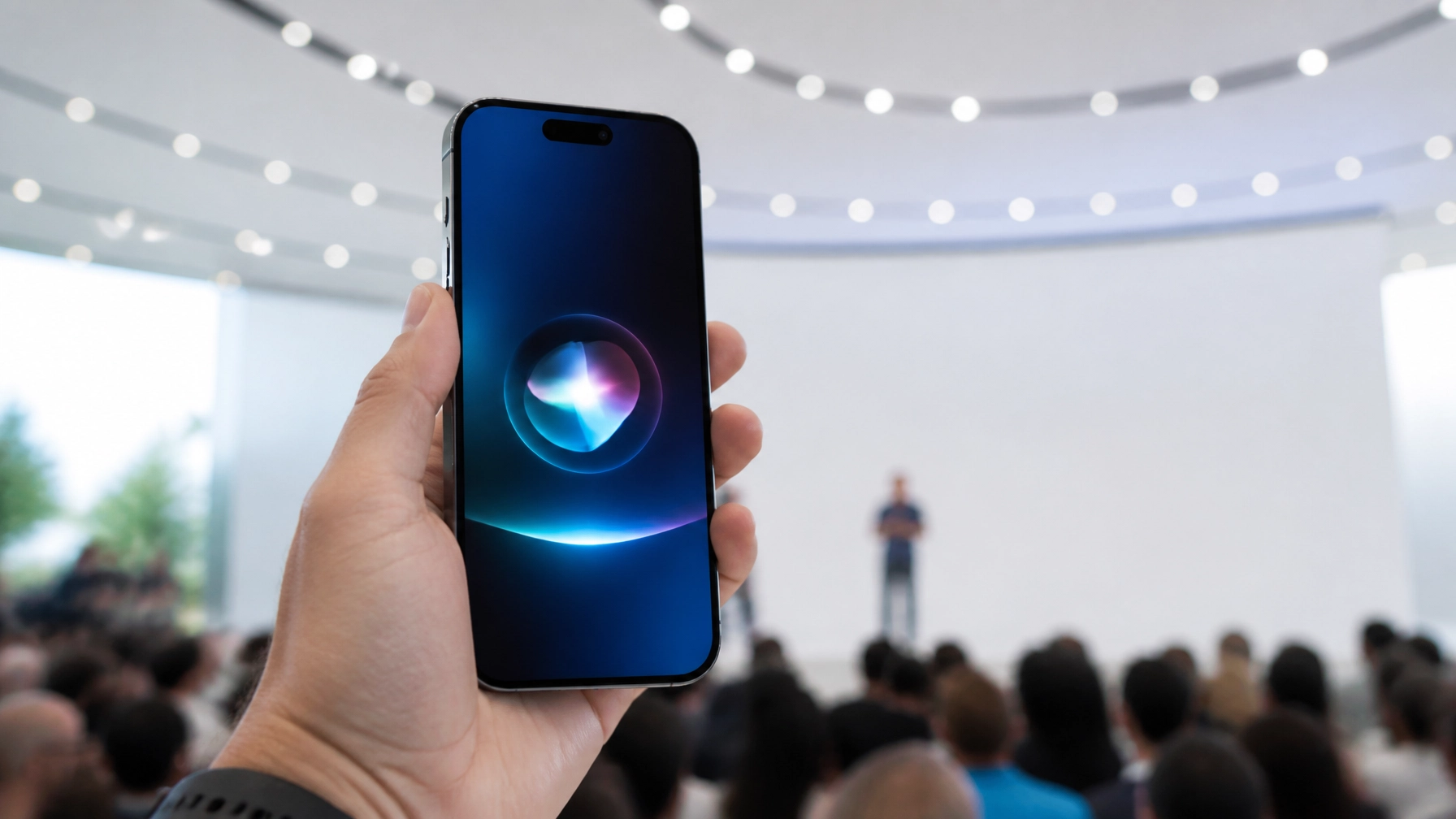
The landscape of personal computing underwent a seismic shift this week as the latest Worldwide Developers Conference (WWDC) unfolded in California.
Apple has pulled back the curtain on a comprehensive overhaul of its ecosystem, placing artificial intelligence at the very heart of its operating systems. The centrepiece of this transition is a radically reimagined Siri, which has been rebuilt from the ground up to transition from a simple voice assistant into a sophisticated, context-aware digital agent. This move represents Apple’s most significant technological pivot in a generation, as the company seeks to integrate generative AI into the daily lives of millions of users while maintaining its hallmark stance on privacy and security.
For years, critics have argued that traditional voice assistants had reached a plateau, limited by rigid command structures and a lack of true understanding. The new iteration of Siri, powered by what the company calls "Apple Intelligence," aims to dismantle these barriers. By leveraging a combination of on-device processing and a new private cloud infrastructure, the system can now engage in natural, fluid conversations that reflect a deeper understanding of human language and personal context. This is not merely an incremental update; it is a foundational change in how users will interact with their devices, moving away from tapping icons and towards a more intuitive, conversational interface.
The integration of these new capabilities is designed to be seamless across the entire suite of hardware, from the iPhone and iPad to the Mac. The company has introduced a new visual identity for the assistant, moving away from the familiar orb at the bottom of the screen to a more immersive, glowing light that wraps around the edge of the display. This subtle change signals that the assistant is now a persistent presence, capable of observing and acting upon whatever is happening on the device at any given moment.
A Reimagined Siri for the Next Decade
The core of the new Siri experience lies in its ability to process information with a level of nuance previously unseen in consumer electronics. The assistant has been updated with advanced large language models that allow it to follow complex instructions and maintain context across multiple queries. If a user asks about the weather in London and then follows up with "What about the weekend?", the system now understands that the user is still referring to London without needing the location to be repeated. This continuity is a critical step towards making digital assistants feel like a genuine help rather than a tool that requires constant correction.
Underpinning this leap in intelligence is a strategic partnership that marks a departure from Apple’s traditional "in-house only" philosophy. While the majority of everyday tasks are handled by Apple’s own efficient on-device models, more complex queries: such as generating long-form text or conducting deep web research: can now be handed off to external models, including Google’s Gemini. This hybrid approach allows the device to offer the power of massive, cloud-based AI while keeping the most sensitive personal data locked down on the user's hardware. When a request requires the power of the cloud, the system explicitly asks for permission before sending any data, ensuring that the user remains in control of their information.
Furthermore, the new "Private Cloud Compute" architecture ensures that even when data is sent to the cloud, it is processed on servers running Apple’s own silicon. This setup is designed to provide the same level of privacy and security as on-device processing. Independent experts will be able to verify the code running on these servers, a move intended to build trust in a world increasingly concerned about how AI companies handle personal data. By building this privacy-first infrastructure, the company is attempting to prove that advanced AI and individual privacy are not mutually exclusive.
Personal Context and Digital Awareness
One of the most transformative features introduced at WWDC is the assistant's new-found "on-screen awareness." For the first time, Siri can understand what a user is looking at and take actions based on that content. If a friend sends a message with a new address, the user can simply say, "Add this to his contact card," and the assistant will identify the address on the screen and update the relevant entry in the contacts app. This capability extends across the entire operating system and into third-party applications, thanks to a new set of developer tools that allow apps to expose their internal functions to the AI.
This deep integration allows for multi-step workflows that were previously impossible without manual intervention. A user could ask the device to "find the photos of the dog from last summer, enhance the lighting, and send them to my sister," and the system would navigate through the library, apply the necessary edits, and compose the message automatically. This level of cross-app automation turns the smartphone into a proactive agent that can manage complex tasks on behalf of the user. It moves the burden of navigating menus and managing files from the human to the machine, fulfilling the original promise of personal computing as a tool for empowerment.
The system also gains a comprehensive understanding of the user’s "personal index." This includes emails, text messages, calendar appointments, and documents stored on the device. Because the AI understands the relationships between these different pieces of information, it can answer highly specific personal questions. A user might ask, "When is my flight landing and who is picking me up?", and the assistant will cross-reference airline confirmation emails with recent messages to provide a single, coherent answer. This capability is powered by an on-device semantic index that organises personal data without ever needing to upload it to a central server for analysis.
Privacy Concerns and Global Availability
Despite the technological marvels showcased, the rollout of these features is not without its complications. A significant portion of the global audience will have to wait to experience the new Siri. The company has confirmed that, at launch, the AI-powered features will not be available in the European Union or China. In the case of the EU, the decision is attributed to the regulatory environment created by the Digital Markets Act (DMA). The company has expressed concerns that the requirements for interoperability could force them to compromise the integrity and privacy of their products in ways that would be unacceptable to their users.
This highlights a growing tension between global technology giants and regional regulators. While the UK, now operating under its own post-Brexit regulatory framework, is expected to receive the updates alongside the United States, the absence of these features in neighbouring European markets underscores the fragmented nature of the modern digital world. In China, the challenges are similarly complex, involving local regulations regarding data storage and the use of approved AI models. For a company that prides itself on a unified global experience, these regional gaps represent a significant hurdle in its quest to make AI a universal standard.
Looking ahead, the developer beta of the new operating systems is available immediately, with a public beta expected to follow in the summer. The full release is scheduled for the autumn, coinciding with the launch of new hardware that will be specifically optimised for these intensive AI tasks. While older devices will support some of the new features, the most advanced capabilities will require the latest chips to handle the significant computational load. As the world watches to see how these tools are adopted, one thing is clear: the era of the passive smartphone is ending, replaced by a new generation of devices that not only store our data but understand and act upon it in ways we are only beginning to imagine.