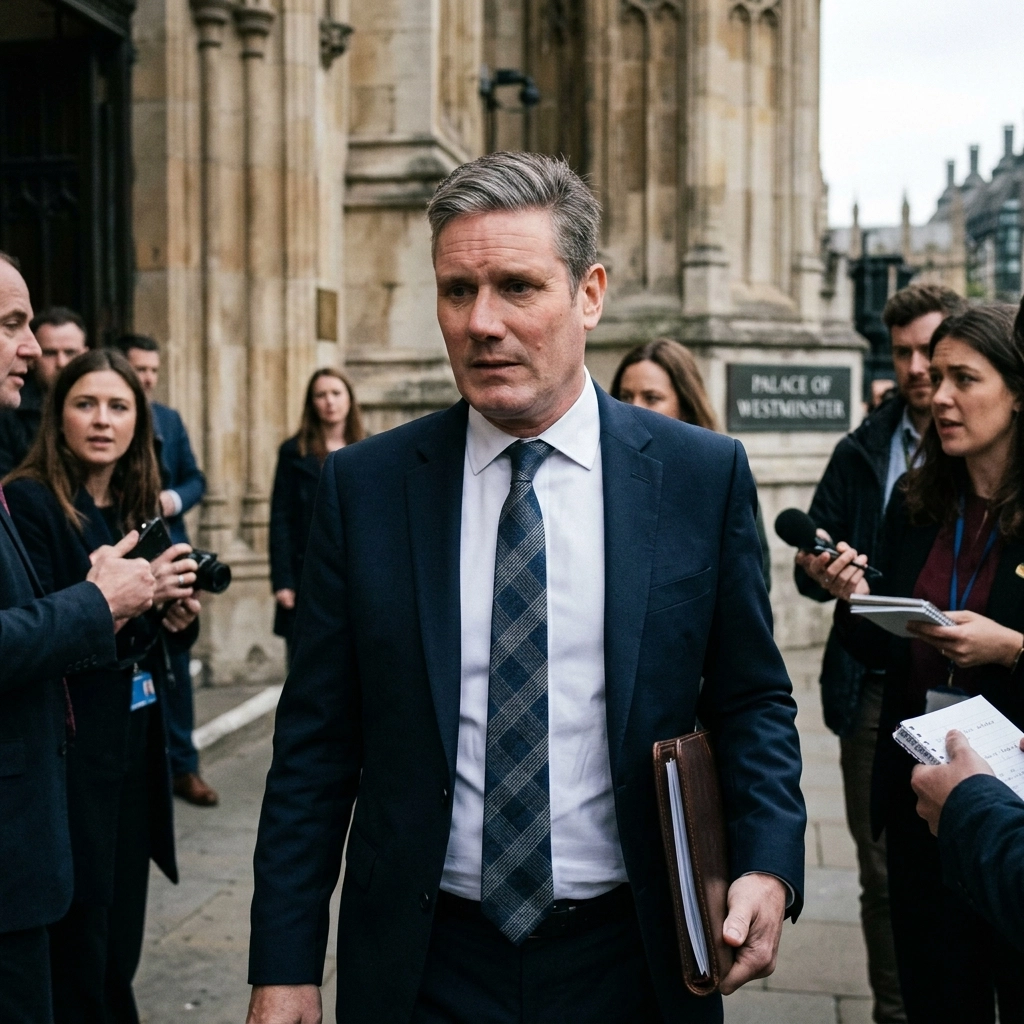
The political landscape in the United Kingdom has always been prone to tremors, but few events in recent years have caused a seismic shift quite like the revelation of the Mandelson Files. For Prime Minister Keir Starmer, the disclosure of these documents represents more than just a political hurdle; it is a direct challenge to the very foundation of his public persona. As a leader who built his career on the pillars of law, order, and forensic integrity, the fallout from these files has left many questioning how such a seasoned legal mind could overlook the glaring red flags presented to him.
At the heart of this controversy is the appointment of Lord Peter Mandelson as the United Kingdom’s Ambassador to the United States in late 2024. While Mandelson has long been a titan of the Labour Party, his historical associations have frequently drawn scrutiny. However, it was the specific connection to the late Jeffrey Epstein that has now become the focal point of a national debate regarding judgment and transparency. In the world of independent news UK, these untold stories are vital for holding those in power to account, ensuring that the public understands the motivations behind major government decisions.
The release of internal government documents has painted a picture of a decision-making process that seemed to bypass standard caution. Despite the high stakes of the Washington post, the appointment was described by some insiders as "weirdly rushed." This sense of urgency is now being viewed through a much more critical lens as the details of the warnings Starmer received continue to emerge.
The Red Flags Ignored at Downing Street
When Keir Starmer sat down to finalise the appointment of Peter Mandelson as the U.S. Ambassador in December 2024, he was not acting in a vacuum of information. Documents now available to the public show that a detailed due diligence memo was presented to the Prime Minister, explicitly outlining the reputational risks associated with Mandelson. This memo was not a vague summary of hearsay; it was a focused report on Mandelson’s historical links to Jeffrey Epstein, the convicted sex offender whose social circle has haunted the reputations of numerous global elites.
The most damning aspect of these files is the revelation that Mandelson allegedly maintained contact with Epstein well after the latter’s 2008 conviction. Perhaps most shocking was the report that Mandelson had stayed at Epstein’s New York townhouse in June 2009 while Epstein was actually serving time in a Florida jail on a work-release programme. For any official vetting process, such a detail would typically be a "stop" sign. Yet, the files suggest that the Prime Minister’s office decided to proceed regardless.
National Security Adviser Jonathan Powell was among those who expressed significant concern. Powell, a man with deep experience in the inner workings of government, reportedly flagged the appointment as problematic, noting Mandelson’s previous history of resignations from Labour cabinets over financial controversies. The fact that Starmer, a man who once led the Crown Prosecution Service, chose to override these internal alarms is what has caused the most significant damage to his credibility. It suggests a prioritisation of political loyalty over the stringent vetting standards the public was promised. You can read more about the complexities of government action in our coverage of inside the UK's massive county lines crackdown.
A Question of Judgment and Integrity
The fallout from the Mandelson Files isn't just about the person appointed; it’s about the person who made the appointment. Keir Starmer’s entire political brand is built on being the "adult in the room." His background as the Director of Public Prosecutions (DPP) was supposed to be a guarantee that the Labour government would operate with a level of forensic precision and moral clarity that was allegedly lacking in previous administrations. By ignoring explicit warnings about "reputational risk," Starmer has inadvertently undermined his own raison d'être.
Critics from across the political spectrum have been quick to point out the hypocrisy. If a lawyer’s job is to follow the evidence, then the evidence in the Mandelson memo should have been enough to halt the process. Instead, the documents confirm that the Prime Minister was aware of the post-conviction contact between Mandelson and Epstein before the ink was dry on the appointment papers. This contradicts earlier suggestions that the government might have been misled or lacked the full picture at the time of the decision.
The impact of this decision reached a boiling point in September 2025, when Mandelson was eventually fired from his post. While Starmer survived the immediate political crisis, the ghost of the appointment continues to linger. The Prime Minister’s subsequent apology to Epstein’s victims was seen by many as a necessary but late attempt at damage control. By stating he was sorry for "having believed Mandelson's lies," Starmer attempted to shift the blame, but the files show the warnings were already on his desk. This discrepancy is a primary reason why many are turning to independent news UK to find the nuances often missed in mainstream narratives. The "untold stories" of how these memos were handled provide a deeper look into the mechanics of power.
The Ripple Effect on British Governance
The long-term consequences of the Mandelson Files extend beyond the personal reputation of the Prime Minister. It has created a sense of unease within the civil service and the wider Labour Party. When internal warnings from high-ranking officials like the National Security Adviser are ignored, it can lead to a breakdown in trust between the political leadership and the professional staff tasked with protecting the state's interests. This "catastrophic failure of judgment," as described by some opposition members, has set a precedent that political appointments might be immune to the standard rules of due diligence.
Furthermore, the relationship between the UK and the US is one of the most critical diplomatic ties in the world. Sending an ambassador with such high-profile baggage was always a gamble. The fact that the gamble failed so publicly in late 2025 has forced the government to work double-time to restore its standing in Washington. For those interested in the broader implications of such political shifts, our podcasts often delve into the international fallout of domestic policy decisions.
As the government moves forward, the Mandelson Files will remain a benchmark for accountability. The public's demand for transparency has never been higher, and the expectation is that the "integrity" promised during the election campaign must be more than just a slogan. It must be reflected in every appointment and every decision made behind the closed doors of Downing Street. The lessons learned from this episode will likely dictate the vetting processes of future administrations, ensuring that the "untold stories" of the past do not repeat themselves in the future.
The Mandelson Files have served as a stark reminder of the complexities inherent in high-level political appointments. The intersection of personal history, international diplomacy, and domestic reputation creates a volatile environment where one decision can have lasting repercussions. As the Prime Minister continues to navigate the challenges of leadership, the shadow of the Mandelson appointment will serve as a constant reminder of the importance of heeding professional warnings. For a government that promised a new era of transparency, the path ahead requires a renewed commitment to the principles of accountability and clear-sighted judgment. Through continued investigation and a focus on the facts, the full impact of these files on British politics will continue to be understood.