








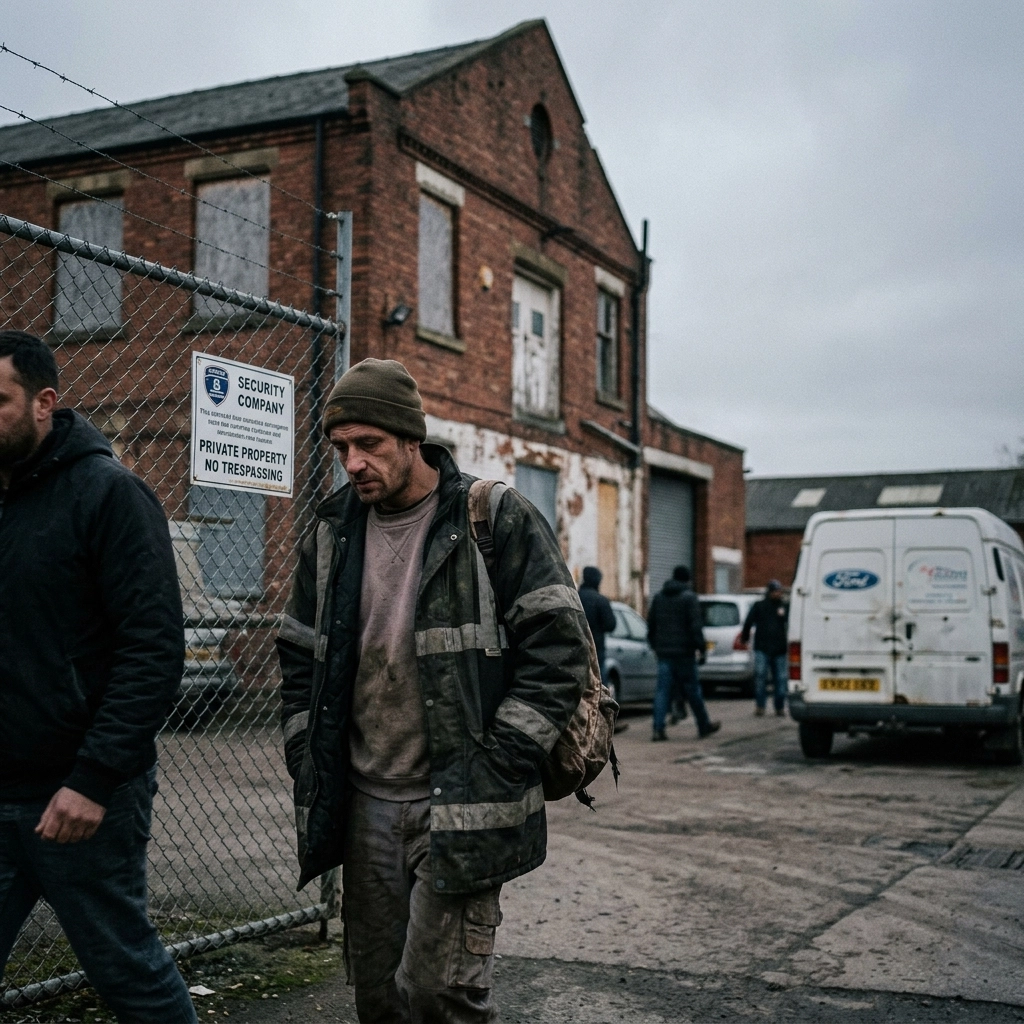
When most of us think about slavery, our minds tend to drift back to history books and grainy black-and-white photos. We like to think of it as a relic of a darker past, something that was abolished and dealt with centuries ago. But the reality is far more uncomfortable. Right now, in the towns and cities we call home, thousands of people are living in conditions that can only be described as modern-day bondage. It is happening in plain sight: at your local hand car wash, on construction sites, and even inside ordinary-looking terraced houses.
One of the most harrowing examples of this in recent British history is the case involving Amanda Wixon. Often described as one of the worst instances of modern slavery ever seen in the UK, it pulled back the curtain on a level of depravity that most of us can’t even imagine. Here at NowPWR, we believe in bringing you the untold stories that mainstream outlets might skip over, providing the kind of independent news UK readers need to understand the world as it actually is.
The scale of these operations is often staggering. We aren't just talking about one or two people being treated poorly; we are talking about sophisticated, organised crime networks that treat human beings like disposable commodities. In some of the largest investigations conducted by the West Midlands Police, it was revealed that hundreds of victims were being held captive at any one time. These weren't isolated incidents, but part of a massive, industrial-scale exploitation machine.
The Reality Behind the Hidden Crisis
To understand how something like this happens in 2026, you have to look at the tactics used by these gangs. They don't usually start with chains and locks. Instead, they start with a promise. For many victims, the trap begins in their home country: often Poland or other parts of Eastern Europe: where they are promised well-paid work, decent accommodation, and a chance to build a better life in Britain. It sounds like a dream, especially for those struggling with poverty or lack of opportunity.
But the moment they arrive on UK soil, the dream turns into a nightmare. Their passports are confiscated "for safekeeping." Their mobile phones are taken. They are moved into cramped, squalid housing where dozens of people might be forced to share a single room. The "well-paid work" turns out to be backbreaking labour for almost no money. In the worst cases, victims have been found washing in canals because they have no access to running water and being forced to scavenge for food in supermarket skips because they aren't given enough to eat.
What makes this Britain's worst ever case is the sheer psychological control exerted over the victims. It isn't just physical violence: though there is plenty of that: it is the constant threat of death. Gang leaders frequently tell victims that if they try to escape or go to the police, their families back home will be murdered. When you are in a foreign country, don't speak the language, and have no money or identification, those threats feel very real. This kind of entrapment is exactly why NowPWR focuses on these untold stories; because without a voice, these people remain invisible to the society they are serving.
Life Under the Thumb of Traffickers
In the case of Amanda Wixon and others like her, the level of exploitation reached levels that shocked even the most seasoned investigators. These weren't just workers; they were prisoners of a system designed to strip them of their humanity. The financial mechanics of the operation were equally cold-blooded. Gang members would open bank accounts in the victims' names, but the victims never saw the debit cards. Their wages would be paid in, and then immediately withdrawn by the traffickers.
The victims would be sent to work in legitimate businesses: places like recycling centres or large-scale farms: where the employers often had no idea they were hiring slave labour. The gangs would provide the transport and the "management," pocketing the vast majority of the earnings while giving the workers a mere pittance: sometimes as little as £20 a week. This "pittance" would then often be taken back to pay for "rent" and "transport," leaving the victims in a cycle of permanent debt.
The physical toll was immense, but the mental scars go even deeper. Some survivors have reported being held for years, losing all sense of time and hope. It took an incredibly brave group of individuals to finally break the silence. The investigation into this particular gang took over four years of painstaking work by police and legal teams. It only really began to unravel when a few desperate people turned up at a church soup kitchen in the West Midlands, reporting that they were being held against their will. This led to a collaboration with charities like Hope For Justice, who worked to provide the safety and support needed for victims to give evidence. Without the bravery of these survivors, many of whom waived their right to anonymity to tell their stories, this massive criminal network might still be operating today.
Building a Future Without Chains
So, where do we go from here? The authorities estimate that there are between 10,000 and 13,000 victims of modern slavery in the UK at any given time. However, many experts believe this is just the tip of the iceberg. In regions like the West Midlands, the numbers could be significantly higher when you factor in the sheer volume of "invisible" labour happening in every sector of the economy.
Combatting this requires more than just police raids; it requires a shift in how we, as a society, view the services we use. If a car wash is suspiciously cheap, or if a construction crew seems to be living in the back of a van, there is a reason for it. We have to start asking questions. As part of our commitment to independent news UK, NowPWR aims to highlight these issues so that readers can make informed choices and stay vigilant.
The legal system is slowly catching up. The Modern Slavery Act has provided more tools for prosecution, and the life sentences handed down in the most severe cases send a clear message. However, the assets accumulated by these gangs: often millions of pounds: can be difficult to track and seize. We’ve seen cases, such as those involving the Connor family in Gloucestershire, where workers were held for over 30 years. It highlights how deeply these roots can grow if they aren't pulled out early.
Stopping modern slavery is about more than just the law; it’s about restoring dignity to those who have had it stolen. It’s about ensuring that when people come to Britain looking for a better life, they aren't met with a cage. By sharing these stories and keeping the pressure on for better oversight and protection, we can help move toward a future where "Britain's worst ever case" remains exactly that: a piece of history, rather than a recurring headline.
Modern slavery is a complex, dark, and often hidden part of our modern economy. The case of Amanda Wixon and the West Midlands trafficking rings serves as a brutal reminder that we cannot afford to look away. Through dedicated reporting and community awareness, the goal remains to ensure that these victims are no longer forgotten and that the people responsible for their suffering are held to account. Understanding the mechanisms of control and the signs of exploitation is the first step in dismantling these networks for good.