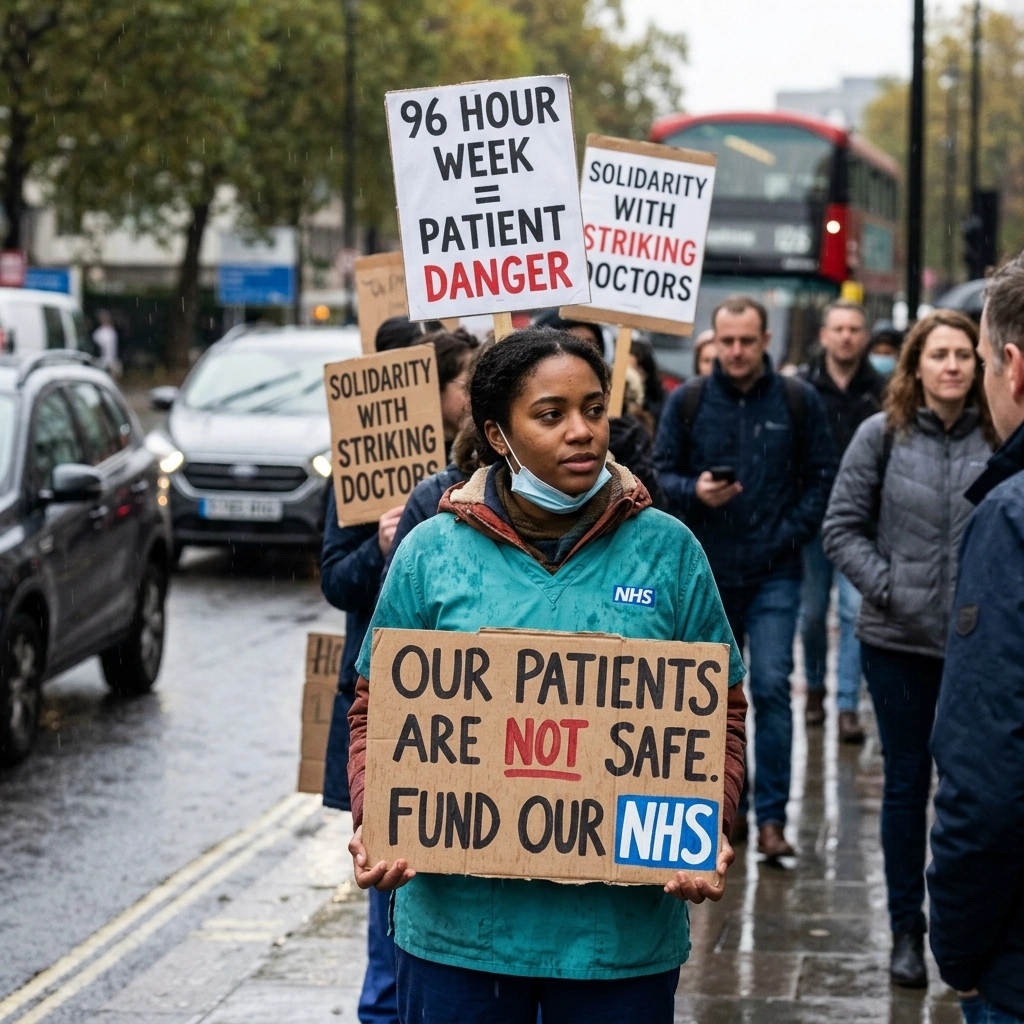
It is mid-April 2026, and the rhythmic sound of chanting and the sight of placards have once again become a staple outside hospitals across the country. We are currently in the midst of a gruelling six-day resident doctors' strike, a move that has brought the NHS to a virtual standstill in many regions. While the reasons behind the industrial action: pay restoration, better working conditions, and a plea for the future of the healthcare workforce: remain consistent, something else is shifting. The atmosphere on the streets and in the living rooms of the UK feels different this time around.
For a long time, the public’s relationship with the NHS and its staff has been one of unwavering loyalty. We clapped on doorsteps, we defended the service against budget cuts, and we generally stood behind those in scrubs when they walked out. But as we move further into 2026, the latest data suggests that the tide might be turning. As an outlet dedicated to independent news uk, we’ve been looking into the numbers and the narratives to see if the "hero" status of our medical professionals is starting to lose its shine in the eyes of a weary nation.
The Numbers Behind the Changing Mood
To understand where the public stands, we have to look at the cold, hard data. Recent polling indicates a significant dip in support for the current round of strikes. Compared to May of last year, backing for the doctors' industrial action has dropped by five points. In a survey of nearly 5,000 adults, the results were telling: 52% of respondents now say they oppose the strikes, while only 34% remain in favour. This is a stark contrast to previous years when the majority of the British public was firmly on the side of the healthcare workers, despite the massive disruptions to services.
This shift isn’t just a statistical blip; it represents a growing sense of fatigue. When the strikes first began, there was a feeling of collective struggle: a "we’re all in this together" mentality. However, after 1.3 million healthcare appointments were lost or rescheduled over the past year, that patience is being stretched to its breaking point. People are no longer just reading about the strikes in the papers; they are feeling the impact in their own lives. Whether it’s a postponed hip replacement or a cancelled consultation for a worrying symptom, the personal cost is starting to outweigh the ideological support.
In our pursuit of untold stories, we’ve found that the opposition isn't necessarily coming from a place of dislike for doctors. Instead, it’s coming from a place of exhaustion. The NHS is under intense strain, and for many, the idea of a six-day walkout feels like a bridge too far. There’s a growing sentiment that while the doctors' grievances are valid, the method of protest is becoming increasingly difficult to justify as the waiting lists continue to spiral out of control. Many people are beginning to ask: when does the fight for a better future start causing too much harm to the present?
Why the Public Patience is Wearing Thin
If we dig deeper into why the mood is souring, we have to talk about the broader economic context. We are living through a period where growth has stagnated and pay for almost everyone has been squeezed for years. When the British Medical Association (BMA) demands a 29% pay rise to achieve pay restoration, it can sound like a fantasy to workers in other sectors who have seen their own wages frozen or barely budge. While doctors certainly carry a heavy burden of student loans and the debt trap, so do many other professionals who don't have the same collective bargaining power.
There is also the factor of the NHS’s current performance. It’s no secret that the service is struggling, with or without strikes. But when you add a six-day walkout into the mix, the system’s fragility becomes even more apparent. For the average person, the nuances of "pay restoration" versus "pay rises" can get lost when they can’t get a GP appointment or when the local A&E wait times are measured in days rather than hours. This creates a high level of anxiety among the population, particularly for the elderly and those with chronic conditions who rely most heavily on consistent care.
Furthermore, there is a perceived disconnect between the negotiators. The discussions between the BMA and the Department of Health and Social Care have been described as "completely broken." In any long-standing conflict, the public eventually stops picking a side and starts blaming both parties for the lack of a resolution. There is a sense that action needed to end this stalemate has been replaced by political posturing. When both sides seem dug in, the public, caught in the crossfire, begins to lose sympathy for everyone involved. They don't want to hear about "broken discussions" anymore; they just want a functioning health service.
Looking Toward an Uncertain Future
So, where does this leave us as the 2026 strikes continue? The reality is that the medical profession is at a crossroads. The doctors are fighting for what they believe is the only way to save the NHS from a permanent brain drain, arguing that without better pay, staff will continue to leave for countries like Australia or quit the profession entirely. These are the untold stories of exhausted registrars and burnt-out consultants that often get buried under the headlines of "chaos" and "disruption."
However, if they lose the public, they lose their most powerful lever. Historically, the NHS has been the "closest thing the English have to a religion," and its priests: the doctors: have enjoyed a level of trust that politicians can only dream of. But as support dips below the 50% mark, that moral authority is under threat. If the government senses that the public is no longer backing the strikers, their resolve to hold the line on pay will only strengthen. This could lead to an even longer, more drawn-out conflict that serves no one.
The next few months will be crucial. If the BMA and the government can’t find a middle ground, we may see a fundamental shift in how the UK views its healthcare system. The affection for the "institution" remains, but the tolerance for the "interruption" is fading fast. As we continue to provide independent news uk, we’ll be watching closely to see if a compromise can be reached before the bond between the healers and the healed is permanently damaged. For now, the six-day strike continues, but the cheers from the pavements are noticeably quieter than they used to be.
The situation remains complex, and the path forward is anything but clear. The resident doctors are standing their ground, but they are doing so on increasingly shaky social foundations. As the wait times grow and the poll numbers drop, the pressure is mounting on all sides to find a solution that prioritises patient safety and staff well-being in equal measure. The coming weeks will reveal whether this is a temporary dip in support or the beginning of a new era of public skepticism toward industrial action in the public sector.