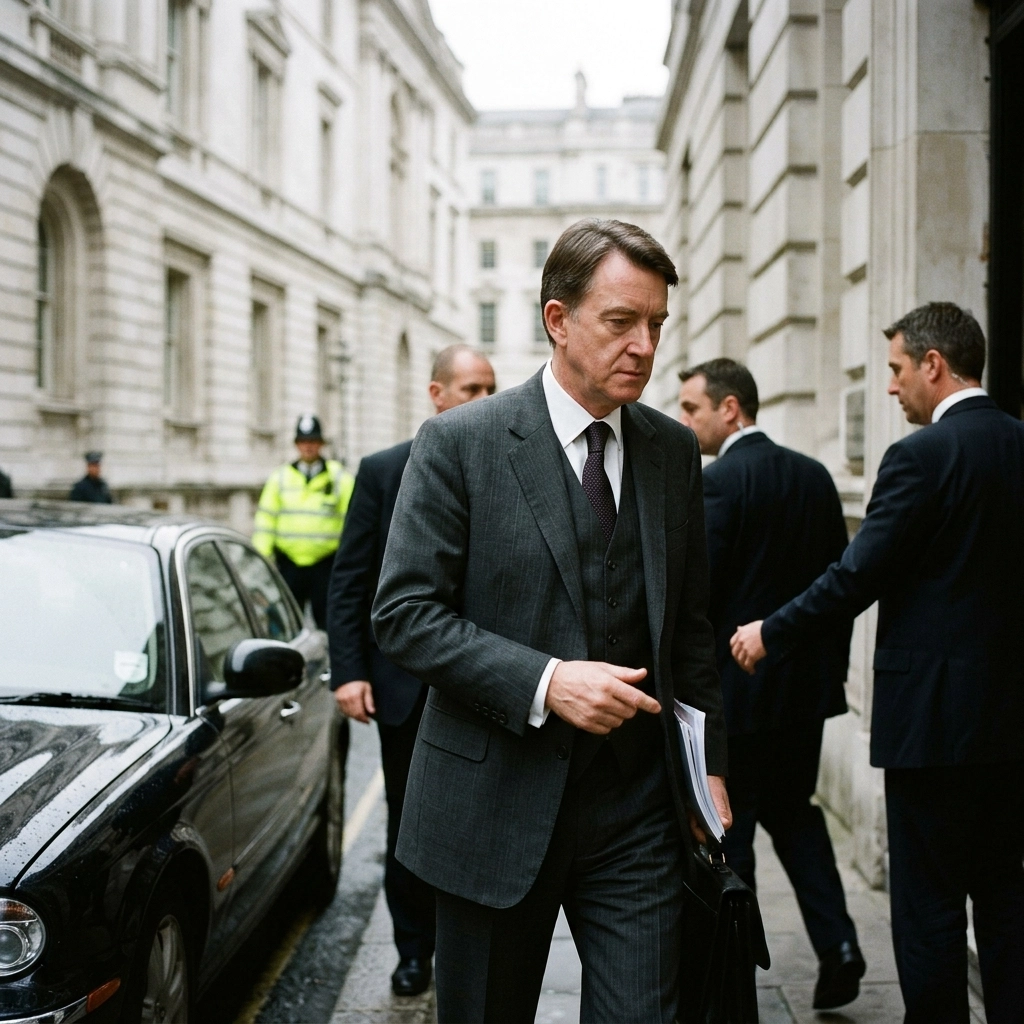
The corridors of Whitehall are rarely silent, but lately, the whispers have turned into a full-blown roar. At the heart of the storm is a name that has dominated British politics for decades: Peter Mandelson. What started as a prestigious appointment to one of the most coveted roles in diplomacy: the British Ambassador to the United States: has spiralled into a complex security row that is testing the foundations of the current administration. For those of us following independent news uk, this isn't just another political spat; it is a fundamental question of how power is checked and how security is managed in the modern era.
The controversy isn't merely about whether Mandelson is the right man for the job. It is about the process: or the alleged lack thereof. When the news first broke that the veteran Labour figure was being lined up for the Washington post, it was seen as a bold move by Keir Starmer. Mandelson, known for his vast network and strategic mind, seemed a logical choice to navigate the choppy waters of transatlantic relations. However, the move quickly hit a snag when questions were raised about the vetting procedures that accompany such high-stakes roles. This is one of those untold stories where the bureaucratic machinery behind the scenes becomes the lead character in a national drama.
In Westminster, the atmosphere has become increasingly charged. The opposition, led by Kemi Badenoch, has seized on the situation, alleging that the government attempted to bypass or accelerate standard security protocols to get their man into position. On the other side, Downing Street maintains that everything is being handled by the book. But as the details emerge, it is clear that the "book" is currently being rewritten under the pressure of this very controversy. The row has exposed a rift between the political desire for quick appointments and the rigid, often slow, requirements of national security vetting.
The Appointment that Sparked a Storm
The role of British Ambassador to the United States is arguably the most important diplomatic posting in the world. It requires a delicate balance of political savvy, social grace, and an unimpeachable background. When Peter Mandelson's name was put forward, it was always going to ruffle feathers. Mandelson has never been a figure who fades into the background; his career has been marked by both brilliant successes and high-profile resignations. Bringing him back into the fold for such a critical role was a calculated risk by the Starmer government, but they perhaps didn't anticipate just how much of a lightning rod his vetting process would become.
The core of the issue lies in the timing of the announcement. Typically, the "intent to appoint" a senior diplomat is a closely guarded secret until the host country gives its formal agreement and all security clearances are in the bag. In this instance, the rumour mill was working overtime long before the paperwork was finalised. This led to a public perception that the appointment was a "done deal," which in turn put immense pressure on the civil servants responsible for the vetting. If the vetting process found something problematic, the government would face a massive public relations disaster. If they ignored potential red flags to avoid that disaster, they would be compromising national security.
This dilemma has brought the National Security Vetting (NSV) system into the spotlight. Usually, these processes are opaque, hidden away from the public eye for obvious reasons. But the Mandelson case has pulled back the curtain. We are seeing the tension between the "political" side of government: which wants to move fast and place allies in key positions: and the "permanent" side of government: the civil service and security services: whose job it is to ensure that no one with a compromised past gets near state secrets. It’s a classic Whitehall tug-of-war, but with the stakes raised to an international level.
Security Checks and Political Crossfire
The political fallout has been nothing short of explosive. Kemi Badenoch has been particularly vocal, using the dispatch box to demand transparency over what she describes as a "vetting failure." The allegations aren't just about Mandelson's past business dealings or his international connections, though those certainly play a part. The broader accusation is that the government is fostering a culture of cronyism where the usual rules don't apply to the "inner circle." This narrative has been a thorn in Keir Starmer's side, forcing him to defend not just the man, but the integrity of the entire vetting apparatus.
Starmer has pushed back hard, insisting that his government is restoring standards that were eroded over the previous decade. Yet, the news that the Mandelson case is now a matter involving police interest: at least in terms of investigating potential breaches or procedural irregularities: has added a layer of gravity to the situation. It’s no longer just a matter of political optics; it’s a matter of legal and security standards. This has led to a fascinating, if somewhat chaotic, clash between the two leaders, with each accusing the other of playing games with national security.
The impact of this row extends beyond the borders of the UK. In Washington, diplomatic circles are watching closely. The US government takes security clearances very seriously, and any hint that a proposed ambassador hasn't passed the strictest possible vetting in their home country is a major red flag. If the row continues to simmer, it could undermine Mandelson's effectiveness before he even sets foot on American soil. This is where the untold stories of diplomacy come into play: the quiet conversations in DC that determine whether an ambassador is welcomed with open arms or kept at arm's length.
Redefining the Rules of the Game
As a direct result of the Mandelson controversy, the government has been forced into a significant U-turn: or an "overhaul," as they prefer to call it. In March 2026, Downing Street announced a comprehensive review of how Whitehall handles standards and vetting. The most immediate change is a new rule: diplomatic appointments will no longer be announced, even informally, until the full security vetting process is complete. This sounds like common sense, but in the fast-paced world of political spin, it represents a major shift in how the government operates.
Furthermore, the Foreign, Commonwealth and Development Office (FCDO) is introducing more rigorous "due diligence" interviews. These aren't just your standard background checks; they are deep dives into a candidate’s financial interests, past associations, and potential vulnerabilities. For political appointees: who haven't spent decades rising through the civil service ranks: this is a significant hurdle. It’s a clear signal that the era of the "celebrity ambassador" or the "political favour" posting might be coming to an end, or at least becoming much harder to navigate.
The government is also empowering the Ethics and Integrity Commission to take a more proactive role. This body will now have the teeth to investigate ministerial conduct and appointment processes without needing the explicit permission of the Prime Minister. This is a big deal. It suggests a move toward a more independent oversight of Whitehall, one that is less susceptible to the whims of whoever happens to be in Number 10. While the Mandelson row has been a headache for the current administration, the resulting reforms might actually lead to a more robust and transparent system in the long run.
The Mandelson vetting row is a reminder that in the world of high-level politics, the process is often just as important as the person. While the headlines focus on the clash between Starmer and Badenoch, the real story is about the quiet evolution of the British state as it struggles to balance political ambition with the cold, hard requirements of national security. As these new rules take effect, Whitehall will have to adjust to a world where "who you know" is no longer enough to bypass "what you’ve done." The ripples from this security row will likely be felt for years to come, shaping the way the UK presents itself on the world stage.